News, Systems, Thought Leadership

Developing system-wide intelligence: What ICSs need to succeed
By

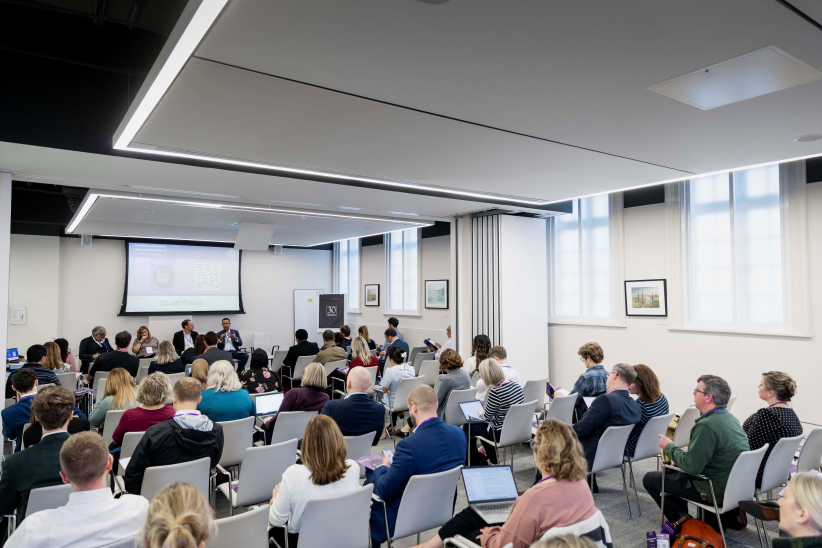
The Integrated Care Delivery Forum on 5 November 2025 brought together leaders from across health and care to explore one of the most pressing questions facing integrated care systems: what does it truly take to develop system-wide intelligence that improves decisions, outcomes, and the experience of care?


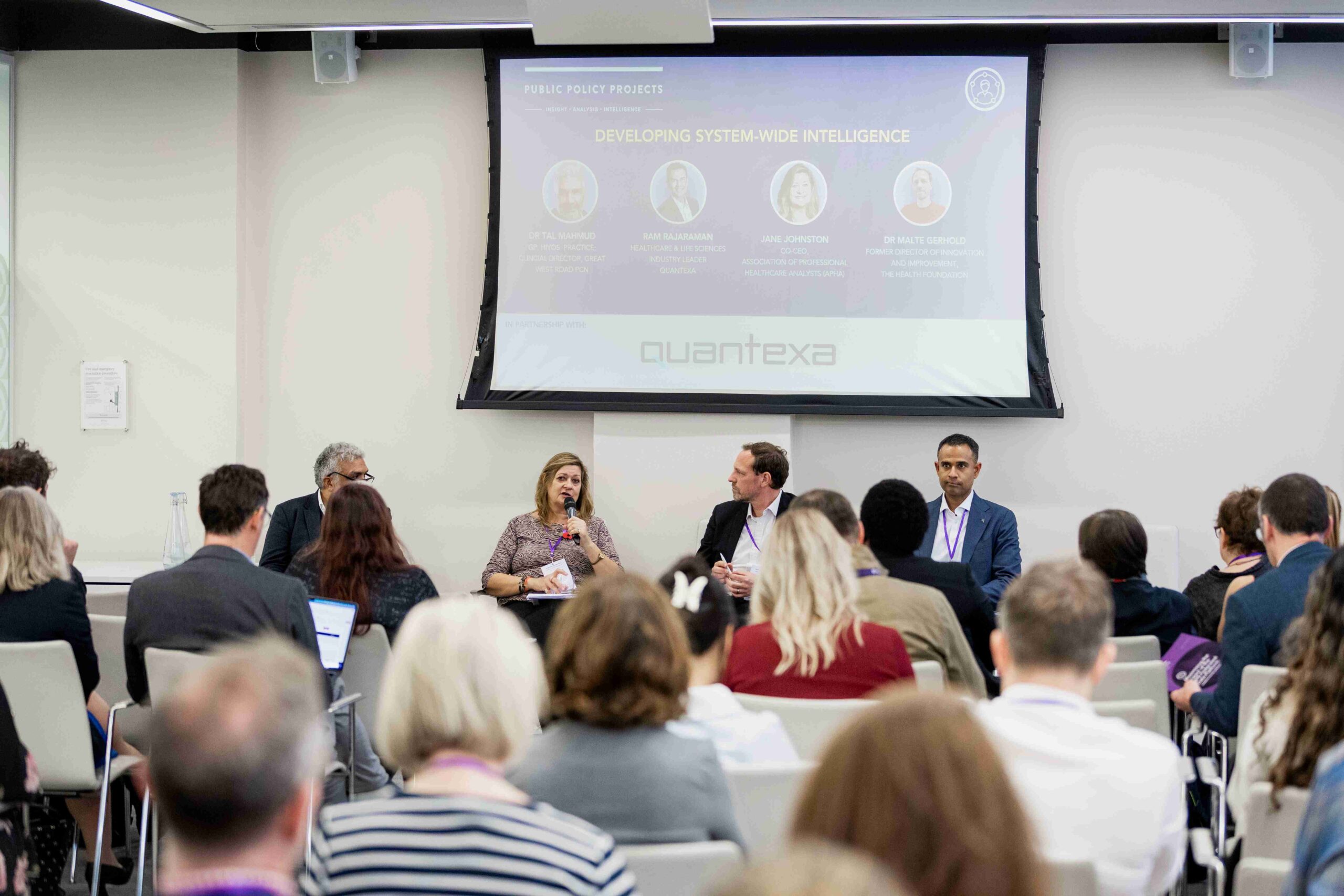
Chaired by Dr Tal Mahmud, GP Partner for HIYOS, the day’s first panel featured Dr Malte Gerhold, Ram Rajaraman, and Jane Johnston, who examined the cultural, technical and workforce conditions needed for data to flow effectively across organisational boundaries.

Their reflections were rooted not only in national initiatives, such as the NHS Federated Data Platform (FDP) and the Single Patient Record (SPR), but in the complex practicalities of how teams on the ground can improve care using the data already available to them.

National direction vs local reality

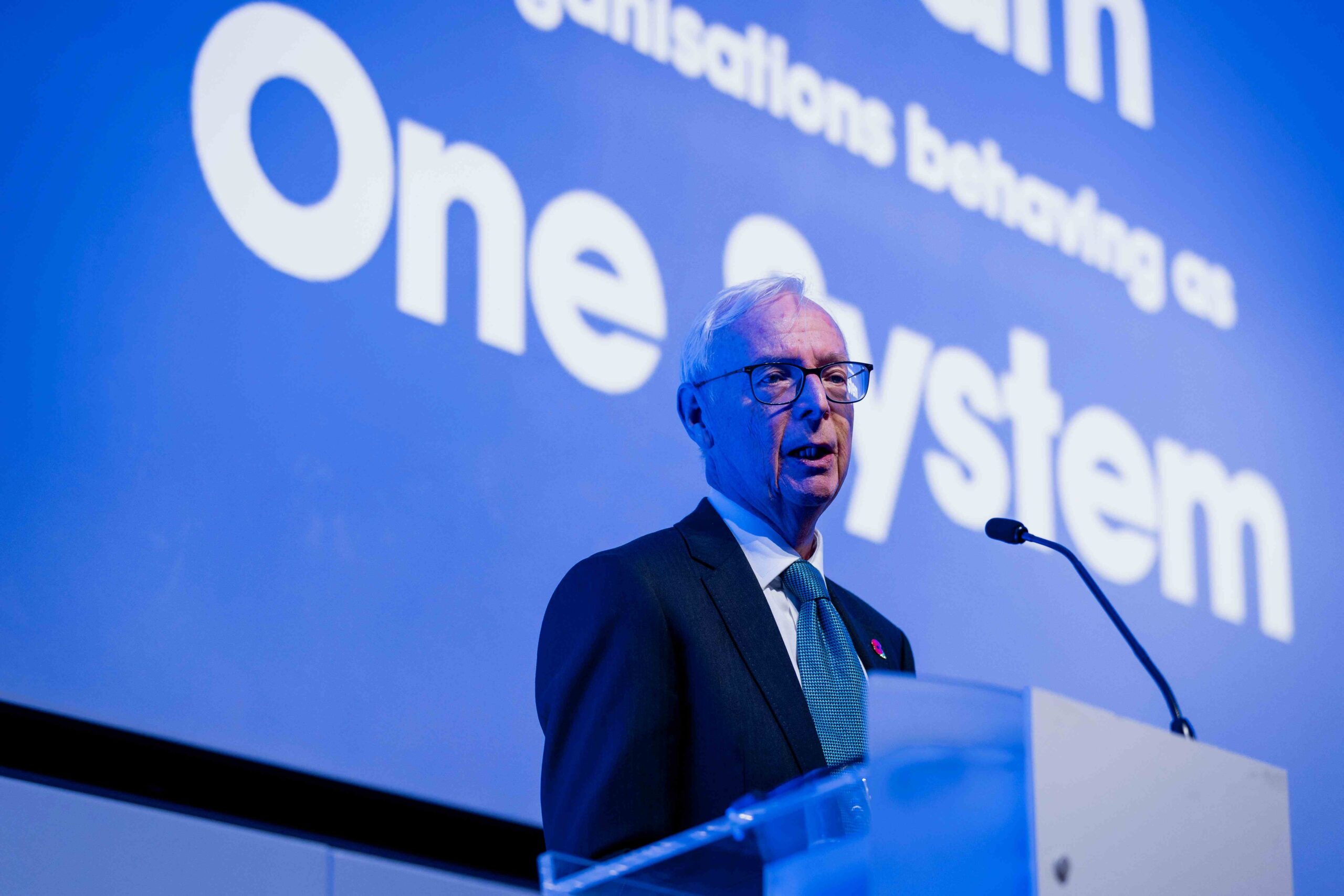
Dr Gerhold, formerly Director of Innovation and Improvement at The Health Foundation, opened the discussion with an overview of the strategic landscape. The 10-Year Health Plan has been supplemented by a medium-term strategic commissioning framework – an unusual but welcome move, he suggested, because it finally gives systems some stability around expectations. A key part of this direction is the strategic commissioning framework’s mandate that every ICB must have a mature intelligence function by March 2027.

As Dr Gerhold explained, this requirement is not minimal or symbolic: “Importantly, it’s also quite prescriptive and extensive… it’s not just the population health needs assessment. It’s also the patient-level pathway and longitudinal data… and the financial activity and quality and performance data that’s needed for commissioners.”

Dr Gerhold emphasised that meeting these requirements cannot begin with technology or centrally defined architecture.

Instead, he argued that progress must start with local problems that clinicians, care staff and operational teams actually feel: “What becomes meaningful to clinicians, care staff and patients is the conversation starting from the problem. And from the problem, getting into: ‘what does the data that we already have tell us about this, and what data might we need?’”

This approach, he said, is essential for generating motivation, as it creates clarity about why data matters, and helps teams understand the tangible impact of better intelligence. Beginning with a specified national blueprint, by contrast, risks misalignment.

“From the centre, what you often get is an expectation that you need to have this piece of kit, or this functionality. Coming from a local perspective, there’s a big risk when translating that into local priorities.”

Dr Malte Gerhold, former Director of Innovation and Improvement, The Health Foundation

By starting with real problems, systems can avoid that pitfall, and ensure that data flows support the change that frontline teams actually need.

Yet even as some aspects are defined nationally, such as digital blueprints, minimum capabilities, and interoperability expectations, Dr Gerhold underscored his view that the centre is no longer trying to dictate how local areas collaborate: “It’s not going to prescribe how each local area plays and collaborates… I think the implication is the centre saying: ‘we believe in devolution’.”

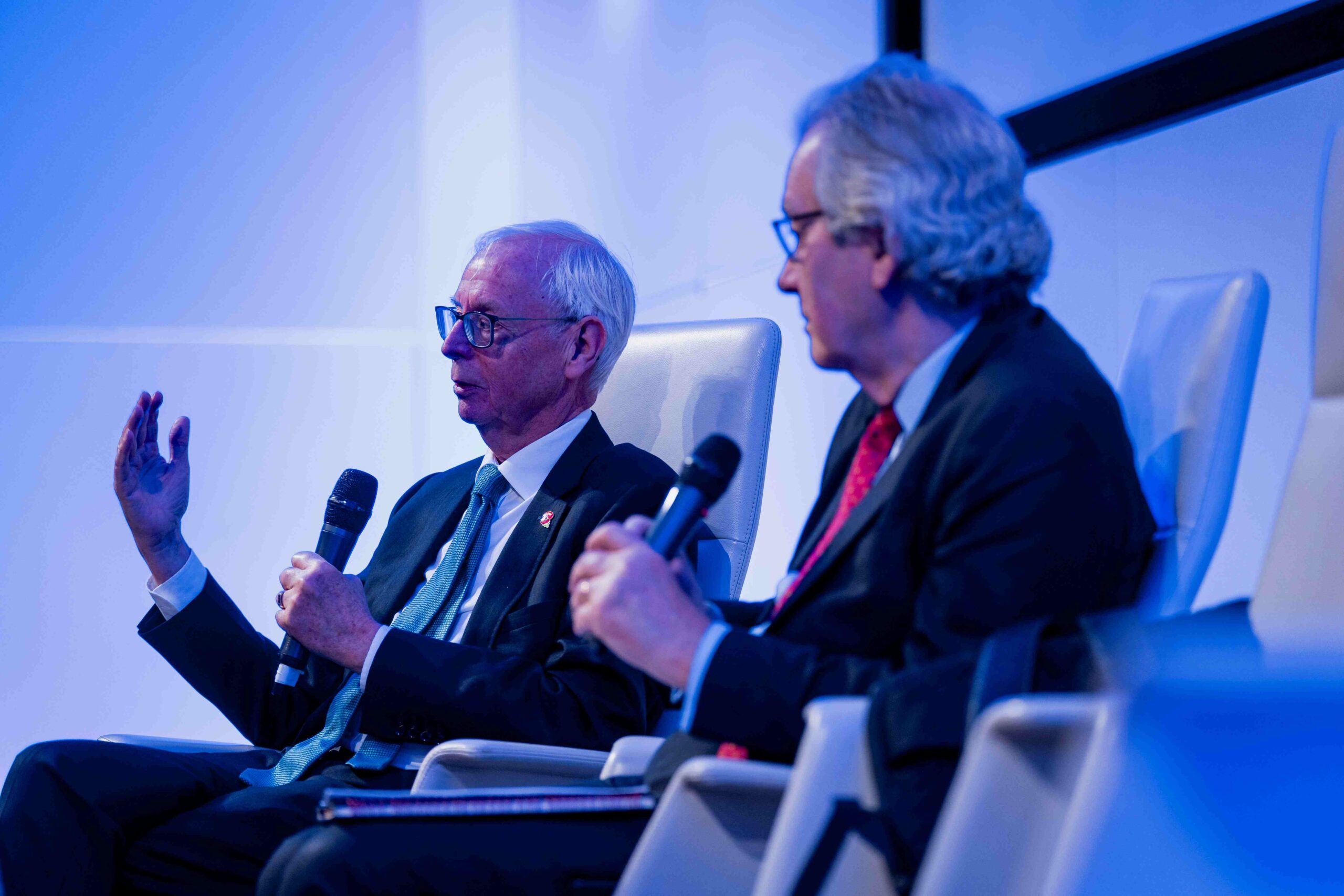
(L-R) Dr Tal Mahmud; Jane Johnston; Dr Malte Gerhold; Ram Rajaraman

Workforce: The critical link

Jane Johnston, Co-Ceo of The Association of Professional Healthcare Analysts (AphA), devoted her contribution to what she sees as the largest barrier to system-wide intelligence: the analytics workforce. The NHS, she warned, is losing its best analysts: “60 per cent of the analysts that leave the NHS to go into commercial organisations leave not because of the money, but because they are not supported in developing their careers.”

Many feel there is no clear progression pathway, no encouragement to attend professional development events, and insufficient understanding of their role. Many analysts, Johnston said, are still viewed as “the mushrooms in the portacabins at the back of hospitals”.

She argued that many NHS boards still do not understand what analytics involves: “They believe if they’ve got a digital strategy, that data and analytics is covered, and it really isn’t.”

The shift towards prevention, predictive analytics, value-based healthcare and strategic commissioning requires analysts with a wider range of skills, from health economics to data science. Supporting, developing and respecting this profession, Johnston argued, must be a priority.

“The NHS has got the richest data set in the world for healthcare if we can access it – but with all this great stuff coming from the digital side, if we can’t see and use the data, then we’re going to fail.”

Jane Johnston, Co-CEO, Association of Professional Healthcare Analysts (AphA)

Developing contextually rich intelligence

Picking up the workforce theme, Ram Rajaraman, Healthcare & Life Sciences Industry Leader at Quantexa, argued that even with sufficient talent, systems must become more disciplined about their relationship with data. Decision intelligence company Quantexa’s AI technology is used to analyse public sector data, providing a contextual and connected view of internal and external data in a single data view.

The focus, Rajaraman stated, should be on developing actionable insights with existing, contextually enriched data, rather than merely accumulating more data.

“The last thing we need is more data. Fundamentally, we need to use the data assets that we have, add context to it, or extract context, and drive actionable intelligence.”

Ram Rajaraman, Healthcare & Life Sciences Industry Leader, Quantexa

For Rajaraman, actionable insight means embedding intelligence directly into clinical and operational workflows, so staff are not overwhelmed by raw information. He illustrated this with an example from safeguarding: “When incidents like multiple school absences come along with the context of a complex household… that context then drives a totally different workflow.” This, he argued, is what demonstrates the value of connected data: its ability to change the actions frontline teams take.
(L-R) Dr Tal Mahmud; Jane Johnston; Dr Malte Gerhold; Ram Rajaraman

Rajaraman also emphasised the importance of incorporating wider determinants such as financial insecurity, housing, and social conditions into system intelligence. Without doing so, he suggested, insights remain partial and the most entrenched issues go unaddressed. As he put it, many of the wider determinants “don’t quite get used in day-to-day operations,” despite being well recognised. The challenge is not only collecting these data but ensuring they inform how services respond: “Health inequalities is not just about understanding it. What does it mean for the actions that you need to do now?”

He noted that systems often know where inequalities lie, but the gap is in operationalising that knowledge and redesigning workflows accordingly. What matters, he said, is creating a clear chain from insight to action, rooted in local context: “You need to have the data in that local system so you can drive a better workflow and action… not just create lots of data or lots of interoperability, but actually understand how do you create that sequence from insight to action.”

Rajaraman acknowledged that policy documents may imply these wider determinants, even if they are not always explicit, but stressed that recognising them is only the first step. Without embedding them into the design of intelligence and the daily decisions teams make, inequalities will persist and opportunities to deliver more citizen-centred services will be missed.

Technology that reveals the real work

The panel was clear that technology has a vital role but cannot replace local problem-solving. Dr Gerhold emphasised that national platforms like FDP and SPR create essential baselines, but innovation happens on the ground.

“If someone is doing something really good, let’s think about how we can then build that into the wider platform capability for others.”

Dr Malte Gerhold, former Director of Innovation and Improvement, The Health Foundation

He offered a cautionary example: when exploratory work attempted to share home-care information with general practice, the new data unexpectedly created new clinical responsibilities for GPs: “What started out as a very limited data exchange actually turned into a very big conversation about the care pathway and clinical responsibilities.”

This example illustrated two crucial points:

  1. Data sharing is never neutral: It reshapes accountability and creates new forms of work
  2. Technology can expose structural problems that require pathway redesign, workforce changes, or policy support, not just more efficient data flow

Dr Gerhold’s warning was clear: systems must anticipate these implications when designing new data pathways. Otherwise, well-intentioned innovations risk overwhelming teams and creating new bottlenecks.

Trust as the foundation of system-wide intelligence

Across the panel, trust emerged as the essential foundation. For Dr Gerhold, trust is neither abstract nor optional – it determines whether data sharing can happen at all.

“Trust is lost with one action and built with thousands of actions,” he reminded the audience, emphasising that trust cannot be mandated from the centre. Instead, it must be built “locally and regionally” around use cases that matter to people.

Jane Johnston illustrated what this looks like in practice. In her work building a multi-sector community of practice, involving analysts from public health, adult social care, mental health, local government, primary care and acute trusts, trust has been fostered through shared problem-solving: “By sharing it around, you start to understand each other’s data and how you all work together… share the skills, share the knowledge.”

Trust therefore grows from relationships, shared purpose and visible impact, not from policy documents or technology alone.

Intelligence that improves care

Closing the session, Dr Mahmud captured the essence of the challenge with a simple question: “The final question is, how is [intelligence] going to change the way you deliver care? How is it going to help you to make your life easier?”

Speakers delivered a consistent message throughout the panel; system-wide intelligence will improve care only when it is built on trust, developed by a valued and skilled workforce, rooted in actionable insight, supported by thoughtful technology and grounded in the lived realities of local systems.

The future of ICS intelligence cannot lie solely in generating more data, but in empowering people – whether clinicians, analysts, managers or citizens – to turn data into meaningful, practical improvements for the communities they serve.


To read more insights from Public Policy Projects’ Integrated Care Delivery Forum London 2025, please visit PPP’s insights page.

For more information on the Integrated Care Delivery Forum and how to get involved, please write to [email protected].

News, Systems

From data to decisions: Transforming GP practices with Operational Research

By

Professor Sanja Petrovic, President of The OR Society, and Professor of Operational Research at Nottingham University Business School, explains how Operational Research can help GP practices use resources more effectively, improve patient care, and reduce daily pressures through data-driven solutions.


Nearly a third of GPs are unlikely to be working in general practice in five years’ time, according to a new report from the Royal College of GPs. Stress from high workloads and excessive bureaucracy is driving this trend, highlighting the urgent need for change. But additional funding or staff will not be enough; GP practices also need smarter ways of working.

This is where Operational Research (OR) comes in. Known as the “art and science of better decision-making,” OR uses data, analytics, and mathematical modelling to tackle complex problems, and it is already enabling healthcare teams to optimise the resources they have.

Two recent academic pilots in GP practices in England have demonstrated the potential of OR to streamline workflows, reduce waiting times, and identify patients with the most urgent needs, easing day-to-day pressures on staff while allowing practices to deliver more tailored and efficient care.

Clustering patients for more targeted care

In one of these pilots, OR methods were used to improve the way patients are managed in GP surgeries. Traditionally all patients have the same access to healthcare regardless of their individual needs. However, this is not ideal as patients’ needs vary significantly, especially when it comes to continuity of care (to allocate the same GP to a patient), frequency of visits and the complexity of their health conditions.

The pilot was focused on introducing a new patient clustering model to create categories of patients that better reflected their healthcare requirements. To test this, data was gathered from several GP surgeries, including patient demographics (age, gender) and health history (chronic conditions, frequency of visits).

Clustering methods were used, such as K-means clustering and fuzzy C-means clustering, to group patients into categories based on their healthcare usage patterns and care needs.

The clusters were then grouped in the three categories:

Red Group: patients who would benefit from continuity of care, with a designated team. It appears that majority of these patients are older patients with multiple chronic conditions who require frequent care (many visits, repeated prescriptions, etc).
Amber Group: Patients with moderate needs, from different age groups, who might be given due attention even if their GP is not available.
Green Group: Younger, healthier patients who rarely need medical attention.

These groups allow GPs to adjust their care plans ensuring patients receive care tailored to their needs. Using this method can enable practices to improve the efficiency of the system, helping GPs to allocate resources where and when they are most needed.

Tackling missed appointments with data-driven scheduling

Another area where OR methods have been piloted is in managing missed appointments, referred to as DNAs (Did Not Attend), which are a major challenge for GPs.

Previously appropriate mitigation strategies have been used such as sending reminders by short message service (SMS) texts, e-mails or phone calls, etc. However, there is a great potential to benefit much more from scheduling approaches which consider DNAs.

To test this, data was taken from GP surgeries to identify patterns and predict patients most likely to miss appointments. Factors such as patient demographics, appointment times, and past attendance patterns were analysed using various models, including decision trees, random forests, and logistic regression.

The findings were insightful. By calculating the probability of DNAs, it is possible for practices to identify the best time slots for appointments and adjust the number of patients booked accordingly, making schedules more resilient and efficient.

Bringing smarter solutions to life

OR has immense potential to transform healthcare, but to make a real difference it must be embedded into daily practice. This requires close collaboration with clinicians and managers to ensure solutions reflect real-world challenges. Partnerships with software providers are also essential to turn OR models into user-friendly tools that staff can easily adopt. Overcoming bureaucratic hurdles, such as ethics approvals, is equally important.

The OR Society supports this process through its Health & Care Systems Special Interest Group (SIG), which fosters collaboration between academics, practitioners, healthcare providers, and technology developers. By highlighting practical benefits and highlighting successful applications, the SIG helps bring OR from theory into practice.

Looking ahead

GP practices need more than additional staff or funding; they need smarter ways to deploy the resources they already have. Operational Research, long proven in other sectors, is beginning to make a real difference in healthcare. The next challenge is moving beyond academic pilots to embed practical, everyday solutions that clinicians and managers can rely on.

Collaboration between OR researchers, healthcare professionals, and technology developers will be vital to ensure the NHS continues to deliver high-quality, sustainable care.

News, Systems, Thought Leadership

Putting our ambitions of community-based health into practice

By

Housing providers are becoming vital partners in delivering integrated neighbourhood health. By shaping services around people and the places they live, the sector can help turn the NHS ambition for community-based care into a reality, writes Sarah Williams, Lead Business Development Manager at Home Group.


When speaking at a recent Public Policy Projects’ event panel, it was encouraging to see the keenness across the sectors to work together to succeed, despite the obvious challenges. If we are to realise the ambitions of delivering community-based health, as laid out in the NHS 10-Year Plan, then it will require all of us pulling in the same direction.

But more than that, it will take the breaking down of traditional boundaries. A person starting their care journey is not interested in whether the support they need is provided by three organisations working together, or a single provider. What matters to them is receiving care or support which is effective, of a high standard, and which addresses their specific needs in that moment. It needs to be consistent, seamless and accessible.

Doing this will require a radical shake up of traditional ways of working. Across healthcare and wider partners, we know how to come together as separate organisations collaborating and each delivering our particular service within that project. But increasingly, we need to be viewing ourselves instead as one singular ecosystem. That means sharing more. Trusting one another more. It could be practical steps such as sharing staff or joint training, but just as important is proactively seeking to build robust relationships between colleagues who share a common goal.

Embedding lived experience in service design

Partners with a particular expertise can enhance the quality of support for customers while bringing an opportunity for other colleagues to develop. Likewise, those same people we are supporting are also the most valuable source of knowledge and experience we can gather about what services need to do to meet their needs.

Lived experience is nothing new to the care sector; we have historically made efforts to engage with customers and gather feedback on their experiences. Where we can grow further is by gathering that input before the service is even designed – having the trust in our customers to inform exactly how a service should operate.

The housing sector is currently adjusting to a swathe of regulatory changes. Tenant satisfaction measures (TSMs) have been introduced to give the customer greater transparency to hold their housing providers to account. Providers have a duty to collaborate with customers and put them at the heart of what they do. TSMs inform our direction as a business ensuring continuous improvement, led by the customer. It should be no different when we talk about health.

Success is ultimately about what partners can deliver together. That is why we are proud to point to partnerships like Hope Haven in the North West of England, where Home Group is one of a number of organisations working in this new innovative way, changing how mental health and wellbeing support is delivered in our community.

When it works

Hope Haven is a collaboration between Home Group, Everyturn, The Well, ICan, Whitehaven Community Trust, Cumbria Health and Cumbria, Northumberland, Tyne and Wear Foundation Trust.

From the outset, it was made a non-negotiable that everything the partnership delivers be under a singular brand and identity. Each partner provides its skills and staff, but they work together as one organisation.

Extensive work has gone into ensuring that patient information is captured and crucially, while still safely and appropriately protected, is able to be shared. Budgets have been set as one organisation, and even the wording used on a day-to-day basis and in external communications has been co-designed to ensure one common language.

All of that comes together so that locally, Hope Haven can present itself as a singular organisation providing mental health and wellbeing community support in Whitehaven and wider Copeland.

This matters because for many people, reaching out in a time of need can be difficult enough. No one should face being passed between several organisations, sharing their story time and again.

Instead, they should have one point of contact, in which they can build up trust and confidence. We then wrap the community provision around that person and make sure we can address all of their needs.

It is why it has also been important to have more than just traditional health providers involved within Hope Haven. Home Group comes into that partnership from a background predominantly in housing and supported services. We recognise that unstable housing exacerbates ill health, but on the other hand, a strengths-based approach equips people with the skills they need to improve their overall wellbeing and sustain their home.

It is likely not a new challenge to many healthcare providers – the idea of having treated the health issues a person may have been facing only to be unable to safely discharge them back into the community because of inadequate or inappropriate housing. We have utilised our housing stock to solve or progress some challenges which otherwise could trap a person within the healthcare system longer than necessary.

As collective organisations, we have the capability to respond effectively with varied experience, because rarely do real people’s issues fit neatly into one cross-section of expertise.

Putting the customer at the centre

When we get it right, it can make a dramatic difference in a person’s life.

One aspect of the Hope Haven project, alongside the community wellbeing and mental health support, is the delivery of several short-stay flats. These are a safe space for people in need to be referred into by the local Crisis team or other social providers, in cases where someone may need temporary support but not necessarily hospitalisation.

Leading the delivery of these flats, we are able to draw on our existing knowledge and experience while embedding them as a Hope Haven service.

‘George’ (we have changed his name) was the first person to be supported in these short-stay flats.

Homeless and presenting to his local Housing Options team as feeling suicidal, he was vulnerable and showed signs of confusion and cognitive decline.

Using Hope Haven short-stay flats as a space to stabilise, the Crisis team was able to assess him in a safe, suitable environment and could collectively understand what help he needed.

George explained how relieved he was when he arrived. After giving him time to settle, primary care staff from Cumbria Health were able give him a full medical check-up and arrange treatment for some of his health concerns.

Over just a four-day period, Home Group worked closely with adult social care and secured funding for him to move into supported housing with us.

Now, George is engaging well with the supported housing team and his social worker, enjoying walks with the team and meeting his neighbours. His memory and cognitive decline issues are also being investigated.

George’s success was due to a true partnership approach that complimented his needs, leaving him to focus on recovering in a safe space. There weren’t blockers, or lengthy referrals to various teams and duplication of information. Instead, support was timely and appropriate, empowering George to take the next the step.

This is what becomes possible when support is genuinely built around the person. Rather than being passed from one organisation to another, retelling their story as they go, they remain the constant touchpoint, with services coming to them, aligned around their needs.

News, Systems, Thought Leadership

Death (and taxes?)

By

Hospices are fundamental to end of life care, and the broader shift ‘from hospital to community’. But, relying on charitable income, they are in financial trouble. Fraser Battye, Head of Policy at the Strategy Unit asks ‘what is to be done?’


Even distant followers of health policy will, by now, have heard of the plan to ‘shift care from hospital to community’. Slightly more careful observers will know about the ‘Neighbourhood Health Service’. And a particular variety of obsessive will be familiar with ‘strategic commissioning’.

In each case, we might ask: how would we know if these initiatives were successful?

End of life care suggests itself as a general test. Each of these initiatives points towards more community-centric, joined-up, locally-based care. If this doesn’t mean better support for the dying and bereaved, then what does it mean?

And, in some ways, starting conditions are as favourable as they will ever be.

For a start, the problem is well described. There are some excellent analyses of the current state of care at the end of life. Strategy Unit analysis for Macmillan, for example, shows the demographic, socio-economic and service-related conditions that tend towards better or worse outcomes. And analysis for Marie Curie, by the Nuffield Trust and (our sister team) the Health Economics Unit, shows how resource use could be rebalanced.

The problem is also slow moving. Driven predominantly by demographic change, it is possible to see – and even animate – a coming wave of deaths. This is not a problem of the unforeseeable and rapidly evolving variety: it is moving steadily, and predictably, into view.

Solutions are also largely agreed upon. The Lancet Commission on the Value of Death – summarised in this really quite beautiful video – sets out what it calls a ‘Realistic Utopia’. It is a vision that resonates with moves in the NHS to make more careful use of medical intervention at the end of life. A holistic understanding of people’s needs in the foreground; medicine playing a supporting role.

Hospices are central to this. From its roots in the late 1960s, this largely charitable movement has grown and evolved. Today, hospices provide specialist care that addresses the physical, social, spiritual and psychological needs of the dying and their loved ones. This care extends out of hospices and into community settings; hospices also engage in research, education and multi-disciplinary clinical work.

This seems like a rare confluence of problems, solutions and policy drives. Community-based care at end of life alleviates suffering for the dying and their families; it reduces pressure on hospitals and makes better use of scarce resources; there is broad consensus on the way forward; and there are organisations designed to do it. If we can’t make this work, then it’s hard to see how more ambitious elements of the care shift will ever take hold.

But beneath these favourable conditions, all is not well. What looks straightforward at first glance is revealed to be devilishly complex upon a closer look. Money, as ever, is part of the story.

The hospice sector has real financial problems

Last month, the National Audit Office (NAO) reported on the financial sustainability of England’s adult hospice sector. The headline? Demand is increasing while supply is tightening.

The NAO notes that:

  • There were around 544,000 deaths in England in 2023; this is projected to rise to 658,000 by 2044.
  • In 2024, for deaths in England: 5 per cent died in a hospice inpatient unit; 28 per cent died at home and 21 per cent in a care home; 42 per cent were in hospital.
  • Most people would prefer to die at home or in a hospice. Current trends are in line with this wish: the proportion of hospital-based deaths has been decreasing.
  • In very broad terms, around two-thirds of the funding for hospices comes from ‘charitable sources’ (shops, legacies, donations, fund raising, etc). One-third comes from the NHS.
  • A few hospices rely almost entirely on state funding; others receive very little.
  • The sector’s income is falling. Around two-thirds of independent adult hospices recorded a deficit in 2023/24. Services are being cut to address this shortfall.
  • Around a third of expenditure in the sector goes on income generation. The rate of return is decreasing. In 2023/24, every £1 spent on fund-raising returned £1.96; the historic rate has always been above £2.
  • Specific initiatives have changed government and NHS involvement in hospices’ income. This has included one-off injections of capital funding, pandemic-related support, and – perhaps most significantly – The 2022 Health and Care Act requirement for Integrated Care Boards (ICBs) to commission palliative care services.
  • ICBs currently discharge this duty through a mix of grant funding and contracting. Where grants are used, there is a lack of transparency and data. Where contracts are used, there are no national tariffs for pricing.

This is not sustainable. And, although the NAO doesn’t say it, every decline in care provided by hospices adds pressure to already overstretched and overcrowded hospitals.

The current situation is not viable. Where might change come from?

One way of approaching this question is to look at the role of the state. The usual way of securing services deemed important to public wellbeing is through taxation and state funding. This boundary is always contested and will never be clear (see social care); but it is legitimate to ask whether hospice services should be more ‘mainstream’ than they are.

This case is being made by the sector. Giving evidence to Parliament’s Health and Social Care Select Committee (July 2023), Hospice UK’s Jonathan Ellis said:

“Hospices…rely on charity donations for the vast majority of the care that they provide – fun runs, charity fundraising and bake sales to fund what, in any reasonable perspective, is a core healthcare service.”

There are more and less thoroughgoing ways that hospices could be made a core NHS service. Most radically, if the state wanted to take full responsibility for the current funding shortfall, the NAO report suggests that annual funding of around £0.5 billion would be needed. This would cover the level of charitable income, less the money spent on fund-raising. Doing so would more than double current NHS expenditure on hospices.

It is unlikely that government will want to go this far. Nonetheless, there is a widely accepted case that the funding mix must change. Pressure will continue to build. The NAO report suggests that, without action, things will get worse.

So where might action come from? I see two main sources.

The first is politics – and current debates on assisted dying. The NAO pointed to this live rail, concluding that:

“With the number of people in England who die each year increasing, and the key positioning of high-quality palliative and end-of-life care in the assisted dying debate, the sustainability of the independent adult hospice sector is of national importance.”

Sam Friedman, in his recent wide-ranging ‘Comment is Freed’ post, furthers this argument. Joining two contentious dots, he says:

“[Assisted dying] will probably be publicly funded which raises questions given other forms of end-of-life care are not … this could act as an incentive for assisted dying.”

This would be unpalatable for most of us – including Wes Streeting, who, while speaking about his opposition to assisted dying, said that:

“I worry about palliative care, end‑of‑life care, not being good enough to give people a real choice…I really worry about those people who think they’ve almost got a duty to die to relieve the burden on their loved ones.”

Any such ‘duty’ would be unevenly distributed. There is evidence of unequal experiences of palliative care by demographic group (skewed in favour of the wealthy). And the NAO reports significant geographic variance in inpatient hospice provision. They show that, in 2023/24, one ICB area had one bed per 2,900 population aged 65+, when another had one bed per 54,300. For an NHS sensitive to accusations of a ‘postcode lottery’, this would presumably be intolerable.

The question of who pays for assisted dying may ultimately therefore wash back into wider discussions of hospice funding. This could be a far-reaching, if unintended, consequence.

A second, and related, potential source of change comes from policy. In response to a question in parliament, Stephen Kinnock MP summarised the broad direction of travel:

“The Government is determined to shift more healthcare out of hospitals and into the community, to ensure patients and their families receive personalised care in the most appropriate setting, and palliative and end of life care services, including hospices, will have a big role to play in that shift.”

Key developments here include:

1. Strategic commissioning

The recent NHS England Strategic Commissioning Framework gives ICBs a clear (if thorny) task: allocating scarce resources to improve the health of the populations they serve.

Given the high proportion of expenditure involved, end of life and palliative care is likely to be a priority. The analysis for Marie Curie referenced above showed that, in the UK, expenditure on healthcare for people in the final year of life is around £12 billion a year. 81% of this is spent on hospital care, and only 11% on primary and community care (including charitable hospices).

Commissioning ‘strategically’ means taking a broader view over time (accounting for looming, as well as immediate, problems) and systems of care. In doing so, ICBs will be aided by Strategy Unit our tools showing the effects of long-term demographic change, and our work to scale potentially mitigable hospital activity – including at the end of life.

Commissioning strategically will also involve developing new contractual forms. Here, ICBs will need to balance competing interests:

  • On one hand, public need will be such that some level of specialist, hospice-led provision should be secured through public funding.
  • On the other, NHS funding should not displace charitable contributions – and hospices will doubtless worry that the bureaucratic strings attached to NHS funding will constrict their social mission.

Navigating this, ICBs should be well-placed to negotiate the local detail of this balancing act. Perhaps through specifying levels of charitable income that should be maintained; perhaps through clarity about what the NHS will and won’t fund (nursing and medical care, yes; complementary therapies, no); perhaps through setting and measuring outcomes (such as reduced suffering, and a ‘good death’) that matter to people and families.

As a related aside, innovative ‘social financing’ arrangements have arisen in this area. These arrangements typically need additional, and sometimes sophisticated, analytical underpinnings. They could therefore significantly improve knowledge of what works – and will doubtless support some effective practice. But there are reasons for caution too: such arrangements have failed expensively in the past – and good strategic commissioning should not require elaborate financial mechanisms to perform the basic task of (re)allocating resources. There is risk of distraction alongside innovation.

2. The ‘Neighbourhood Health Service’

Neighbourhood health is becoming the mainstay of the shift from hospital to community. The National Neighbourhood Implementation Programme, which the Strategy Unit is happily supporting, has not started with the ‘end of life cohort’ – but it is encouraging and catalysing a model of care that lends itself directly to this.

Local integrated teams – drawing from the voluntary sector, multiple NHS services, social care, and other public services – all seeking a more ‘Do With’ relationship with local citizens. This is entirely in line with the requirements of high-quality end-of-life care. Hospices perform a vital, specialist, role; harnessing and guiding the contribution made by other community-based services is fundamental.

It would therefore be surprising if forthcoming national guidance on neighbourhoods didn’t feature a specific emphasis on end of life and the role of local hospice care.

The only test that matters: when policy becomes embodied

Health policy necessarily deals in concepts and abstractions. Its basic currency is ideas, and its stock in trade is the narrative. So, it is often difficult to imagine what things like ‘neighbourhood health’ or ‘strategic commissioning’ or ‘shift from hospital to community’ might mean in practice.

But, at some point, the abstractions of policy become embodied and experienced. The ultimate test of health policy is the extent to which it reduces actual, felt human suffering. End of life is a deep source of real suffering – and it is growing. The sustainability of the hospice sector is therefore a critical issue for people, policy and the NHS.


Fraser Battye is Head of Policy at the Strategy Unit – an NHS internal consultancy that specialises in applied analysis.

Sir John Oldham calls for the NHS to realise neighbourhood vision

By

Sir John Oldham used his keynote address at the Integrated Care Delivery Forum to highlight the importance of the Neighbourhood Health Implementation Programme, and called on the sector to overcome longstanding obstacles to shift care into community settings.


The National Neighbourhood Health Implementation Plan (NNHIP) launched earlier this year, with 43 locations across England in its first cohort. In his keynote address at PPP’s Integrated Care Delivery Forum, Sir John Oldham, who previously spearheaded the programme, outlined the key priorities of the programme and what it must do differently to help realise the ‘left shift’ and the government’s vision for neighbourhood care.

Each NNHIP site has (or will have) appointed a programme lead to align existing provisions and establish multidisciplinary neighbourhood health teams. These teams will include general practitioners, community nurses, hospital doctors, social care workers, pharmacists, dentists, optometrists, paramedics, social prescribers, local government, and the voluntary sector, ensuring easier access to care at the community level.

The programme is designed to redesign and connect fragmented care pathways, scaling local best practices highlighted in the Plan for Change and the 10-Year Health Plan. Over the next year, it will expand to include services such as diagnostics, mental health care, outpatient services, post-operative care, rehabilitation, nursing, and social care. From 2026, voluntary neighbourhood contracts will support GP leadership at scale, with single-neighbourhood providers serving approximately 50,000 people and multi-neighbourhood providers serving around 250,000.

Empowering communities and individuals

A central theme of the programme is empowering people within their communities and enabling them to co-manage their own conditions.

Sir John used his keynote address to emphasise the importance of shifting from a healthcare model that relies predominantly on professionals managing patients’ conditions to one that actively supports individuals in taking control of their own health. He illustrated this with an example from Sweden, where a patient with Parkinson’s tracked the hours spent managing her condition versus professional interactions.

This concept, referred to as the “blue-dot programme”, highlights the need to focus on the significant time individuals spend managing their health independently. In Denmark, AI-supported systems have been used successfully to interpret patient data, reduce hospital admissions by 30 per cent, and cut healthcare interactions by 50 per cent for certain cohorts.

Addressing systemic challenges

The NNHIP acknowledges systemic issues within healthcare, such as the imbalance in workforce distribution and the fragmented approach to care delivery. Sir John Oldham noted the 163 per cent increase in hospital consultants over the past decade compared to a seven per cent decline in GPs, highlighting the strain on primary care providers.

Sir John, a GP by background with decades of experience in pioneering quality improvement methods into the NHS, stressed the need for greater permeability between primary and secondary care, citing examples where cross-disciplinary collaboration led to significant reductions in hospital admissions. For instance, coordinated care in Walsall resulted in an 85 per cent reduction in hospital admissions for children aged 0-12.

Sir John Oldham (L); Rt Hon.Stephen Dorrell (R)

The role of integrated teams

Integrated teams are a cornerstone of the programme, aiming to shift from “body part medicine to whole-person care”. These teams will include professionals from various sectors, such as social care, local government, and voluntary organisations, to address the multifactorial causes of healthcare demand. Oldham highlighted the need for ‘collective asset mobilisation’ and the importance of a collaborative approach to achieve meaningful results. He also emphasised that the programme is not a pilot, but a large-scale change initiative designed to reach a tipping point of 20 per cent population coverage within two years.

Challenges in implementation

Despite the promising objectives, Oldham expressed concerns about the implementation process. He emphasised the importance of designing change programmes with local accountability and empowerment, warning against centralised control that could hinder progress. He also pointed out the difficulties in navigating current procurement frameworks and financial flows, which often focus narrowly on specific areas rather than supporting holistic, patient-centred solutions.

Oldham stressed that the NNHIP must overcome a historically fragmented approach to health and care delivery, where individuals often end up in the least appropriate care settings due to a lack of coordination between organisations, places, and services. This fragmented style has particularly disadvantaged vulnerable groups, such as children from disadvantaged homes, people with mental illnesses, or those excluded from society. Without addressing these multifactorial causes effectively, demand for care continues to rise, further straining the system.

“That rising demand I’ve spoken about is principally driven by more and more people with more complex needs. Not just people with multiple conditions of frailty, but also kids from disadvantaged homes, people with injury and mental illness, people who can’t work or cook. People who are excluded from society, and [become] further disadvantaged by the style and fragmented approach of the system. [They go from] person to person, organisation to organisation, place to place, and often end up in the least appropriate place.”

Sir John Oldham

Another challenge has been the lack of resonance between decision-making and the realities of community care. Historically, senior managers in healthcare have predominantly come from acute hospital settings, which limits their understanding of community-based care. Until recently, even the board of NHS England lacked members with experience in primary or community care, leading to distorted decision-making. This absence of expertise has contributed to failures in implementing community-focused strategies, as decision-makers often lack the instincts and knowledge required to navigate the complexities of care outside hospital environments.

Sir John also pointed to a lack of urgency within the NHS in addressing systemic barriers, such as financial flows and workforce issues, alongside an inability to cross organisational boundaries effectively. Without addressing these underlying issues, attempts to move care into the community have often faltered.

Lastly, Sir John emphasised the importance of empowering frontline workers and communities to implement changes locally. He noted that large-scale change programmes often fail when they rely on centralised control and top-down directives. Instead, successful initiatives require local accountability and the ability to adapt solutions to specific community needs. He warned that repeating the mistakes of imposing rigid, centralised plans would only perpetuate historical failures, stressing the need to empower individuals and frontline teams to drive progress in their own communities.

Conclusion

The NNHIP represents a significant step toward integrated, patient-centred care. By empowering individuals, mobilising community assets, and addressing systemic challenges, the programme seeks to create a sustainable healthcare model. However, its success will depend on overcoming implementation barriers and fostering collaboration across sectors to truly transform care delivery for communities across England.

“If you want to change something, it’s no good having a plan that describes what is going to be in five years’ time. That can be a valuable context. What really matters is what happens next Tuesday. The key is empowering frontline people with accountability and tracking of progress.”

Sir John Oldham

A Single Patient Record: The unsolved challenge, or is it?

By

Richard Kavanagh, openEHR and FHIR Board member and Head of Technology (UK & Ireland) at Better, examines why delivering a Single Patient Record for England has long proved difficult – and shows how global progress with open, person-centred data models offers a practical path to achieving the NHS 10-Year Plan.


The government has committed to introducing a Single Patient Record (SPR) for England. It is one of the clear ambitions set out in the 10-Year Health Plan, and will see it operate as a patient passport, making sure people get seamless care no matter where they are in the NHS.

It’s a long overdue ambition, in part because of its perceived complexity and because most of the public think it already exists. However, it’s certainly not an unsolved challenge. Elsewhere, across the globe, other health and care systems have rolled out national shared records. Here I explore how the NHS can turn the SPR vision into reality.

Data for life

What an SPR should do is provide data for the life of a patient. To achieve this, we need to adopt a data format that is going to be valid in years to come. This means records can’t be locked away in separate IT systems using proprietary formats that only specific vendors can read and write. They should be capable of outliving technology providers through the use of standardised data models and APIs that any compliant system can implement. This mitigates issues caused by business model changes and removes the risk of commercialisation.

To achieve this approach, the SPR needs to be built on open, vendor-neutral standards, such as openEHR, that can create one consistent longitudinal record during a person’s lifetime.

True data ownership

Then, there is the reoccurring question of who actually owns the data. In theory, it is the patient, but the existing digital infrastructure doesn’t adequately support that principle. Currently, the custodians of the data are the IT systems that the data is stored in, and it can be incredibly difficult for an individual to obtain a copy of their health and care record. They can make a formal request, but the lead time is lengthy due to the fragmented data being compiled from multiple care settings and systems.

This fragmentation occurs because healthcare data often exists in different formats – lab results in one schema, imaging reports in another, GP notes in yet another. Without a common data architecture, assembling a complete record becomes a manual, time-consuming process of translation and consolidation.

To enable patients to truly own their data in a meaningful way, we need to support health and care systems to move away from organising records around systems, to data that is centred around (and follows) the person. The result should be an SPR in a format which is open and accessible both to individuals, and to the relevant health and care organisations involved in their care.

Promoting innovation

Rather than restricting innovation, this open approaches enable it. Adopting an open approach for an SPR can accelerate digital transformation by securely separating patient data without the frictions of disparate data silos. It provides an effective and flexible data launchpad for clinicians and digital teams to expedite extensive digital programmes.

Today’s shared care records

Shared care records are the closest thing we have to a SPR in the NHS. They are breaking down silos to create a joined-up record of each patient’s health and care, ensuring that information follows the patient, and giving health and care professionals the full picture they need to provide personalised care. For patients, this means no longer repeating their medical history at every appointment, and for clinicians, it means being empowered with the right information at the right time.

The Universal Care Plan (UCP) is making great strides in this area and Better is proud to be supporting the transformation that is helping to deliver safer and more personalised care for every Londoner. Spanning five integrated care systems, 35 NHS trusts and 1,400 GP practices, it recently celebrated the milestone of enabling over 100,000 care plans to be created and shared across health and care teams. It has established nationwide access to care plans by integrating with the NHS App and the NHS National Record Locator, and due to the successful introduction of sickle cell care plans, is working towards also sharing these nationally.

Tomorrow’s shared care records

The traditional approach for shared care records has been to maintain a federated view of data centred around systems and users. We must now move towards the next generation based on lasting, structured, and usable data to create the fundamental foundation for a SPR. Shared care records are how we start to deliver on that ambition and we are in conversation with some well-established shared records across England that are moving towards a more active model.

Throughout Europe, nations and regions such as Slovenia, Greece, Malta, Ireland and Catalonia are already building shared care records using openEHR and open platforms. Slovenia has been using openEHR for ten years and today, its national electronic health record stores shared health data for 98 per cent of its population. This has seen the system integrate with 1,600 health providers and store over 250 million clinical records for 2.1m people. Additionally, the scope of Greece’s electronic health record spans 130+ public hospitals and more than 10 million citizens.

As the government looks to solve the challenge of creating an SPR in England, there are critical lessons to be drawn from other parts of the world where this problem has already been solved.. We only have to look to advanced health and care systems in Europe who have overcome the challenge. Many similarly advanced health and care systems in Europe have overcome the challenge. These examples show what is possible when structured, interoperable data is at the core of care delivery. They prove that the vision of safe, connected care is not a distant goal, but a reality being lived today, and the UK is well-positioned to learn from and build on these successes.

Following in their footsteps will be key to meeting the 10-Year Health Plan’s vision of an NHS fit for the future – one where the technical infrastructure is as accessible and interconnected as the care itself, built on foundations that will serve patients not just for years, but for decades to come.

Community-based, innovation-driven services crucial for UK cancer care

By

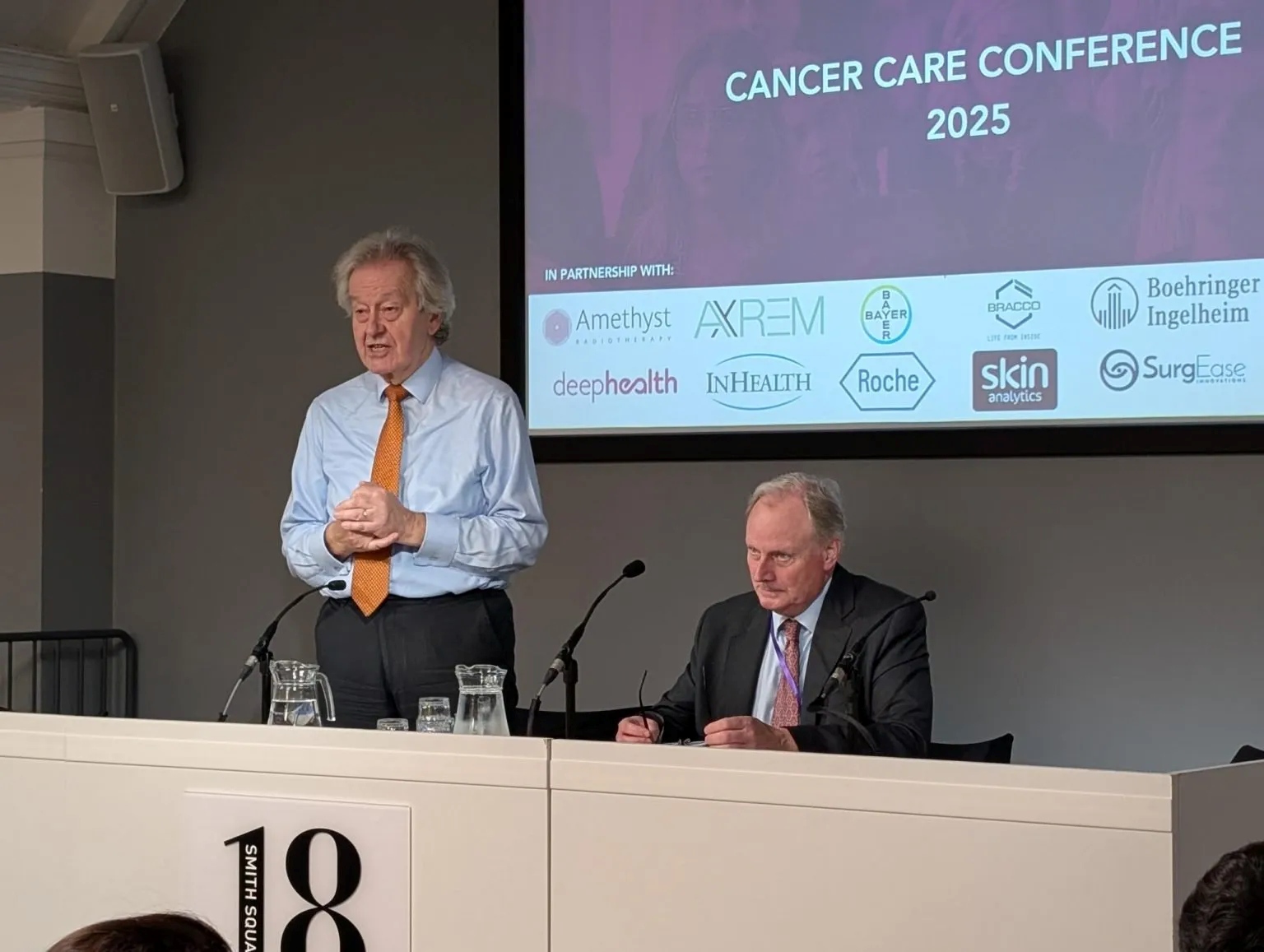
Speaking to an audience of NHS leaders, oncology specialists and industry experts, Professor Peter Johnson, the National Clinical Director for Cancer at NHS England, delivered a comprehensive keynote address at the PPP Cancer Care Conference 2025.


Speaking to an audience of NHS leaders, oncology specialists and industry experts, Professor Peter Johnson, the National Clinical Director for Cancer at NHS England (pictured above, right), delivered a comprehensive keynote address at the PPP Cancer Care Conference 2025.

In the context of the upcoming National Cancer Plan, Professor Johnson used his keynote address to highlight transformative innovations, community-focused healthcare, and strategic collaborations to drive equity and tackle cancer care challenges.

Key challenges and opportunities

Professor Johnson identified several pressing challenges in cancer care, including an ageing population, increasing cancer incidence (3 per cent annually), and stretched diagnostic and treatment services.

He outlined that “we are at a point…of trying to match challenge with opportunity. I think the challenge is pretty clear. We have a population which is living longer and getting older…we’re less healthy than we used to be. We’re heavier, we take less exercise, we eat more processed food.”

He also highlighted the strain on diagnostic services, noting that “the length of time it takes us to investigate, diagnose and treat cancer has stretched out, and we are struggling to meet the cancer waiting time standards.”

Although progress has been made, such as the 28-day diagnosis standard being met, Professor Johnson emphasised that the NHS remains “on a knife edge” to maintain cancer waiting time standards and called for providers to innovate and refine approaches to meet demands.

Advances in early diagnosis

Professor Johnson outlined how early diagnosis rates have risen by over 3 per cent since before the pandemic, resulting in more than 9,000 additional cases diagnosed at an earlier stage annually. This is attributed to active interventions, such as community-based healthcare delivery, rather than merely lowering referral thresholds. Innovations like the faecal immunochemical test (FIT) for bowel cancer have helped triage patients effectively, reducing unnecessary colonoscopies and prioritising high-risk cases.

He also highlighted the role of community-based interventions, stating, “taking healthcare to people where they live in their communities is crucial.”

Against the backdrop of the NHS 10-Year Health Plan, Professor Johnson highlighted the growing importance of neighbourhood health services in cancer care, emphasising the need to bring healthcare closer to communities. He explained, “the move to community and the development of neighbourhood health services for cancer is going to be another critical development that we bring forward as part of the cancer plan. How do we bring services to people, rather than expecting people to go to services?”

He also discussed the potential for community-based support models, such as nurse-led or pharmacy-led clinics, to address the unsustainable strain on the NHS due to the growing number of cancer patients requiring long-term follow-up. Professor Johnson stated, “I think the development of the neighbourhood cancer service, which is a relatively new concept, is something that we need to look at for how we better provide support in the community.” These insights reflect a shift toward decentralising cancer care, focusing on delivering services locally to enhance accessibility and efficiency.

Innovation in diagnostics and treatment

Professor Johnson discussed transformative advancements in diagnostics, including the rollout of AI diagnostic systems for skin cancer and the use of circulating tumour DNA (ctDNA) for faster lung cancer diagnoses. He also highlighted the use of genetic predisposition tools, such as the National Inherited Cancer Predispostition Register, to identify individuals at high risk of cancer.

“The ability to take a blood sample, to look at circulating DNA and to pull out the genomic characteristics of the tumour…has enormously shortened the length of time it takes us to have both the diagnosis and the molecular characteristics of the cancer.”

In treatment, robotic surgery and stereotactic radiotherapy have become widespread, with significant improvements in patient outcomes and shorter recovery times. Additionally, the Cancer Drugs Fund has facilitated rapid access to innovative treatments, benefiting over 100,000 patients in the past decade.

Professor Johnson remarked, “we’ve brought robotic surgery in now…something like 95 per cent of colorectal cancers are done either laparoscopically or with robot assistance.” He also emphasised the importance of radiotherapy advancements, stating, “we’ve rolled out SABR [stereotactic ablative radiotherapy]…reducing the number of fractions we use for a number of common cancers.”

Cancer vaccine research and system readiness

Professor Johnson outlined the “Cancer Vaccine Launchpad”, which aims to streamline processes for cancer vaccine trials and prepare the healthcare system for their potential routine use.

The UK has been a leader in trial recruitment, exemplified by the success of colorectal cancer vaccine trials. Partnerships with pharmaceutical companies like Moderna also underscore the UK’s commitment to innovation. He added, “the first colorectal cancer adjunct trial that we did in the UK was recruiting faster than the rest of the world put together.”

Addressing inequalities in cancer care

A significant portion of Professor Johnson’s address focused on tackling inequalities in cancer care. He cited the success of targeted lung cancer screening programs in deprived areas, which have reversed the gap in early diagnosis rates between the most and least deprived populations.

“We are not the helpless victims of the social determinants…We are starting to see progress driven by more active interventions – taking healthcare to people living in their communities.“

Similar efforts are underway for other cancers, including pancreatic and colorectal cancers, with trials exploring innovative diagnostic tools and community-focused interventions.

Workforce and system capacity

Professor Johnson acknowledged workforce shortages as a critical issue, with increasing demand for cancer services but limited resources. He highlighted efforts to expand training posts in key specialties, such as clinical and radiation oncology, and the need for better workforce planning to address capacity challenges.

Innovations like AI-driven radiotherapy planning and remote patient monitoring were also discussed as ways to improve productivity and resource utilisation.

“We are underpowered in terms of our specialist workforce…in the last five years, we’ve very substantially increased the numbers of trainees in some of the key specialties.” He also highlighted his belief in the role of technology, adding, “the ability to use AI to plan radiotherapy fields is going to be absolutely critical.”

Focus on research

Professor Johnson stressed the importance of research and innovation as core elements of cancer care. He called for stronger collaboration across the NHS, academia, and industry to streamline clinical trials and accelerate the adoption of new technologies. He emphasised the role of cancer alliances in understanding local population needs and driving strategic improvements in cancer care. “You need entities that know their populations and understand how to get to them, understand how to take healthcare to them, and understand what the strategic requirements are.”

Professor Johnson stressed the essential role of research, stating, “innovative research trials are not an optional extra for cancer treatment. They are absolutely core business for the services we deliver.”

Conclusion

In closing, Professor Johnson highlighted the need for a strategic, whole-system approach to tackle the growing pressures on cancer care services. He advocated for continuous refinement of ideas, leveraging innovation, and addressing inequalities to improve outcomes for patients. He underscored that research and innovation are not optional but essential components of effective cancer care delivery.

“Our job, as experts in the field, is to make the best possible use of these resources and to make sure that we are continuously refining our ideas.” He emphasised the need for equity and innovation, adding, “reducing the deprivation gap must be an absolutely critical part of how we develop our interventions.”


For more information on Public Policy Projects’ Cancer Care Programme, please contact [email protected].

News, Systems, Thought Leadership, Workforce

Rebellion and revolution: The reality of neighbourhood health delivery

By

At last week’s Integrated Care Delivery Forum, PPP convened leaders from across the health and care sector to unpack what the latest policy shifts mean for the future of integrated care. Following the event, one senior Neighbourhood Health Implementation lead felt compelled to offer their reflections – an honest account of renewed hope, fading trust, and the call for quiet rebellion to keep neighbourhood working alive


The promises and opportunities

When the newly elected government promised a fundamental shift in health and care reform, I felt something I hadn’t in years: hope. The promise was not to do more of the same. To listen to and value communities and staff. To give back agency, and to do with, not to.

There were also assurances that the endless distractions of organisational restructures would stop. This would free us from the draining processes that force box-ticking over meaning, so we could focus our collective energy on building a social movement for genuine, lasting change. We were promised trust – real trust – to deliver that change.

There were hopes that we, as humans and professionals, would be valued again. At last, we could refocus on why we joined this sector in the first place: to make things better for our communities, our families, our colleagues, and ourselves.

I was hopeful about the recognition of the incredible innovation already underway across the country, suggesting that we may finally have the freedom to learn, adapt, and act locally.

The moment felt like a recognition that this is a path that must be trodden. As in We’re Going on a Bear Hunt, we’ve tried to go over it, under it, around it, and finally realised, we’ve got to go through it. But unlike in the story, what waits for us in the cave might not be a bear – perhaps it we’ll find a pot of gold, and even a unicorn waiting there.

Transformation is not just about new systems and strategies, but about winning hearts and minds and changing culture. This shift takes time, human connection, messy conversations, empathy, and genuinely listening to lived experience.

For a while, it really did feel different. A clear mandate from the top: “Go and do what you do best. Build relationships within your neighbourhoods. Do the right thing. And those with power will change the policies that hold you back.”

It was enough to stop me scanning job sites outside the public sector – a thought I never imagined having. The actions seemed to be matching the rhetoric.

The reality

But reality has a way of creeping back in. I fear we’re on the verge of losing this incredible opportunity.

The public no longer feels they can rely on us and, honestly, many of us working within the system don’t feel we can either. We’re public servants, but also members of the public. We see what’s broken; we feel it, too. We want desperately to fix it, and to rebuild that trust.

But trust is reciprocal. The trust we began to build with those “the powers that be” is eroding, as their actions start to contradict their promises. Leave aside the vow of ‘no more structural changes’, and the reality speaks for itself.

Pressure builds, and old habits creep back in. We can feel it happening. It’s human nature; our nervous systems crave safety, and ‘doing what we’ve always done’ feels safe.

As winter approaches, the clickbait headlines sharpen and terms such as ‘corridor care’ begin to dominate discourse. Fear sets in. Suddenly, we’re chasing proof again, demanding assurance, sending yet another ‘evidence template’ or gap-closing plan.

Each well-intentioned attempt to control only drags us further into the very patterns we promised to leave behind. Yet, as the pressure mounts, the system reacts: we see more policies, more frameworks, more ‘guidance’. It usually comes from a place of good intention, but it ends up distracting, confusing, disempowering, and risks dragging us back to type.

The instinct to retreat to the familiar is understandable – but it’s within our power to make sure we don’t.

Rebellion, remembering, and revolutionSo how do we reach that rainbow, that pot of gold, and avoid the scary bear?

We rebel against the pull to “do what we’ve always done”. We remember, as a system, why doing things differently matters, why we started this work, how we came together during the pandemic, and we do it again. We dig deep, find our courage, and hold the line.

We stand together and join the revolution.
(And yes, this part deserves to be said Hamilton-style.)

Because the irony is, revolutions don’t wait for permission. They begin when people move forward anyway. And while most revolutions don’t have permission, we do.

So, we can keep blaming “those in power” for slowing change. Or we can politely remind them: you asked us to do this, you promised to enable us, and then get on with it.

Reflection

Moments of pressure often test the culture we are trying to build. When those higher up in the hierarchy revert to type, it can trigger the instinct across the system to play it safe – to fall back into what’s familiar.

The challenge is to notice that reflex, to sit with the discomfort it brings, and to remember the purpose behind the work. The fear and frustration that follow are temporary; they pass.

But the change being pursued – the shift in mindset, the renewal of trust, the reimagining of how care is delivered – that is what will endure.

News, Systems, Thought Leadership

Why housing must be central to ICB commissioning

By

As integrated care systems (ICSs) continue to evolve, the importance of including housing providers in the conversation has never been clearer. Providers have a key role to play in strategic and community commissioning with integrated care boards (ICBs).


The NHS 10-Year Plan rightly focuses on prevention, reducing health inequalities and delivering care closer to home. With deep community roots and a wealth of experience in delivering support services, housing providers are uniquely positioned to help meet these goals.

Now we have an opportunity to formalise this collaboration between health and housing to improve outcomes for customers and patients.

Part of its success relies on a recognition that good housing is more than bricks and mortar; that it is a foundation for good health.

Housing’s pivotal role in supporting good health

From reducing hospital admissions to supporting hospital discharge and preventing homelessness, housing plays a pivotal role in the health and care ecosystem. Stable, safe homes contribute to better mental and physical health, and housing-related support services help manage long-term conditions, maintain independence and avoid crises.

All of that is to say, good housing aligns directly with the NHS’ ambitions to reduce demand on acute services and invest in sustainability. When we recognise housing as a key health determinant, we can create communities where health inequalities are actively addressed rather than exacerbated.

Poor quality or insecure housing is one of the drivers of inequality; partnering early and often with housing professionals is essential to designing more inclusive, equitable services.

True collaboration starts with inclusion. For housing to contribute effectively to this agenda, its leaders must have a seat at the table when we shape strategy. Supported housing providers are steered by the properties they develop and the services they introduce, and community housing experts have a wealth of insight which can help ICBs make better-informed decisions around the types of services both the community needs and which are deliverable by providers.

Their inclusion in key decision-making forums, from local partnerships to advisory groups and place-based boards, should be seen as a core part of planning and delivery, rather than an afterthought.

Giving housing a seat at the table

ICBs are currently navigating a period of transition and uncertainty. While this period of restructuring poses risks to continuity and focus, it can also create a timely opportunity to reimagine partnerships.

Housing providers have decades of experience working across funding streams, adapting to changing landscapes, and solving complex local problems. Bringing that expertise into ICB conversations can offer valuable support, while allowing housing professionals to gather their own insights around designing cost-effective, person-centred solutions within the community – just as the NHS 10-Year Plan calls openly for.

One of the strengths of the housing sector, and particularly a provider like Home Group, is the commitment to community engagement and co-production. Bringing housing providers to the table doesn’t just bring subject matter experts, it also brings in a raft of customer knowledge and lived experience that sits behind that, gathered from tenants and service users.

For example, in Home Group, we make a conscious effort not only to listen to customers to understand their needs and experiences with our services, but to co-design the way these services will work directly with them.

It reflects our recognition of what an invaluable asset lived experience is, both in designing the right services for local community need and in generating that sense of local buy-in which sees those services become successful.

Fostering this community agency, a key principle in empowering healthier, more resilient neighbourhoods is a skill across both health and housing.

Collaborative, integrated commissioning

So, how do we better involve people in this co-designing process? Collaboration between ICBs and housing providers allows for joint insight on new models of co-production, the ability to share best practice and crucially the ability to invest in local capacity to support community engagement at scale.

But it is not just about the designing of a service where housing’s merits shine through. It is no secret the health and care system is continuously grappling with a trifecta of rising demand, workforce shortages and tighter budgets.

Housing can play a role in the solution. Preventative models, such as supported housing, tenancy sustainment, and step-down accommodation can reduce hospital stays, prevent readmissions, and ease pressure on overstretched services.

These models provide consistency and stability, helping individuals and communities weather periods of systemic change.

If we are to build the truly integrated future of healthcare, as the NHS 10-Year Plan calls for, then we need to not think siloed into our sectors: in health, in housing. Instead, we must think about one connected, collaborative place-based partnerships.

This means bringing organisations around the table like housing associations, local authority housing leads, and community-based organisations. We need to build formal relationships, establish shared outcomes, and invest in long-term cross-sector strategies.

All of this recognised the fact that, very rarely, is a person’s health linked to just one factor in their life.

The vision of the NHS 10-Year Plan is to create a health and care system fit for the future, but that can only be realised if we build it together. Housing is not just a backdrop to health, but a key driver of it.

Together, through collaboration, shared purpose and community-led approaches we can build healthier places and lives for all.


You can hear more from Home Group’s Sarah Williams at the Integrated Care Delivery Forum 2025, on 5 November, on the panel Social care and the future of integration. To find out more, please click here. 

News, Systems, Thought Leadership

IHOs: Another NHS rebrand? Why ‘integrated care’ is doomed without a financial revolution

By

For thirty years, the NHS has chased the dream of integrated care through a dizzying series of reforms. The latest buzzword is the ‘Integrated Healthcare Organisation’ (IHO), but it is doomed to fail just like its predecessors, unless we radically reform the financial incentives that pit hospitals against community care. By Lucia De Santis, Consultant at Edge Health. 


Ghosts of reforms past: A thirty-year journey of fragmentation

Before the market reforms, District Health Authorities (DHAs) ran the whole show. They planned services and managed the hospitals and community care for their local population. It was an integrated model by design, but it had a fatal flaw. Funding was based on history, not on how many patients were treated, how complex their needs were, or the quality of the care provided. This gave hospitals little reason to innovate or improve, feeding the waiting list crisis of the late 1980s – with median waiting times for inpatient treatment (the only recorded metric at the time) hitting over 22 weeks.

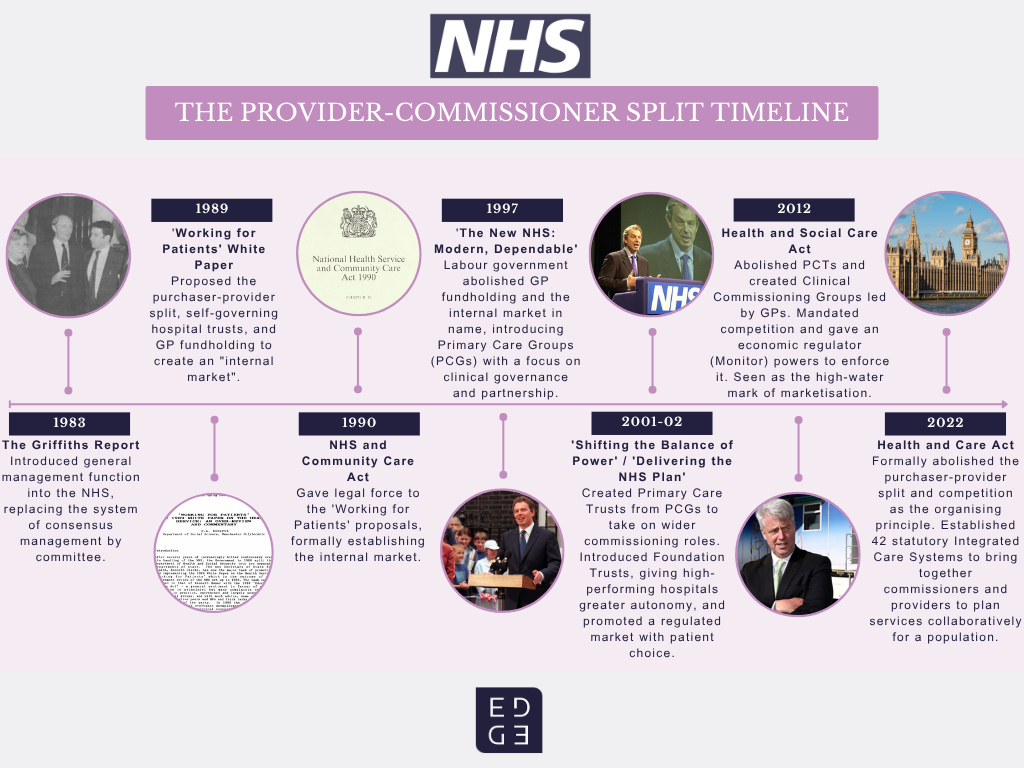
The 1989 Working for Patients white paper blew this model apart, introducing the “purchaser-provider split” that would define the NHS for the next thirty years. The theory was simple: separate the buyers of care (commissioners) from the sellers (providers) and let competition drive everything forward. Money was the carrot – and the stick.

What followed, however, was a dizzying series of reorganisations, as successive governments tweaked the model, moving from GP Fundholding to Primary Care Trusts and finally to Clinical Commissioning Groups (CCGs). This market-based philosophy reached its peak with the 2012 Health and Social Care Act, which put competition at the very heart of the NHS.

Timeline of NHS policies on the provider-commissioner split that led to the creation of ICBs and the premise for IHOs (Image credit: Edge Health)

The market’s hangover

By the mid-2010s, it was clear the market experiment had struggled to deliver, and left a legacy of fragmentation. One could argue fragmentation has its merits – less bureaucracy, can drive high activity levels (which, until recently, was the key marker of performance). However, fragmentation shows its flaws when it comes to caring for a population with increasingly complex, long-term conditions. This requires seamless coordination between GPs, hospitals, and community services.

Plus, collaboration becomes an even greater struggle when community and secondary care are made to argue over who gets the slice of the pie needed to sustain services. Under Payment by Results, a hospital admission generates income. This wouldn’t be as much of an issue if prices were truly reflective of costs. In reality, costs change with activity (economies of scale) and often prices aren’t set to the actual cost, translating in significant cross-subsidies to sustain “loss-making” services. This creates a perverse, if logical, reality: moving care into the community isn’t just a different way of working; for a hospital trust, it is a direct threat to its bottom line.

The 2022 Health and Care Act officially buried the purchaser-provider split, establishing integrated care systems (ICSs) to bring everyone back to the same table. But while the law changed, the culture (and the money) didn’t. Today’s integrated care boards (ICBs) are left trying to align the priorities of hospitals and community providers in a system still wired for competition and cost management. This has bred a deep-seated scarcity mindset. For decades, providers have been forced to focus on their own financial preservation, diverting energy from transformation to simply keeping the lights on.

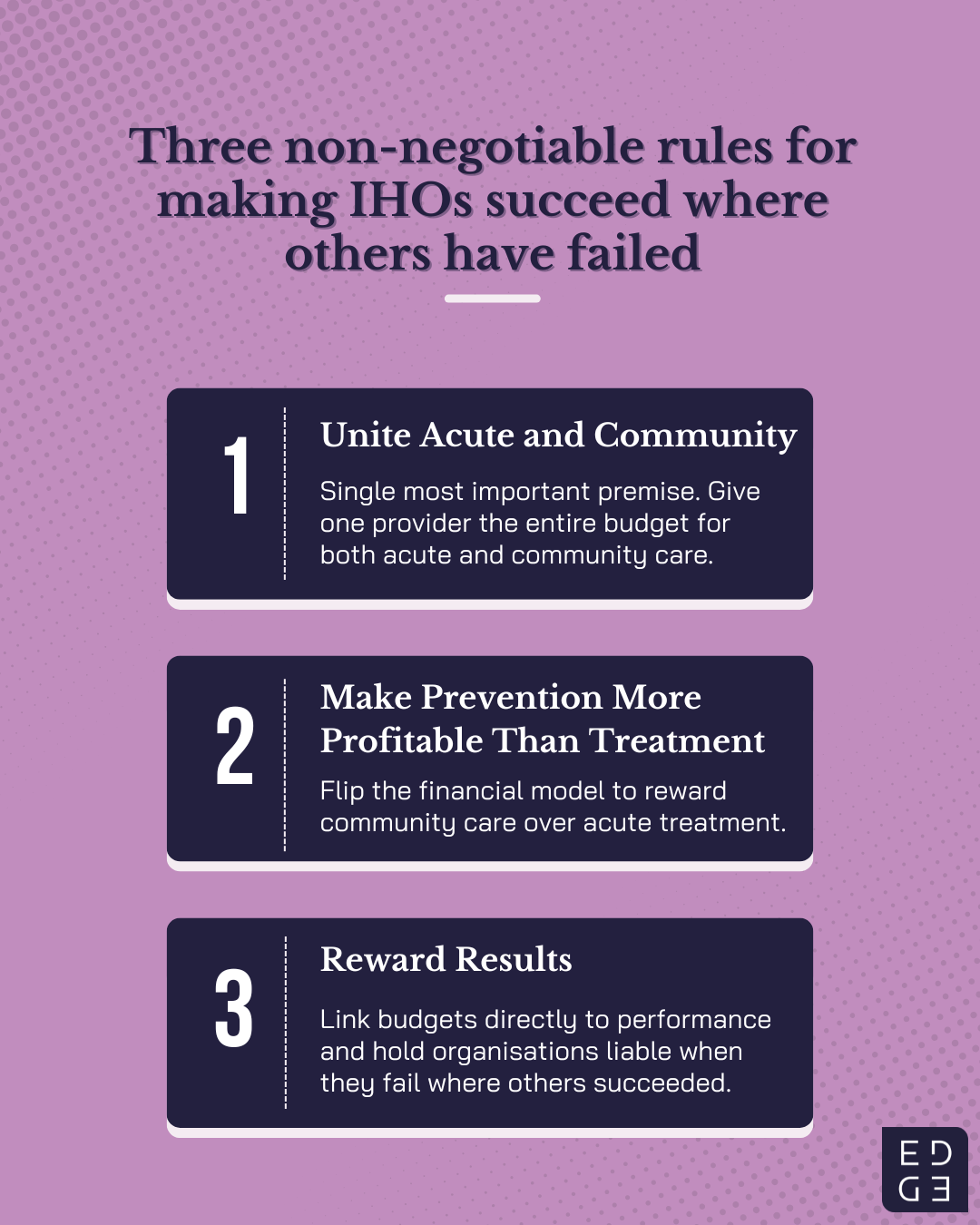
And so, we are back to a single organisation – the IHO. However, this model is fundamentally different from ICBs. If the NHS chose to mimic international counterparts, it would mean giving a single provider organisation total control over the budget for a population’s entire care journey. The hope is palpable: under one leadership and budget, integration could finally become a reality.

Making IHOs work: Follow the money

In dismantling the old command-and-control model, the reforms of the past threw the baby out with the bathwater. A single organisation overseeing both hospital and community care is not inherently a bad idea. The mistake was funding them without sufficient accountability*, and the overall lack of focus on performance, need, outcomes (and data!).

If we are serious about making community and hospital services partners instead of economic rivals, giving a single provider organisation responsibility for the whole patient journey feels like the only way forward. But to break the cycle of perverse incentives we must accept that in healthcare, real change follows the money.

The solution is a tough but effective one: change the payment model to make it more financially appealing for organisations to deliver more activity in the community and less in hospitals (where appropriate, of course). This only works, however, under one non-negotiable condition: the IHO must hold the entire budget for both community and acute care for its population and be fully accountable for the level of quality that it needs to deliver. Without this, you unleash the “NHS Hunger Games” – a turf war where providers are locked in a battle for their own survival.

By giving a single IHO control over the whole budget, shifting care from a costly hospital bed to a more efficient community setting** suddenly becomes the most rational financial choice. This requires two bold moves:

  • Direct investment: We must supercharge community services to build their capacity. Ideally, this would be an “invest-to-save” model, paying a premium for care delivered out of hospital. A more painful but perhaps necessary alternative would be to pay less for hospital activity that could have been delivered in the community.
  • Tied funding: The IHO’s budget must be linked to both population need and performance. Organisations struggling to meet population needs where others in similar contexts (deprivation, demographics) have succeeded would need to be held accountable and undergo greater scrutiny to fix the drivers or be financially liable.

Betting on prevention

One obvious critique of the above is that paying community activity at a “premium” doesn’t actually save any money – at best, if funds are moved away from the acute setting, it would achieve a net neutral scenario. But here’s the key – this shift is not going to suddenly unlock billions of savings overnight. However, it feels like the necessary carrot to drive a behaviour change: invest more in prevention, rather than focus all efforts on treatment. Currently, with a healthcare infrastructure that favours acute treatment from a financial, structural and capital point of view, there’s just not enough incentives to move activity out of hospitals.

Leaders should be making a bet: that a behaviour shift favouring prevention and community care will truly deliver a healthier population. There are very good grounds to believe it true. But we can’t expect an overnight change, that’s not how physiology works. We are unlikely to see true savings for a decade at least – but it’s a worthy investment.

Three rules to make IHOs work in the NHS where others have failed (Image credit: Edge Health)

A call for bold leadership

The foundations for IHOs have already been laid by Provider Collaboratives. In places like Cheshire and Merseyside, hospital trusts are already working together at scale – and won an HSJ award in 2023 for working together to eliminate long waits. If these collaboratives were given control over a single, population-based budget and the freedom to reward prevention over cure, we might finally achieve the integration we have been promised for so long.

Of course, that is if we can eventually shift collaboratives towards conglomerates that function more as a unit (operationally, digitally, workforce-y…) rather than a chimera of different interests and operating models.

Navigating this transition will be complex, and leaders will need to be bold, grasp the nettle of financial reform to really build the integrated system that patients deserve, and staff have long been promised, rather than just shuffling chairs on the deck – again.


* In the pre-1990 DHA times, a hospital received its budget as a block grant at the start of the year, and any unspent surplus was often clawed back by the authority, creating an incentive to spend the entire allocation regardless of efficiency. There was no meaningful relationship between the funding a DHA received and the number of patients its hospitals were treating. This offered limited incentives for hospitals to innovate, improve productivity, or take on additional work. Additionally, there was no independent external agent with the power or incentive to challenge its performance. If a hospital was inefficient, its waiting list would grow.

** Research from NHS Confederation found that “On average, systems that invested more in community care saw 15 per cent lower non-elective admission rates and 10 per cent lower ambulance conveyance rates, both statistically significant differences, together with lower average activity for elective admissions and A&E attendances.”

About the author

Lucia De Santis is a Consultant and NHS-trained medical doctor. She is passionate about engaging workforce in healthcare improvements, evidence-based transformation and operational strategy. Her unique insights add depth and human element to data analysis, literature review and visualisation.