Featured, Op-Ed, Partners, Thought Leadership

Respiratory innovation must not eclipse the ‘brilliant basics’ of asthma care
By

Dr Jason Suggett, Vice President, Medical and Scientific Affairs at Trudell Medical International, discusses why respiratory innovation must not come at the expense of the ‘brilliant basics’ of asthma care.


Respiratory medicine is undergoing an exciting period of medical innovations and evolving approaches. Most notably for asthma patients, the growing use of biologics and emphasis on Maintenance and Reliever Therapy (MART). These developments are driving discussions and transforming outcomes for patients. In the UK we have the worst death rates for lung conditions in Western Europei, and so these advances deserve recognition and advocacy.

However, there are fundamental interventions that we know underpin effective respiratory treatment for the vast majority of patients. According to Asthma + Lung UK’s latest findings, just 32 per cent of people with asthma in the UK receive good basic care. This is a worrying drop from 40 per cent before the pandemicii. In this case, the three components of basic asthma care were inhaler technique training, having a personalised asthma action plan (PAAP) and annual asthma reviews.

Inhaler technique training – a key pillar of basic care

Technique training is necessary to ensure the patient is using their inhaler correctly and getting the most from their treatment.

There are two main types of inhaler devices: pressurised metered-dose inhalers (pMDIs), which use a pressurised aerosol to propel the medication out of the device, and dry powder inhalers (DPIs), which use the patients’ inhalation energy to break down a powder medication into smaller particles that can reach the lungs. DPIs rely on the patient generating sufficient inspiratory flow, meaning device choice should take account of an individual’s inspiratory ability, dexterity, cognition and ability to use the device correctly. This can be particularly relevant for some very young, frail or acutely unwell patients.

It is estimated that up to 80 per cent of people have incorrect inhaler technique.iii Focusing on pMDIs, which account for 70 per cent of inhaler use,iv one key difficulty is the coordination required between actuation and inhalation. An inability to master this can have a major impact on medication reaching the lungs. The consequences of poor coordination can be substantial. In one functional respiratory imaging study, a 0.5-second delay between pMDI actuation and inhalation was associated with a marked reduction in predicted lung delivery, with predicted lung delivery falling to around 1 per cent under the specific conditions modelled.v

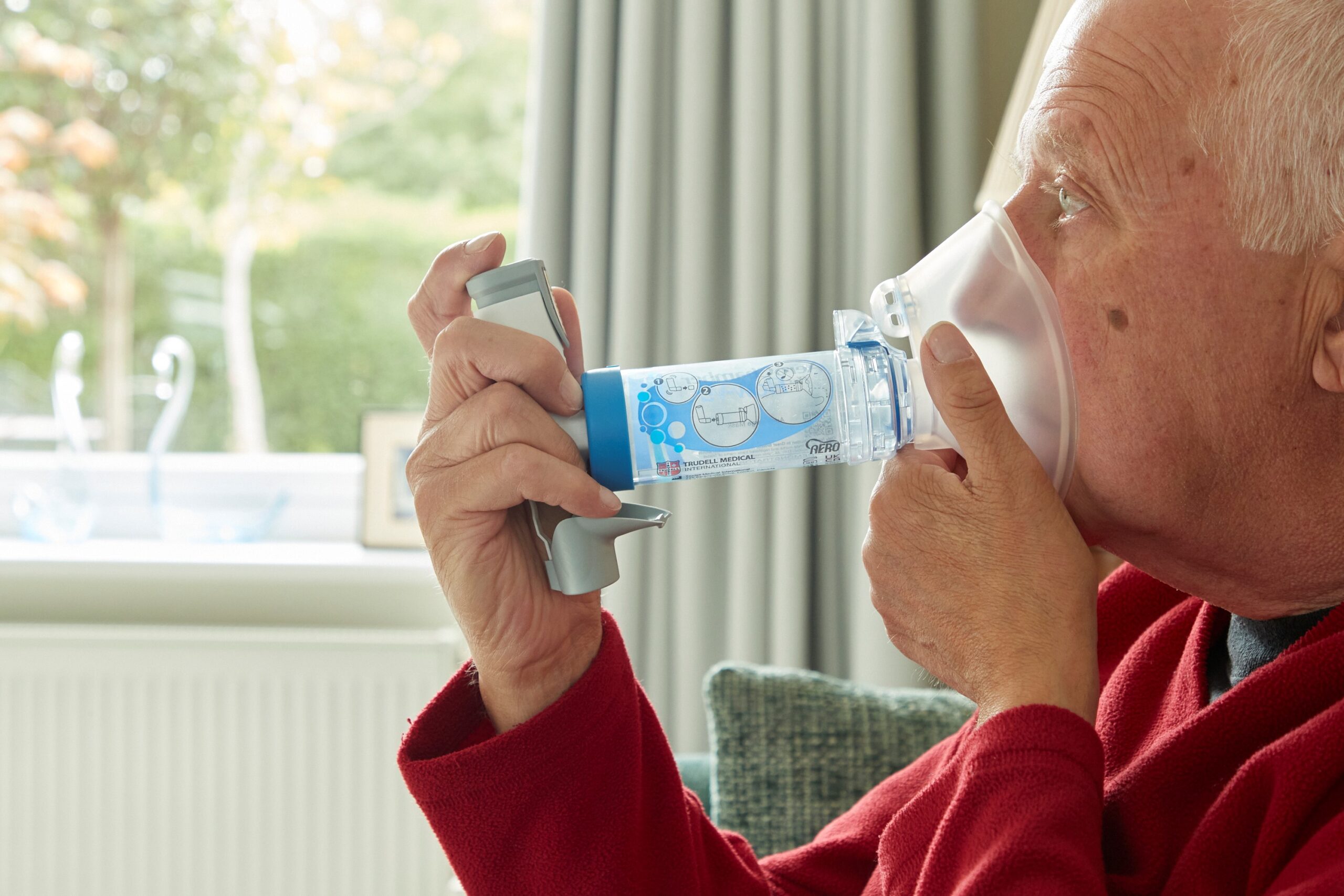
While pMDIs continue to help millions manage their disease in the UK, patients may not be aware they aren’t receiving the intended dose of medication into their lungs. Utilising spacers, or Valved Holding Chambers (VHCs), can give patients confidence that they are consistently receiving the intended dose, even with poor pMDI techniquevi.

For patients using pMDIs, spacers or valved holding chambers can reduce the coordination demands associated with actuation and inhalation, and can improve drug delivery where technique is suboptimal. They can also reduce oropharyngeal deposition of inhaled medication.vii However, they do not remove the need for patients to receive and regularly revisit inhaler technique training.

Basic technique training and consideration of spacers must not fall into a professional niche or become a treatment afterthought, as ensuring correct inhaler technique brings important benefits for HCPs too. Before escalating or changing therapy, clinicians need confidence that the prescribed treatment is actually being delivered effectively. Poor inhaler technique can otherwise be mistaken for treatment failure, potentially leading to unnecessary escalation while the underlying problem remains unresolved.

PAAP – not just a piece of paper

Every asthma patient should have, and be familiar with, their Personalised Asthma Action Plan (PAAP). This ensures they can get the most from their treatment and know where to turn in the event of changes to their condition or exacerbations. Absence of a Personalised Asthma Action Plan (PAAP) is linked to poor health outcomes, including a heightened risk of death.viii A PAAP turns a consultation into something a patient can act on after they leave the pharmacy, practice or clinic. It gives people clear instructions about their usual treatment, what to do when symptoms worsen, and when to seek urgent help. Community pharmacists are particularly well placed to reinforce this understanding during routine medicines interactions, especially where a patient appears uncertain about their preventer, reliever or escalation plan.

A good review should assess symptom control and exacerbation history, confirm the diagnosis where appropriate, review adherence and triggers, and check that the patient can use their inhaler correctly and understands their PAAP.

There are three core components of a PAAP:

  • The routine medication that a patient should take to stay well, and how to take it
  • What to do if asthma symptoms worsen
  • What to do in the case of an exacerbation and when patients should call emergency services.

Asthma patients making uninformed decisions in any of these three circumstances puts their health at risk and prevents the health system caring for them in the most effective way.

Asthma reviews – the opportunity for intervention

People with asthma should receive an annual review to assess their condition and review their treatment. These appointments run upstream from inhaler technique and PAAPs. This is the opportunity for HCPs to establish, check, and if necessary, adapt all aspects that contribute to their patient’s self-management of their condition.

An asthma review should: check and explain diagnoses, assess asthma control and frequency of exacerbations, check peak flow, review triggers and other contextual factors. As mentioned, two of the most critical points of asthma reviews is to check and improve inhaler technique and PAAPs. Just increasing the number of people with asthma who have their inhaler technique reviewed would save over £7 million per year, as well as offer a 70 per cent reduction in hospital bed days amongst people with asthma.ix

Ideally, reviews would always be conducted in person, but we must be realistic about patient preferences. Therefore, GP practices should be offering a choice of video, phone and face-to-face options to their patients, with the goal of encouraging as many people with asthma to attend as possible.

These interventions should not be confined to the annual GP review. Community pharmacists have repeated contact with people using asthma medicines and can identify warning signs that may otherwise be missed: frequent reliever requests, uncertainty over inhaler technique, confusion following a device switch, or poor understanding of a PAAP. Each interaction represents an opportunity to reinforce technique, identify deteriorating control and signpost or refer where appropriate.

Respiratory bodies building momentum for better care

There are positive signs that respiratory care can reapply emphasis to these long-standing essentials. The UK Inhaler Group (UKIG), supported by Primary Care Respiratory Society (PCRS) and the Association of Respiratory Nurses (ARNS), has released a new Consensus Guide to drive consistency in spacer prescribing across the NHS. The guide was supported by a grant provided by Trudell Medical. Trudell Medical had no editorial control other than to check factual accuracy.

Secondly, the National Respiratory Transformation Partnership (RTP) is setting out its aims to revolutionise respiratory care by 2028. It plans to prioritise community settings, proactive prevention and improve long term management, alongside expanding new treatments, with an ambition to deliver better outcomes across the NHS.

I often hear excitement from colleagues in pharmacy or general practice surrounding new inhalers, biologics and other innovations, but we must ensure attention remains on the fundamentals and gives due consideration to the millions of people in the UK using pMDIs.

Getting the brilliant basics right across general practice, community pharmacy and hospital care would represent a major step forward for respiratory outcomes. That means routinely checking inhaler technique, ensuring patients understand and use their PAAPs, and making every review or medicines interaction an opportunity to identify poor control – reducing the two-thirds of asthma deaths in the UK that could be prevented with better basic care.x

New therapies will continue to transform respiratory medicine, and rightly so. But innovation should add to the fundamentals of good care, not distract from them. If we can combine both, we stand a much better chance of reducing avoidable exacerbations, hospital admissions and asthma deaths.


Dr Jason Suggett

Dr Jason Suggett is Vice President, Medical and Scientific Affairs at Trudell Medical International, a manufacturer of aerosol drug delivery and lung health devices, including spacers, for the management of respiratory conditions.

A pharmacist by training, Dr Suggett practiced in Newcastle prior to completing a PhD in pharmaceutics at the University of Sunderland. A leading voice in respiratory technology, he has coordinated a large number of clinical/scientific studies and published extensively in the field.

His industrial career spans 30 years at the forefront of respiratory devices and technology. Starting at 3M Healthcare, Dr Suggett spent a decade in research and development on metered dose inhalers (MDIs) before joining Teva and becoming responsible for European respiratory products. Dr Suggett moved to Portugal as Director of Pharma Operations at Hovione, leading all drug product development. He joined the leading respiratory device company, Trudell Medical International, in 2012 and since being there has overseen product development, medical and scientific affairs.

Dr Suggett is a member the European Pharmaceutical Aerosol Group and also was part of the United States Pharmacopeia General Dosage Forms Expert Committee and Inhalation Sub-Committee from 2010-2020.


References

iAsthma + Lung UK. Lung conditions kill more people in the UK than anywhere in Western Europe. 2022.
iiAsthma+Lung UK. Life with a Lung Condition 2025 Basic care briefing December 2025. 2025.
iiiGlobal Initiative for Asthma (GINA). Global Strategy for Asthma Management and Prevention 2021.
ivhttps://www.selondonics.org/icb/healthcare-professionals/medicines/transforming-and-integrating-medicines-optimisation/sustainability/reducing-the-greenhouse-gas-emissions-associated-with-inhaler-use/
vSuggett J et al. The Impact of different Valved Holding Chambers (VHCs) on Lung Drug Delivery: Using Functional Respiratory Imaging (FRI) and a single Metered Dose Inhaler (MDI) type European Respiratory Journal. 2020;56:4015.
viDorinsky P, DePetrillo P, DeAngelis K, Trivedi R, Darken P, Gillen M. Relative Bioavailability of Budesonide/Glycopyrrolate/Formoterol Fumarate Metered Dose Inhaler Administered With and Without a Spacer: Results of a Phase I, Randomized, Crossover Trial in Healthy Adults. Clin Ther. 2020;42:634-648.
viiGlobal Initiative for Asthma (GINA). Global Strategy for Asthma Management and Prevention 2021.
viiiRoyal College of Physicians. Why asthma still kills. 2015.
ixAsthma + Lung UK. Saving Your Breath. 2023.
xAsthma + Lung UK. All puffed out. 2026.

Featured image credit: Trudell Medical UK


News, Op-Ed, Systems, Thought Leadership

Strategic commissioning is back. But here’s why it won’t work.

By

As NHS England seeks to rebuild strategic commissioning capability, ICBs face mounting pressure to deliver better outcomes with fewer resources. Without stronger accountability, better use of data and a commitment to value-based healthcare, the latest reforms risk repeating the shortcomings of previous commissioning models.


NHS England recently put out a £7 million tender for a structured action learning service – called the Strategic Commissioning Development Programme – to rebuild what the procurement document describes as fifteen years of eroded “commissioning capability, authority and confidence”.

Integrated care boards (ICBs), which between them are stewards of over £130 billion of NHS funding, are being asked to deliver population-based, outcomes-focused commissioning while simultaneously cutting their staff spend by 50 per cent.

Over the years the NHS has seen the introduction of practice-based commissioning, world-class commissioning, and now strategic commissioning. Each iteration has sought to have the right structures in place to enable the same outcomes. And each time, we have reorganised staff and their functions, losing valuable skills and expertise in the process.

Fundamentally, at its core, the goal is to elevate the way the NHS collects, analyses and uses data to ensure the planning, purchasing and evaluation of services delivers the best possible health outcomes and greater value for a population.

Data-driven decisions for social good

How we use data for more value-driven healthcare was a core theme at a roundtable I recently chaired with NEC Health and some of the sharpest minds working at the intersection of data, health outcomes, and NHS decision-making.

We discussed how the NHS doesn’t use patient outcome data for decision-making – at least, not systematically. It has commissioning structures that reward activity, measures throughput, and defines success in terms of actions rather than results.

Strategic commissioning, if done properly, could resolve this issue. As could value-based healthcare, population health management and/or the neighbourhood health model.

At the roundtable discussion, we kept returning to the question of accountability. We don’t need more strategy, guidance or another reorganisation. Specifically, we need to tackle who owns the problem that the data reveals, who is responsible for acting on what the evidence shows, and what happens when they don’t.

And as the NHS Confederation has noted recently, at a time when ICBs are reducing their headcounts and actively losing commissioning capacity, they are being asked to take on a new iteration of commissioning at a significant pace.

The reorganisation that created ICBs was, in many respects, the right direction of travel – bringing together health and care at a system level, creating the conditions for population-level thinking.

But organisational memory doesn’t transfer automatically when you restructure. And the skills required to commission for outcomes rather than activity – to deliver genuine value-based healthcare and to hold providers to account for what care achieves rather than how much of it they deliver – take years to develop.

Asking ICBs to simultaneously shrink, restructure, and become sophisticated strategic commissioners within five months of a new framework being published is nigh on impossible.

Stop reinventing the wheel

The irony is that a lot of the skills and expertise needed to achieve this shift already exist. In my role at the newly launched Data Observatory, I chair a council of fifty specialists working across NHS data, analytics, outcomes, and commissioning. The knowledge required to do this well – to evolve the data infrastructure and accountability frameworks that strategic commissioning (and value-based healthcare) actually needs – sits with these individuals.

So, we need to look at the current operating model for the NHS and the intended plans for commissioning, against this backdrop of reorganisation and change, and find a way to deliver meaningful change.

It’s therefore critical that we stop trying to reinvent the wheel.

Let’s embed value-based healthcare into the new strategic commissioning plans – as it is rather than hidden or diluted – and empower the NHS to deliver it.

With the introduction of the new neighbourhood health integrators (INTs) and place partnerships, there’s an opportunity to drive this forward.

For example, in London, Central London Community Healthcare (CLCH) could be given the freedom and autonomy, as part of their advanced foundational trust status, to deliver value-based healthcare. And as a lead integrator in parts of North West London, they could syndicate this across the boroughs quickly and effectively.

Data Observatory experts have already designed a playbook on value-based healthcare, defining key terms, measures, and data sources to drive outcomes, reduce waste, and improve population health. This, alongside the CLCH example, could be supercharged to make the neighbourhood health delivery from concept to reality, driven by evidence and evaluated by the impact of the services.

Therefore, the real question is whether the Strategic Commissioning Development Programme will look to build on existing foundations or construct something parallel to them.

If it doesn’t embed value-based healthcare into its operating model and empower place-based teams like INTs to deliver locally, it risks running for two years and spending £7 million, all while leaving the system broadly where it found it.

We need to look honestly at the ‘new’ plans for strategic commissioning and recognise what’s already achievable to deliver outcomes-driven health and care. In the hope that, if there is another reorganisation, we’ve made enough tangible progress that it can survive what comes next.


Hassan Chaudhury is Commercial Director at DATA-CAN: The Health Data Research hub for Cancer
Digital Implementation, Op-Ed

Could new imaging technology free over one million appointments?

By

With demand for diagnostic imaging continuing to rise, could digital tomosynthesis help reduce unnecessary CT and MRI referrals? Dr Siân Phillips, NHS Consultant Radiologist and Chief Medical Officer at Adaptix, explores the evidence.


Every radiologist I know has watched the same story unfold over the past decade: demand for diagnostic imaging rises year on year while the capacity to deliver it struggles to keep pace.

A 2025 analysis of NHS England’s Diagnostic Imaging Dataset illustrates the scale of change. CT activity rose by 60 per cent between 2016/17 and 2023/24 while MRI activity increased by 31 per cent. This is not simply a post-pandemic effect, but a sustained increase in the amount and complexity of imaging modern healthcare requires.

Much of that growth is positive. Earlier and wider use of imaging in cancer, neurological and other pathways can improve diagnosis and treatment. GP direct to imaging has created routes to diagnosis that do not always require an initial secondary-care consultation, although access and capacity continue to vary between areas, and Community Diagnostic Centres are bringing additional diagnostic capacity closer to patients.

But adding scanners is only part of the answer.

Imaging capacity depends on having the workforce to protocol, perform, interpret and act on examinations. The Royal College of Radiologists’ latest workforce census reports a 32 per cent shortfall in UK clinical radiology consultants, with more than 2,300 additional radiologists needed to meet current demand. The College projects that gap could rise further by 2030. The result is not simply pressure within radiology departments but delays throughout patient pathways, including substantial reporting backlogs after imaging has already been performed.

Rising demand and the limits of existing imaging pathways

Minor injury and emergency care provide a useful example of where pathways might be improved. Conventional X-ray remains the appropriate first-line examination for most suspected extremity fractures: it is fast, relatively inexpensive, low dose and widely available. But a two-dimensional image inevitably superimposes anatomy, so subtle fractures in complex areas such as the wrist, ankle and foot can be difficult to identify.

When an X-ray is normal or equivocal but clinical suspicion remains, patients may be immobilised and brought back for follow-up, undergo repeat radiographs, or be referred for CT or MRI. Each option can be entirely appropriate, but each also consumes additional appointments, clinical time and, in some cases, scarce cross-sectional imaging capacity.

NHS Resolution’s review of missed-fracture claims illustrates some of the vulnerabilities in this pathway: In many cases an appropriate X-ray had been obtained but image interpretation and follow-up were points of failure. The lesson is not that radiography is unsafe; rather that safe pathways depend on the quality of information available when decisions are made, alongside robust reporting and safety-netting.

The potential of digital tomosynthesis

This is where digital tomosynthesis deserves consideration. It uses multiple low-dose X-ray projections to reconstruct sectional images, reducing the problem of overlying anatomy. In musculoskeletal imaging, this can provide more anatomical information than a conventional radiograph without requiring a CT examination.

It is equally important to be clear about what tomosynthesis is not. It does not replace CT or MRI. CT will remain necessary for complex trauma and some surgical-planning questions, while MRI is required where marrow, ligament, tendon, cartilage or other soft-tissue pathology is the principal concern. The potential value of tomosynthesis is more targeted: Resolving selected cases at the point of first presentation where conventional radiography does not provide enough confidence.

Published musculoskeletal literature provides an emerging evidence base for this role, including applications in occult fracture detection and scaphoid assessment. However, the evidence is not yet uniform across indications and much of it comes from relatively small or retrospective studies. That makes prospective pathway evaluation essential.

That distinction is significant because the potential system benefit comes not from replacing cross-sectional imaging entirely but from avoiding some unnecessary escalation to it.

If a proportion of patients who currently progress from an equivocal radiograph to CT or MRI can instead have the clinical question resolved at first presentation using tomosynthesis, some cross-sectional imaging referrals could be avoided. That could shorten individual patient pathways while releasing CT and MRI capacity for patients who genuinely require those modalities.

Assessing the potential impact on NHS imaging capacity

We have modelled that potential impact using early-adopter data and assumptions around appropriate extremity imaging pathways. On that basis, national adoption could potentially release more than one million CT and MRI appointments annually in England.

This is a modelled estimate, not an observed NHS outcome, and it will need prospective validation in routine clinical pathways.

That validation should test what proportion of cases are genuinely suitable for tomosynthesis; how often it changes diagnostic confidence or management; how many CT and MRI referrals are actually avoided rather than delayed; and the effects on repeat attendance, reporting workload and overall cost.

This direction is consistent with wider NHS policy. The 10 Year Health Plan emphasises moving care from hospital to community and from analogue to digital, while GIRFT has focused on ensuring imaging is delivered in the right place and at the right time. Community Diagnostic Centres are one expression of that ambition. Another should be considering whether clinicians seeing patients first have access to the most appropriate imaging technology for the decisions they need to make.

There may be future applications for compact point-of-care 3D imaging beyond current orthopaedic and trauma pathways, including other community or resource-limited settings. Those possibilities require separate evidence, evaluation and regulatory approval and should not be confused with established capability today.

None of this removes the need to address radiology workforce shortages. But if imaging demand continues to grow faster than the workforce, capacity needs to be approached from both directions: Expanding services where they are required while safely reducing avoidable demand on CT and MRI.

Better imaging, available earlier and closer to the patient, could help us do both; improving the first diagnostic decision while protecting higher-end imaging capacity for the patients who need it most.