News, Systems, Thought Leadership

Findings from wound care demonstrate value promise in NHS

By

The latest report from Public Policy Projects demonstrates that wound care procurement is leading the discussion about embedding value at the heart of a reforming healthcare system.


  • Experts restate need for procurement focus to shift from short-term cost-cutting to long-term value creation.
  • Report highlights population health management as the analytical engine of value-based procurement, enabling systems to link data, reduce unwarranted variation, and design services that reflect true patient need.
  • Embedding cultural reform and workforce empowerment are noted as essential to translate value-based procurement into everyday practice.

A new report from Public Policy Projects (PPP) argues that value-based procurement in wound care could unlock significant efficiency gains across the NHS. Smarter spending, better care examines how procurement teams and clinicians are embedding value principles into one of the health service’s most resource-intensive yet under-recognised areas of care, and identifies the cultural, analytical and institutional barriers that must be addressed to realise its full potential.

Read the full report here.

Drawing on insights from a multi-stakeholder roundtable chaired by Sian Fumarola (Head of Clinical Procurement at NHS North Midlands and Black Country Procurement Group), the report explores how value-based procurement (VPB) can move from a policy ambition to operational reality.

As the NHS seeks to translate the ambitions of the 10-Year Health Plan and Life Sciences Sector Plan into practice, roundtable participants were keen to look beyond the DHSC’s guidance (covered in PPP’s preceding report). Delegates underscored that the success of that guidance depends on ‘winning hearts and minds’ across the clinical and financial divide. As Sian Fumarola observes, “It is clear, now, that we stand at a pivotal moment for the NHS. The 10-Year Health Plan gives us a clear directive and, despite its complexities, offers exciting opportunities.”

The report positions wound care as a test case for wider procurement reform. It shows how shifting from cost-driven to value-led decision-making can improve patient outcomes and strengthen workforce efficiency. Participants emphasised that traditional, cost-driven procurement models fail to capture the long-term, downstream benefits of innovation and collaboration.

A central conclusion of the roundtable was that population health management (PHM) is not an optional tool, but the core analytical engine necessary to make VBP practically functional. PHM is defined as a proactive, data-driven approach leveraging high-quality intelligence to align resources with the needs of the population. It allows systems to move beyond generalised care by analysing local, linked, longitudinal data to identify distinct patient cohorts based on shared characteristics, geography, or underlying social determinants of health.

This capability enables providers to differentiate between warranted and unwarranted variation in care, allowing services to be designed in ways that truly reflect specific patient needs. Procurement decisions can reflect the local burden of wounds, ensuring investments target efficiency and improved patient outcomes where they are most needed.

Read the full report here.

Recommendations

  1. Clinical, financial and procurement teams must receive adequate training on value-based methodology, establishing common agreements on parameters, outcome measurement and project management.
  2. NHS procurement should incentivise honest, longer-term commercial strategies from industry partners by promoting accountable contract management arrangements, including risk-sharing.
  3. Integrated care boards (ICBs) should endeavour to establish an overview of the local burden of wounds by integrating datasets from acute, primary, community and social care. The objective should be actionable insight: ensuring timely and sufficiently reliable data can inform decision-making, even if data sets are not fully complete.
  4. ICBs should invest in population health management capacity to support procurement functions. This includes sufficient resources to link data, deploy intelligence tools, and ensure robust staff training to develop institutional capacity.
  5. Procurement contract management, in accordance with DHSC value domains, must from the outset consider staff impact, system efficiency and patient voice.
  6. Procurement teams should include mandatory outcome definition and evaluation frameworks in all ongoing contracts, working constructively with industry by recognising and incentivising evidence co-production and shared responsibility for outcomes.

Next steps

PPP is planning to continue convening deliberations on value-based healthcare to support ongoing reform efforts. Embedding value as a cornerstone of NHS service delivery, we are collaborating with multidisciplinary partners to provide considered insights and practicable recommendations relevant to system leaders. This will particularly focus on those areas of applicability not currently understood in great details.

If you are interested in engaging with us on this work, please contact: [email protected].

Key information

Coloplast Ltd provided financial support for the organisation of the roundtable from which the report draws. Public Policy Projects retained full editorial control over the roundtable agenda and contents of the report, excluding the case study prepared through support from Coloplast.

About Public Policy Projects

Public Policy Projects (PPP) is an organisation operating at the heart of health and life sciences policy delivery. PPP bring together senior leaders and practitioners in the public and private health and life sciences sectors to find realistic solutions to the most pressing issues relating to health and care delivery.

PPP facilitates effective collaboration between public and private sector organisations. PPP help businesses to grow their profile within the NHS and wider public sector. In turn, we support public sector leaders and organisations with practical recommendations on implementing policy to improve health and wellbeing outcomes for local populations.

Media enquires

For further information, or to request interviews, please contact: Fredrik Matre, Programme Executive, [email protected]

What new social care standards mean for neighbourhood care

By

By Dr Rowan Sil, GP Partner in North West Leicestershire and Chief Clinical Information Officer, Leicester, Leicestershire and Rutland Integrated Care Board.


The recent national standards of care published by the Social Care Institute for Excellence (SCIE), developed in collaboration with sector partners including The Access Group, mark an important moment for the whole health and care system.

While it has been published to directly inform the government’s Casey Commission on the future of adult social care, it’s also created a live opportunity to influence how social care is structured to support neighbourhood health, prevention and integrated working with primary care.

One experience, one set of expectations

The principles set out in SCIE’s report – dignity, continuity, coordination, transparency, safety and person-centred care – mirror what the NHS has spent years embedding clinically.

They’re not uniquely social care ambitions, but rather, universal standards of good health and care services. And as integrated care systems (ICSs) are asked to shift more activity into communities, prevent avoidable hospital admissions and manage long-term conditions closer to home, the alignment between health and social care becomes even more critical.

The ambitions for neighbourhood health-based teams will not be deliverable if there are mismatched expectations. Primary care, which sits at the centre of the integration and delivery, will be a crucial piece of the puzzle.

Primary care teams coordinate long-term condition management, oversee frailty, support housebound patients, navigate mental health services, and liaise daily with community nursing and social care teams. In reality, primary care is where fragmentation shows up first – through repeat appointments, crisis escalation, safeguarding concerns and avoidable admissions to the acute sector.

The introduction of clear national standards across social care offers something long overdue – a shared baseline of quality and accountability for the services GPs work alongside every day.

When social care is consistent, coordinated and properly supported, it reduces reactive workload in other areas, such as primary care, and improves outcomes.

When it isn’t, general practice absorbs the pressure.

The housebound use case

Few examples illustrate this better than housebound patients with multiple long-term conditions. These individuals often rely on GPs for clinical oversight, community nurses for ongoing treatment, social care teams for daily living support and family carers for informal care.

By aligning standards of communication, continuity of care and coordination, we can avoid missed information becoming a clinical risk, delayed responses escalating into emergencies and unclear ownership leading to duplication and unscheduled GP contacts in a pressured service.

Technology as the practical enabler

However, aligned national standards will only succeed if they are underpinned by digital infrastructure that supports coordination, clarity and accountability in everyday practice.

Shared records, real-time care planning and interoperable platforms can form the backbone of neighbourhood working, but only where there are clear rules on authorship, amendment and responsibility when information is incorrect or disputed.Without this, uncertainty is simply digitised and frontline teams revert to duplication and risk-avoidance.

A shared system doesn’t automatically create shared accountability. It creates a shared surface for information. Many of the real risks in neighbourhood care sit in the space between organisations – shared care plans, safeguarding context, frailty notes and social care packages. These require explicit ownership, version control and clear routes for challenge and correction.

We need to get to a point where closed-loop working becomes the norm: structured messages linked to records, shared artefacts with named ownership, and tasking that is acknowledged, time-bound and escalated when appropriate.

Therefore, the best way to approach shared care is the same way we approach prescribing: define the pathway, define responsibilities and define escalation.

This means:

  • Source record – each organisation remains responsible for the record it authors, such as the GP clinical record, community nursing notes or the social care case record.
  • Shared view – neighbourhood teams can access what they need for direct care, using role-based access and a clear purpose for use.
  • Shared artefacts – where services genuinely collaborate, such as care plans, crisis plans or RESPECT forms, there should be a named service owner, an agreed change process and a meaningful audit trail.

For primary care, this means less time chasing information in a crisis and more time delivering proactive support. Without digital enablement, national standards risk raising expectations without fixing the operational reality.

Delivering action

However, for these standards to deliver real impact, they have to be embedded into commissioning decisions and contracts, reflected in regulation and inspection, supported by workforce investment, enabled through digital infrastructure, and treated as a system priority by ICSs/neighbourhood health teams.

In addition, as primary care takes on a pivotal role in the evolving health and care system, it is essential that we actively contribute to integrating and implementing standards at the local level. For GPs to trust shared working, we need a system where accountability is baked in, not discovered after the first serious incident.

And, if policymakers are serious about neighbourhood care, prevention and reducing pressure on general practice, social care must be equipped to operate to consistent national expectations – supported by funding, workforce planning and modern digital tools.

Neighbourhood care is only as strong as the weakest part of the system supporting it. SCIE’s standards and the Casey Commission can create credible foundations for change, not just for social care, but for all the health and care professionals involved in the ‘one care journey’ our citizens expect.

News, Systems, Thought Leadership

Neighbourhood health takes centre stage: new framework sets direction for integrated care

By

A shift to neighbourhood-level delivery, prevention, and partnership working signals a decisive evolution in how integrated care is expected to function across England.


The government’s Neighbourhood Health Framework sets out a clear expectation: integrated care must now be delivered at a far more local, granular level, with neighbourhoods becoming the engine room of reform. Framed as a practical blueprint rather than a wholesale structural overhaul, the document reinforces a direction of travel that has been emerging for years (towards joined-up, preventative, community-based care) but with a sharper emphasis on delivery, consistency, and outcomes.

At its core, the framework positions integrated neighbourhood working not as an optional model, but as the default operating model for the NHS and its partners. It signals a maturation of integrated care systems (ICSs), moving from system-level architecture to frontline, place-based implementation.

Key takeaways

  • Neighbourhoods become the primary unit of delivery, typically serving populations of 30,000–50,000
  • Integrated care is operationalised through multidisciplinary teams, not just governance structures
  • Prevention and population health management are elevated as core system responsibilities
  • Primary care is reaffirmed as the coordinating hub, but within broader partnerships
  • Community services and local government play a central role, particularly in addressing wider determinants
  • Digital and data-sharing capabilities are essential enablers, not optional enhancements
  • ICBs are expected to enable, not control, with greater emphasis on local autonomy and delivery

From systems to neighbourhoods

The framework affirms the transition from system-level integration to on-the-ground execution. While ICSs remain the overarching structure, the document argues clearly that meaningful change will be delivered closer to communities. Neighbourhoods are defined as the scale at which:

  • Relationships between professionals can be sustained
  • Local population needs can be understood in detail
  • Preventative interventions can be targeted effectively

This reflects a recognition that large-scale system integration alone has not been sufficient to shift outcomes. Instead, patients must experience integration through local, responsive, connected services.

Integrated neighbourhood teams are the core

A central pillar of the framework is the expectation that care will be delivered through integrated neighbourhood teams (INTs). These teams bring together professionals from across sectors, including:

  • General practice and primary care networks
  • Community health services
  • Mental health services
  • Social care
  • Voluntary and community organisations

The framework emphasises the need for shared responsibility for a defined population, rather than organisational silos. Teams are expected to move beyond coordination towards genuine co-delivery of care. This model builds on existing primary care networks but expands their scope significantly, positioning them as part of a broader ecosystem rather than standalone entities.

Read the Neighbourhood Health Framework in full here.

The place of Health and Wellbeing Boards

The Neighbourhood Health Framework confirms Health and Wellbeing Boards (HWBs) as strategic conveners at place level, rather than core drivers of frontline delivery.

While INTs are assigned to lead the day-to-day coordination of care, HWBs are identified as the bodies responsible for ensuring that services are aligned with local population need and long-term strategic priorities, preventing INTs from operating in isolation from the wider system. INTs will instead have their priorities, including target populations and service models, shaped by the area’s Joint Strategic Needs Assessment and the wider health and wellbeing strategy, agreed at place level by HWBs. This is intended to provide some strategic coherence among to local delivery teams.

HWBs are also confirmed as a bridge between the NHS and local government. With prevention and population health management becoming mandatory responsibilities for ICSs, HWBs will also support alignment across public health, social care and wider local authority services.

There is little by way of new powers or responsibilities assigned to HWBs. They will instead need to rely on their convening power to actively shape how neighbourhood models manifest in practice, at place level.

Prevention as a whole system responsibility

A central argument of the Neighbourhood Health Framework is that prevention cannot be delivered by the NHS alone. While this has long been acknowledged in policy rhetoric, the document goes further in setting expectations for how ICSs must operationalise joint working with local government and community partners.

The framework is explicit that the drivers of poor health sit largely outside healthcare services, including housing conditions, employment status, education, social isolation, and access to community support. As a result, neighbourhood health models are expected to embed these wider determinants into day-to-day delivery, not treat them as secondary concerns.

Prevention is no longer framed as an abstract ambition, but as a material shift in how services are designed and delivered. Neighbourhood teams will now be expected to:

  • Identify at-risk individuals through population health data
  • Intervene earlier to prevent deterioration
  • Address non-clinical factors such as housing, employment, and social isolation

This represents a move towards proactive care models, particularly for people with multiple long-term conditions or complex needs.

Rebalancing care towards the community

The framework also expands on the long-standing policy goal of reducing reliance on hospital-based care by strengthening services in the community. Key elements include:

  • Expanded community-based diagnostics and treatment
  • Greater use of urgent community response services
  • Development of “virtual wards” and alternatives to admission
  • Improved access to general practice and continuity of care

Neighbourhood health centres are highlighted as a physical manifestation of this shift, bringing multiple services together under one roof. The intent is to make community settings the default for care delivery wherever clinically appropriate.

Data and digital as foundational infrastructure

The framework places significant emphasis on the role of data and digital tools in enabling integrated care. Neighbourhood teams will require:

  • Shared care records across organisations
  • Real-time data to support decision-making
  • Population health analytics to identify need and target interventions

Digital tools are also expected to support patient access and self-management, although the framework stops short of prescribing specific technologies. The framework is explicit that without interoperable data systems, integration will remain limited in practice.

Workforce and cultural change

Delivering neighbourhood health will require substantial changes to workforce models and professional culture. The framework calls for:

  • Greater multidisciplinary working
  • Flexibility in roles and responsibilities
  • Strong local leadership within neighbourhood teams

It also implicitly challenges traditional hierarchies and boundaries, encouraging a more collaborative, team-based approach. However, it offers little detail on how workforce constraints, already a major pressure point across the system, will be addressed.

What this means for ICBs

For integrated care boards (ICBs), the framework represents both a validation of their purpose, along with some shifts in expectations. ICBs are confirmed as enablers of neighbourhood delivery, rather than central controllers. Their role includes:

  • Allocating resources in ways that support place-based working
  • Aligning incentives across organisations
  • Supporting the development of neighbourhood teams
  • Ensuring consistency while allowing local flexibility

This will require a careful balancing act. On the one hand, ICBs must provide strategic direction and accountability; on the other, they are expected to devolve decision-making to neighbourhoods.

The framework also implies a greater focus on outcomes and impact, particularly in reducing inequalities and improving population health. For many ICBs, this will mean accelerating efforts to:

  • Strengthen partnerships with local government
  • Embed population health management approaches
  • Shift investment towards community services

At the same time, the lack of new funding commitments may present challenges in delivering these ambitions at pace.

A pragmatic but ambitious direction

The Neighbourhood Health Framework does not introduce a radically new vision for integrated care. Rather, it consolidates and sharpens existing policy directions, with a stronger emphasis on delivery at scale.

By making neighbourhood working and care closer to home the default expectations, and codifying ICS’ responsibility for delivering prevention, the framework operationalises much of the policy rhetoric that lay the foundation for integrated care. However, its success will depend heavily on implementation, in particular, the ability of local systems to translate ambitious reforms into tangible changes on the ground.

A sea change for healthcare reform?

The Neighbourhood Health Framework signals a decisive step in the evolution of integrated care in England, shifting the focus from structures to delivery, and from systems to communities.

By placing neighbourhoods at the centre, it seeks to make integration real for patients in the experience of care itself. For system leaders, the challenge now is not understanding the direction of travel, but delivering it at pace, at scale, and in the face of persistent financial and workforce pressures.


Hear from Neighbourhood Health leadership at the Integrated Care Delivery Forum

On 30 April 2026, Public Policy Projects’ Integrated Care Delivery Forum returns to Birmingham, at the Macdonald Burlington Hotel, bringing together senior leaders from across the NHS, local government, voluntary sector and industry.

With a dedicated Neighbourhood and Systems Theatre, the Forum will focus on what it takes to make neighbourhood-led care work in practice, exploring how integrated neighbourhood teams, place-based partnerships and prevention-led models can be delivered on the ground.

The agenda will spotlight frontline insight and national leadership, including contributions from Dr Minal Bakhai, Director of Primary Care and Community Transformation and National Lead for the Neighbourhood Health Implementation Programme at NHS England, alongside a range of system leaders driving change across integrated care systems.

As the policy direction sharpens, the forum offers a timely opportunity for ICBs, local authorities and partners to share learning, tackle delivery challenges, and shape the future of neighbourhood health.

Find out more here.


Comment

Dr Rowan Sil, Chief Clinical Information Officer Leicester Leicestershire and Rutland Integrated Care Board / GP Partner Ibstock & Barlestone Surgeries (NWL PCN):

“The framework sets a clear direction towards integrated, community-based care, which is welcomed. However, its digital dimension remains under-specified where it matters most: operational practice. Digital is framed as an enabler of access and integration, yet there is little clarity on workflow, accountability, or clinical responsibility across organisations.

“This creates a significant risk, particularly for primary care – who are central to the delivery of neighbourhood health models. Digital triage, virtual wards, and proactive models all depend on clear task ownership and risk transfer, which the framework doesn’t define. Without explicit “rules of play,” digital integration may unintentionally drive workload dumping rather than system reform.

“Similarly, while shared records have been assumed, they aren’t sufficient. Shared care requires coordinated workflows, not just visibility. The absence of a defined digital operating model for neighbourhood teams – particularly for asynchronous MDT working – leaves a critical gap.

“To realise its ambition, the framework needs to articulate how digitally enabled care is governed in practice. Without this, it risks delivering access without ownership and integration without accountability.”


Mark Hindle, Managing Director at Tunstall Healthcare:

“The NHS Neighbourhood Health Framework is a significant step towards strategically connected health, social care and community services.

“At Tunstall, we welcome all updates that work to align services and we understand that true healthcare starts at enabling earlier intervention, better decision-making and joined-up, proactive care.

“The real opportunity lies in unlocking data, connecting services and moving telecare from reactive safety net to neighbourhood intelligence infrastructure. However, we must acknowledge that we are not starting from a position of strength on data. In many cases, telecare teams are working with fragmented, inconsistent data, if they have access to it in a usable form at all. 

“It is time for the sector to begin creating opportunities to harness the power of technology that is already in the home, already supporting vulnerable people and already behaviour mapping. This is the only way to create connected solutions and become the backbone for prevention.”


David East, Director, NEC Health:

“The framework provides welcome clarity on the shift toward neighbourhood‑based, primary‑care‑led delivery. Crucially, it recognises that interoperable digital and data‑sharing capabilities are essential enablers rather than optional extras.

“Digital tools that surface early risk signals and support earlier intervention are fundamental to shifting from reactive to preventative care, which is where neighbourhood models can have the greatest impact.

“Neighbourhood teams will also need solutions that provide proactive population‑health insight, streamline triage and referral pathways, and reduce administrative burden on general practice. If done well – which is the critical issue – this creates the conditions for teams to work earlier, more collaboratively and with greater local impact.” 
 

Acute Care, News, Systems

NHS England defines “corridor care” as emergency pressures intensify

By

New guidance from NHS England formally defines “corridor care” and sets safety principles for staff when patients are treated in non-designated clinical areas during periods of extreme pressure.


NHS England has published new guidance defining “corridor care” and outlining principles for providing safe treatment when patients are cared for in non-designated clinical spaces during periods of extreme demand.

The document describes corridor care as the treatment of patients in areas not designed for clinical use, such as corridors or waiting areas, for more than 45 minutes within a 24-hour period. This typically occurs when emergency departments and wards are operating beyond capacity. The guidance states that the practice is “unacceptable” as routine care and should occur only for the shortest possible time in exceptional circumstances.

The guidance also seeks to standardise how corridor care is recorded and escalated across the NHS. Staff are encouraged to document instances where patients are treated in non-designated clinical spaces through established patient safety reporting systems, allowing organisations to track how frequently the practice occurs and identify associated risks.

NHS England says corridor care should trigger escalation procedures within hospitals and prompt action to improve patient flow, such as accelera

Key criteria that define corridor care have been provided to trusts to inform their reporting. If trusts answer ‘no’ to any of the following questions, this confirms an instance of corridor care, according to the guidance:

  • Is the patient in a clinically appropriate and safe setting including bed head services, for example, oxygen, call bells?
  • Can privacy be maintained?
  • Can dignity be maintained including access to food, water, toilets?
  • Can lights be turned off and noise levels minimised to facilitate a sleep?
  • Has the trust’s Infection Prevention and Control team confirmed appropriateness of the space being occupied?

The publication reflects growing concern across the NHS about overcrowding in urgent and emergency care services. Rising demand, bed shortages and delays in discharging patients into community or social care settings have led to increasing numbers of patients being treated in temporary escalation spaces.

While the guidance focuses on patient safety during such situations, the underlying causes extend far beyond emergency departments. Corridor care is often linked to pressures across the entire urgent care pathway, including ambulance handover delays, shortages of inpatient beds and limited capacity in community and social care services to support discharge.

Implications for integrated care systems

For integrated care leaders, the guidance highlights how corridor care is rarely the result of pressures within emergency departments alone. Overcrowding is typically driven by wider system factors, including delays in discharging patients into community or social care services and limited capacity in alternatives to hospital admission. By standardising how corridor care is defined and reported, NHS England may also create clearer visibility of these pressures across the urgent and emergency care pathway, potentially increasing scrutiny of how integrated care systems manage patient flow.

NHS England said the principles aim to support staff in maintaining safety and dignity for patients when services face exceptional pressure. However, the guidance also underscores the scale of the challenge facing the NHS as demand continues to rise across urgent and emergency care.

News, Systems, Thought Leadership

“I wouldn’t have a conference on safety” – Dr Penny Dash

By

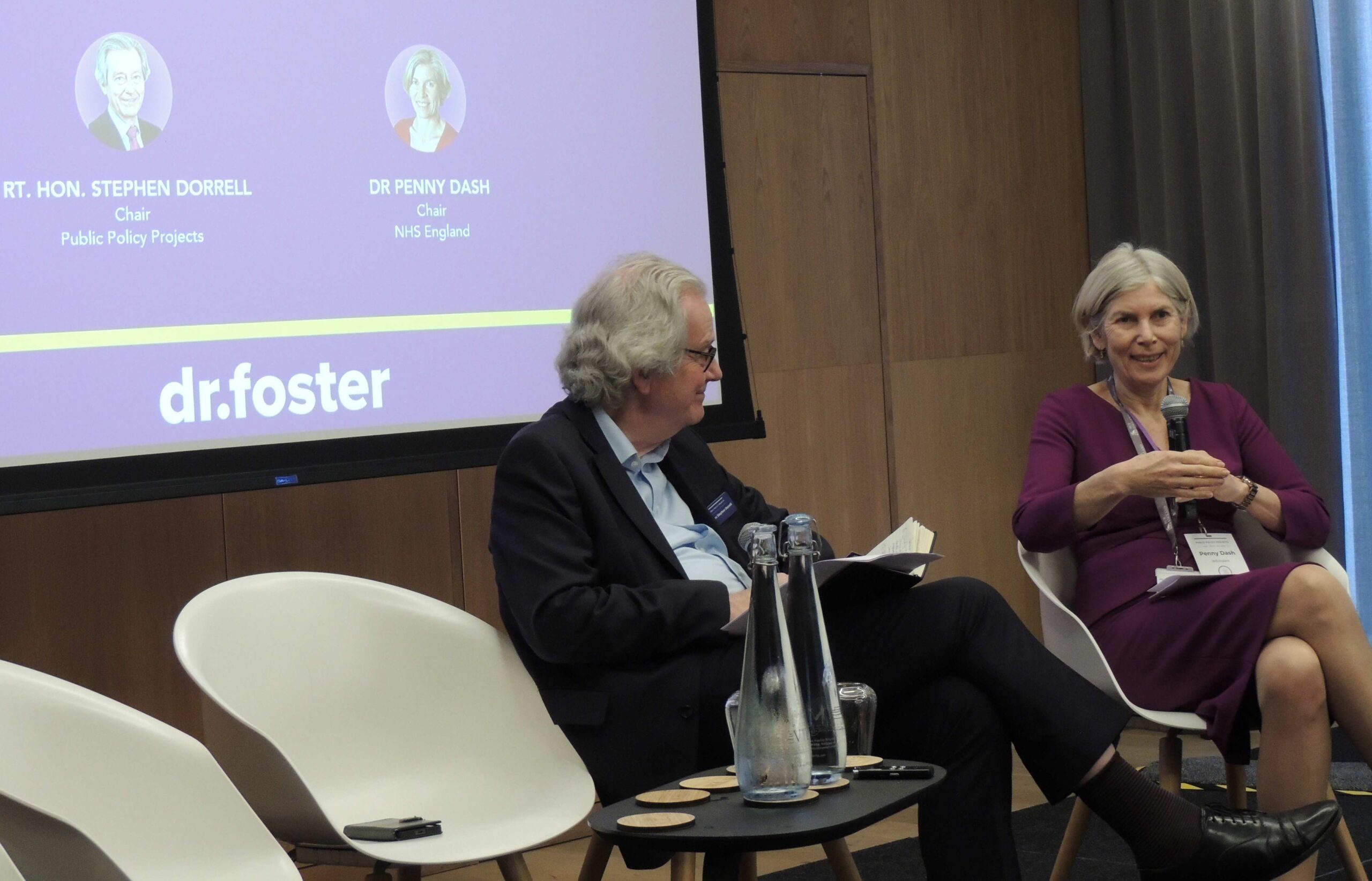
Patient safety should be indivisible from care quality and effectiveness, said NHS England Chair Dr Penny Dash at Public Policy Projects’ Patient Safety Forum last week. In providing an update on the forthcoming National Quality Strategy, Dr Dash said that a binary focus on safety has detracted from efforts to deliver prevention at scale and improve care outcomes.


On 25 February 2026, healthcare leaders and stakeholders gathered in London for the Patient Safety Forum, organised by Public Policy Projects (PPP) in partnership with Patient Safety Learning. Dr Penny Dash, Chair of NHS England, returned to give a keynote address, alongside PPP Chair, the Rt Hon. Stephen Dorrell. As well as providing an update on the forthcoming National Quality Strategy, Dr Dash reflected on the findings of her 2025 review of the patient safety landscape and how the NHS is moving forward to improve quality of care.

Years in the making

In May 2024, Dr Dash (then Chair of North West London Integrated Care System) was asked by the Department of Health and Social Care (DHSC) to carry out an independent review of the Care Quality Commission (CQC). Published in October that same year, the review identified “significant failings” within the CQC, noting a “stark reduction” in inspection activity and a “substantial loss of credibility” across the health and social care sectors. It recommended the CQC rapidly improve its operational performance by fixing its regulatory platforms and reforming the Single Assessment Framework to focus more on outcomes and transparency.

Dr Dash was subsequently asked to review the wider patient safety landscape, but was named as NHS Chair before her findings were released, placing her in the unusual position of being responsible for implementing reforms she would be recommending.

Published in July 2025, the review identified a “unified national strategy for improving quality” as a major systemic gap, recommending a “revamped, revitalised and reinforced” National Quality Board responsible for developing “a comprehensive strategy to improve quality of care”.

That revamped National Quality Board is now in the final stages of drafting the new comprehensive National Quality Strategy; the first of its kind in over 15 years. With Dr Dash reassuring the audience that “hopefully [NHS England] will be able to get it out in April [2026]”, she gave an insight into its strategic focus.

‘No big surprises’ in National Quality Strategy

The National Quality Strategy will “reaffirm the three dimensions of quality: effectiveness/outcomes, safety, and patient/user experience.” Dr Dash emphasised the importance of framing the strategy around these pillars and to “identify priorities within each dimension.”

To improve outcomes and effectiveness of care, the NHS will seek “to improve life expectancy and, crucially, healthy life expectancy,” with a focus on critical areas such as cardiovascular disease (CVD) and cancer. New Modern Service Frameworks (MSFs) aimed at driving improvements in length and quality of life will be implemented in several key pathways, with CVD and sepsis among the first being rolled out this summer.

According to Dr Dash, the 10-Year Health Plan for England’s central three shifts (hospital to community, analogue to digital, sickness to prevention) all underpin improvement in healthcare effectiveness and population health outcomes: “Everything really fits together.” It is through “primary prevention, developing neighbourhoods and good primary care, and using technology and digital tools” that Dr Dash hopes the National Quality Strategy, taking full advantage of MSFs, will improve general population health and wellbeing.

Reinforcing the Patient Safety Strategy

The forthcoming National Quality Strategy will, according to Dr Dash, “pick up on the work of the Patient Safety Strategy” published in 2019 with a strategic update in 2021. NHS England reported in April 2025 that the Patient Safety Strategy was responsible for “saving 1,000 additional lives and £100 million annually”.

The National Quality Strategy is expected to “reinforce” the Patient Safety Strategy, ensuring that “all of the work on various processes that are in place locally” are being monitored to ensure metrics show continued improvement.

‘The most transparent healthcare system in the world’

The National Quality Strategy will place significant emphasis on patient and user experience, with a focus on transparency and real-time data integration. Dr Dash described plans to appoint a national Director of Patient Experience, tasked with improving how patient feedback is collected and acted upon. “We want that person to galvanise what we do, think about how we bring live patient experience data back to the board, and replicate that across the system,” she said.

Transparency is another key element, with the strategy aiming to leverage the NHS’s extensive quality metrics to foster greater accountability. Dr Dash highlighted the importance of making these metrics more accessible, stating, “We’ve actually got more quality metrics than any other healthcare system, so if we can start to socialise those more, that’s a big step forward.”

An ‘anti-mandate’ centre

Responding to an audience question about whether NHS England will mandate local systems to appoint Directors of Patient Experience, Dr Dash cautioned that “there’s a reluctance to mandate,” with specific reference to NHS England CEO Sir Jim Mackey’s outspoken ‘anti-mandate’ stance. The new National Director will be tasked with “working with the system to work out what is it that people want locally [while] trying to move away from telling every single part of the country how to work.”

Dr Dash acknowledged the tension between centralised mandates and local autonomy, agreeing with Stephen Dorrell that it is a tension “as old as the health service” itself. Emphasising the challenges of striking the right balance in a national health service, she recognised the “very strong view from many people to ‘devolve, devolve, devolve.’ But as a national health service, there’s an expectation of consistency in care.”

“We don’t want to be overly mandating. There are real negatives of mandating too much. Equally, if you go completely the other end and you say, ‘it’s up to everybody locally’ and ‘every GP practise can work out and decide what they do’, then quite rightly I think we would have a lot of problems.”

Dr Penny Dash, Chair, NHS England

Prioritising quality improvements

Dorrell challenged Dr Dash on a particular finding in her 2025 review, which stated that “a focus on safety over the last 5 to 10 years has been to the detriment of other aspects of quality of care, particularly effectiveness.” Dr Dash responded that the data was quite clear in demonstrating the opportunity for NHS England to save “100,000 lives a year” through a focus on care effectiveness, compared to the opportunity to save “between 1,000 and 10,000” through safety improvements.

This is not, as Dash emphasised, a binary choice, and the National Quality Strategy will aim to improve both safety of care and the patient and user experience. Asked by Dorrell if “patient safety needs to be the foundation on which improved quality is built,” Dr Dash restated the broader purpose of DHSC and NHS England “to improve life expectancy and quality of life, and to ensure a consistently high-quality health and care system.” Doing so will mean having to re-examine long-term trends in resource allocation.

“We’ve increased the spend in the last 10 years in our acute hospitals by thirty per cent, in primary care by five per cent, and in community care by minus five per cent. And guess what? Life expectancy has reduced. Years lived in healthy life has reduced.”

Dr Penny Dash, Chair, NHS England

Collaboration over instruction

Concluding, Dr Dash highlighted the importance of collaboration to realise the ambitions for quality improvement. The National Quality Board, co-chaired by herself along with the CQC Chair, exemplifies how alignment can be achieved without relying on mandates. “We need to jointly agree what good, high-quality care look like,” she explained. By fostering collaboration between central planners, regulators and local stakeholders, it is hoped that a unified vision of quality care can guide local organisations without imposing rigid mandates.

Balancing local autonomy with national consistency and fostering innovation while ensuring equitable, high-quality care for all is, as Dr Dash noted, no easy task. The strategy’s focus on effectiveness, safety, and patient experience – supported by collaboration, technology, and shared frameworks – intends to chart the course.


This conversation was supported by Dr Foster, an organisation providing NHS organisations with trusted analytics and benchmarking to understand performance, identify risk, and support better decisions. To find out more about Dr Foster’s work and services, visit www.drfoster.com.

News, Systems, Thought Leadership

Embedding social prescribing in the Bart’s heart attack pathway: What new data means for commissioners and clinicians

By

Two years after embedding social prescribing into its heart attack pathway, Barts Health NHS Trust has published outcomes data showing improved patient wellbeing and reduced social concerns. More than 2,000 patients have been screened and nearly 500 supported, with strong reach into working-age men and deprived communities, offering practical lessons for commissioners and secondary care teams.


Barts Health NHS Trust (Barts Health) first embedded social prescribing within its heart attack pathway in November 2023 with a clear ambition to integrate structured social support directly into specialist cardiovascular care rather than rely solely on discharge-based signposting.

As previously reported by ICJ, the Trust developed a toolkit to support other secondary care organisations, working in partnership with the Bromley by Bow Centre. First pioneered in the Trust by Dr Tara Mastrucci, Vascular Surgeon at St Bartholomew’s Hospital, the initiative was backed initially by the North East London Personalised Care Team and later by Barts Charity. The model embeds social prescribers within the acute heart attack pathway, introduces systematic screening for social need, and aligns hospital-based care more closely with community resources.

Now, a second-year impact report released by Barts Health provides updated data on reach, activity and patient-reported outcomes. For commissioners and clinicians alike, the findings offer insight into both the potential and the practicalities of integrating social prescribing within specialist services.

Identifying unmet need within a specialist pathway

Cardiovascular disease is closely associated with deprivation, insecure employment and housing instability. Recovery following a heart attack can exacerbate these pressures, particularly for working-age adults in physically demanding or insecure roles

Between November 2023 and September 2025, the Trust screened or contacted 2,002 patients within its heart attack http://www.bhf.org.uk/what-we-do/our-research/heart-statistics/health-inequalities-research/cardiovascular-inequalities-in-england-an-analysispathway. Screening focused on two questions: whether patients were struggling to make ends meet or meet basic needs, and whether they would like support.

Of those screened, 25 per cent reported difficulty meeting basic needs and 28 per cent expressed interest in receiving help. Overall, 30 per cent (606 patients) were referred into social prescribing and 25 per cent (499 patients) engaged with the service. Across the two-year period, 1,899 appointments were delivered and 1,021 onward referrals made.

These figures indicate a substantial level of self-reported social need within a specialist cardiac cohort. Because screening was systematic rather than discretionary, the model did not rely solely on clinician judgement or patient self-referral. Although the evaluation does not compare directly with alternative approaches, the data suggests that routine enquiry within a specialist pathway may surface needs that might otherwise go unrecorded.

A distinct patient profile and possible implications

The demographic profile of those engaging differs in several respects from that reported in many general social prescribing services.

Among patients supported:

  • 81 per cent were male and 19 per cent female;
  • 74 per cent were under 65;
  • the most common ethnicities were White British and Bangladeshi/British Bangladeshi;
  • 82 per cent lived within North East London ICB boroughs.

The demographic profile of services users is notable; general social prescribing services often report higher engagement among women. The cardiac cohort was also older than Bromley by Bow’s general social prescribing population (median age 56 compared with 45), although it remained predominantly working-age.

One possible explanation for the distinct demographic profile is that locating social prescribing within a cardiology pathway (where patients are already engaged in clinical follow-up) may reduce some of the practical barriers associated with accessing additional support. Because social prescribing is presented within routine cardiac care, engagement does not depend entirely on separate referral processes or independent help-seeking.

The evaluation does not establish causation, and further comparative analysis would be required to determine the extent to which pathway location directly influences gender balance. However, the contrast with more female-skewed primary care-based services suggests that the setting in which support is offered may shape who participates.

Deprivation data provides further context. Thirty-one per cent of cardiac social prescribing patients lived in the most deprived IMD quintile, compared with 27 per cent of the wider Barts cardiac population. Only 9 per cent lived in the two most affluent quintiles, compared with 19 per cent of the wider cardiac intake.

Within an already high-need cardiac population, this represents relatively higher participation from more deprived communities. Again, while the mechanism cannot be isolated, systematic screening within secondary care may identify social need among patients who are less likely to engage independently with voluntary or primary care-based offers.

For commissioners, the implication is less about the performance of a single service and more about design. Models that are proactive and embedded within specialist pathways may be associated with different patterns of uptake compared with those that rely primarily on discretionary referral or self-identification.

Recovery beyond the acute event

Qualitative findings from three focus groups (17 attendances) and four interviews illustrate the broader disruption experienced following a heart attack.

Participants described fear of exertion, medication side effects, cognitive changes such as memory difficulties, and uncertainty about returning to work. Some reported losing employment or contracts, particularly where work was physically demanding or insecure. The evaluation reports that 98 per cent of patients said their condition affected daily life, and 61 per cent reported severe impact in at least one domain.

This context is relevant when interpreting the scale and intensity of social prescribing activity; the needs identified were frequently intertwined with recovery, such as employment insecurity, housing stress and financial strain, formed part of the post-event landscape rather than existing independently of it. Embedding social prescribing within the pathway aligns with recognition that social and financial factors may influence rehabilitation and longer-term outcomes.

Intensity and complexity of support

Of the 606 patients referred, 36 per cent required level 3 or level 4 support, involving multiple sessions and sustained casework. Housing, immigration advice, financial support and access to food accounted for 59 per cent of referrals and signposts, while mental health support also featured prominently.

The proportion requiring higher-level support suggests that, in this cohort, needs often extended beyond light-touch signposting. For commissioners, this has workforce and capacity implications. Delivering more complex casework within a secondary care-adjacent model requires appropriate supervision structures and strong links with voluntary and community sector partners.

Despite being based in a densely populated urban area, 88 per cent of social prescribing appointments in the Barts Health programme were delivered by telephone, with only 12 per cent conducted face-to-face. On first glance, that profile might seem counter-intuitive: in urban settings with shorter travel distances and more community resources, one might expect higher rates of in-person contact than in rural areas. However, the data suggests that remote delivery may address practical access barriers that persist even in cities, such as limited mobility during recovery, competing work and family commitments, and the wide geographic catchment of patients drawn from 38 boroughs.

In the context of social prescribing, the high reliance on phone appointments may reflect both practical necessity and the potential for remote support to increase reach, but it also raises a question about digital inclusion. ensuring that access to telephonic or digital care does not inadvertently disadvantage those who struggle with technology or have communication needs that are better met in person.

Reported outcomes

The evaluation used two validated measures: MyCAW® (Measure Yourself Concerns and Wellbeing) and EQ5D-5L. Before support, 65 per cent of patients rated their concerns at 5 or 6 on the MyCAW scale (where 6 represents “as bad as it can be”). After support, this proportion fell to 36 per cent. The Trust summarises this as a 77 per cent improvement in severity of concerns among respondents with matched surveys.

At first encounter with the service, 86 per cent recorded negative wellbeing scores. Following support, the proportion reporting severe negative wellbeing decreased, particularly among those with the highest baseline scores. On the EQ5D-5L measure, 49 per cent of patients with matched surveys reported improved ratings across domains.

These findings are observational and do not include a control group and as such, they cannot attribute change solely to the intervention. However, they indicate reported improvements within a cohort characterised by high baseline disruption.

Household context and wider effects

Participants also described effects extending beyond the individual patient. Some reported that successful benefits or employment advice improved household financial stability. Others described changes in diet, communication and stress within the family.

While qualitative and self-reported, these accounts suggest that support delivered at a moment of acute illness may influence the wider recovery environment. Further research would be needed to quantify such effects or assess their durability over time.

Design, equity, and future evaluation

Two years on, the Barts Health model illustrates how the organisational location of social prescribing may be associated with different engagement patterns. Compared with many primary care-led services, this pathway-based approach engaged a higher proportion of men and relatively more patients from deprived communities within the cardiac cohort.

The evaluation does not determine whether these differences are directly caused by pathway embedding. Nonetheless, it raises a question for commissioners: if access to social prescribing depends in part on where and how it is offered, should service design be considered alongside service scale when addressing inequalities?

An economic evaluation with the University of East London is now underway, linking programme data with GP records across North East London to explore potential impacts on healthcare utilisation and cost. Findings are expected in Q2 2026 and will inform decisions about sustainability.

In the interim, the updated data provides a detailed account of how social prescribing can be integrated within secondary care. It indicates reported improvements in concerns and wellbeing among participants and suggests that embedding support within specialist pathways may be associated with distinct patterns of uptake. Whether those patterns translate into longer-term system value will be addressed in the next phase of evaluation.


To find out more about the Barts Health toolkit, please click here.

Acute Care, News, Primary Care, Systems

New report calls for clear policy and standardised medicines carbon footprint data to accelerate NHS net zero progress

By

A new report from Public Policy Projects (PPP) highlights the critical role of medicines in delivering the NHS’ net zero commitments, and sets out practical steps to accelerate progress without compromising patient care or the resilience of the medicines supply chain.


  • Medicines are a major contributor to the NHS’ carbon footprint, requiring targeted, data-driven action to meet legislated net zero commitments
  • Independent, standardised medicines carbon footprint data can support decarbonisation efforts, but clear governance is required to ensure data are used appropriately and to avoid unintended consequences
  • Embedding carbon considerations into product development and health technology assessment can unlock sustainability by design, aligning improved health outcomes with sustainability and economic growth
  • Timely action offers an opportunity for the UK to consolidate its leadership in healthcare decarbonisation and shape global standards for sustainable medicines

Medicines account for around 20 per cent of the NHS’ carbon footprint. Progress has been made in reducing emissions from inhalers and anaesthetic gases, but most medicines-related emissions arise from tablets and solutions, where decarbonisation strategies remain limited.

A new report from PPP and YewMaker, Accelerating health sector decarbonisation through medicines carbon footprinting, finds that identifying high-volume, high-emissions medicines is essential to targeting action to achieve the NHS’ commitment to net zero supply chain emissions by 2045. Product-level carbon data, as will be required by the NHS Net Zero Supplier Roadmap from 2028, can help to identify these hotspots, enabling targeted interventions. The report explains how such data can also support existing policy initiatives, such as antimicrobial stewardship, and help align emissions reduction and economic considerations, while safeguarding clinical outcomes.

However, the report outlines that medicines carbon footprinting will only be effective if data are consistent, comparable and scalable. Manufacturer-produced carbon footprints were viewed as costly and resource-intensive to develop, with limited utility for product comparison, reducing their value for decision-making. Independent and standardised datasets, produced using transparent and validated methodologies, were highlighted as a more practical approach to identify priority areas, support clinical guideline development and strengthen supplier engagement.

Read the report here

Clinicians are increasingly incorporating sustainability considerations into practice, using available carbon data to identify hotspots and inform clinical guidance. However, the report stresses that responsibility for assessing environmental impact should sit at system level, with robust frameworks embedding carbon considerations upstream within supply chains, procurement and guideline development, rather than adding burden at the point of prescribing.

The report also cautions that careful governance of how medicine product carbon data are used is crucial, as certain decision points can directly impact medicines supply.

Environmental policies and product footprinting requirements should be supported by governance frameworks which drive improvement while ensuring supply chain stability, clinical quality and patient access to medicines. The report recommends that the Department of Health and Social Care (DHSC) should clarify how medicine product carbon footprint data will be used, defining the decision points and communicating the rationale.

More than a compliance exercise, medicines carbon footprinting could become a catalyst for innovation and economic opportunity. Integrating environmental impact into product development and health technology assessment could unlock sustainable medicines and care pathways by design, allowing the UK to lead internationally on aligning improved health outcomes with sustainability. With legislated NHS net zero targets and strength in life sciences, the UK can use medicines carbon footprinting to pilot approaches that shape sustainability standards across global supply chains.

Haroon Taylor, MCF Classifier lead and CTO at YewMaker, says: “Medicines are a major, but under-addressed, contributor to healthcare emissions. At YewMaker, we’ve built standardised, comprehensive medicines carbon footprint datasets, which we are now making available to the NHS to support strategies to reduce emissions from medicines.”

Yousaf Ahmad, Chief Pharmacist and Director of Medicines Optimisation at NHS Frimley ICB, states: “Medicines are one of the most powerful tools to transform health outcomes, and coupled with the right data, they can also become catalysts for a more sustainable healthcare system. Clinicians and system leaders must work together to ensure care delivery supports environmental sustainability and protects the health of future generations.

Matthew Sawyer former GP and sustainability expert, says: “Medicines carbon footprinting helps us focus on reducing emissions from the biggest contributors, but we need confidence that the data are independent, transparent, and comparable.”

Read the report here

Recommendations

1. Medicine product carbon footprint data should be leveraged to focus interventions on high-volume, high-emission medicines, enabling efficient resource use and measurable progress toward NHS net zero goals.
2. Industry and health system leaders should collaborate to strengthen the use of pragmatic, standardised and independent approaches to medicines carbon footprinting, ensuring data are comparable, scalable and able to inform action across suppliers and systems.
3. The Department of Health and Social Care (DHSC) should clarify how medicine product carbon footprint data, as required under the NHS Net Zero Supplier Roadmap, will be used indecision-making, defining the decision points and communicating the rationale and use cases to health system and industry stakeholders.
4. Environmental policies and product footprinting requirements should be supported by governance frameworks which drive improvement while safeguarding supply chain stability, clinical quality, and patient access to medicines.
5. Environmental considerations should be embedded within health technology assessment, procurement frameworks, and clinical guideline development, so that medicines entering clinical practice have been assessed for environmental impact alongside safety, efficacy, and value.
6. Education and training for medical, access, and commercial functions across the health sector should be expanded to empower leaders, embed sustainability into core business decisions, and ensure the sector is equipped to deliver on sustainability targets.
7. Manufacturers and suppliers should be supported and incentivised to optimise medicine-related emissions by highlighting that early movers will gain competitive advantage and reduce long-term business risk.
8. The UK should leverage its legislated NHS net zero targets and Supplier Roadmap to shape international sustainability standards, with medicines providing a practical model for action across global supply chains.

Key information

About Public Policy Projects:

Public Policy Projects (PPP) is an organisation operating at the heart of health and life sciences policy delivery. We bring together senior leaders and practitioners in the public and private health and life sciences sectors to find realistic solutions to the most pressing issues relating to health and care delivery.

For further information, please contact: Samantha Semmeling, Policy and Programmes Manager, Public Policy Projects: [email protected]

About YewMaker: 

YewMaker develops science-based solutions to make medicines more sustainable.

For more information, please contact: Nazneen Rahman, Founder and CEO, YewMaker: [email protected]

News, Systems, Workforce

The NHS’ most valuable asset is consultant time. Why are we not using it effectively?

By

New analysis of consultant job plans shows direct clinical care time is falling despite record workforce growth, raising urgent questions about how the NHS plans and uses its most valuable clinical asset.


If consultant time is the NHS’ most valuable clinical asset, why do we still plan it based on past wisdom instead of new intelligence? A landmark five-year analysis of thousands of consultant job plans, conducted in collaboration with NHS England, reveals a paradox that should concern every NHS leader: we have more doctors than ever, yet direct clinical care time has intentionally declined by an average of 0.16 Programmed Activities per job plan. More doctors, fewer direct patient care hours.

As NHS England’s Deputy National Medical Director for Secondary Care, Stella Vig has observed, job planning is not just a management exercise, it is a clinical leadership tool. When we treat it as infrastructure to be managed in partnership with service leads, we unlock the real value of our people: their time, their innovation, and their ability to deliver better care.1

The tools for job planning such as the contracts and the frameworks, haven’t changed in years, and they don’t need to. What has changed, fundamentally and irrevocably, is the nature of clinical work itself. Yet, the NHS still plans consultant capacity as if it were 2015, relying on historical patterns rather than intelligent analysis of what’s actually happening on the ground.

The invisible shift in clinical work

The data reveals what many clinicians have been experiencing for years; their work has been transformed. Analysis by The Health Foundation shows that in 2021, 57 per cent of NHS staff reported working unpaid overtime, but this declined to 50 per cent in 2024.2 EPR implementations, transformation projects, medical student teaching, nursing education – activities that once happened on discretionary effort during lunch hours or at the margins of the day, are now rightfully accounted for in job plans. This isn’t consultants doing less, it’s organisations finally acknowledging the full scope of what we ask them to do.

NHS finance directors overwhelmingly feel they’re not extracting efficiency from contracted clinical hours. The midnight panic of the finance director on call authorising thousands in agency bookings because staffing has collapsed is symptomatic of a deeper problem. We’re measuring productivity, not value. We’re counting hours without understanding how those hours are actually being spent or what they’re achieving.

Meanwhile, hospital patients have become significantly more complex as simpler cases move to community settings. Each patient now consumes more clinical time, yet we haven’t adjusted our planning frameworks to account for this fundamental shift in case mix. The analysis also shows a concerning reduction in audit time, precisely when we need more, not less, clinical governance.

The result? We’ve created an illusion of staffing without the delivery of service.

The workforce assurance crisis

For the first time, NHS planning and compliance guidance explicitly mandates job plan sign-off targets over three years. Yet current sign-off rates fluctuate wildly between 30 per cent and 90 per cent, averaging just 53-65 per cent.3 This means nearly half of consultant job plans remain unsigned – a workforce assurance crisis that correlates with clinical leadership engagement, not NHS trust size.

Unsigned job plans aren’t just an administrative inconvenience. They represent a fundamental breakdown in the conversation between organisations and their most valuable clinical workforce. Without signed job plans, we have no shared understanding of what consultants are contracted to deliver, no baseline for capacity planning, and no foundation for service redesign.

From individual contracts to service-level intelligence

The Health Foundation’s analysis reveals that team-based job planning, like aligning consultant capacity with actual service demand, is emerging as critical infrastructure for modern integrated care. This represents a fundamental shift from managing individual contracts to service-level planning informed by real intelligence.

Consider an orthopaedic clinic. On paper, the consultant has time allocated to see 15 patients in a morning session. But if porters are delayed, admin staff are overwhelmed, transport doesn’t arrive on time, or theatre lists run late, that consultant might only see eight patients, despite being present and willing to work at full capacity. The problem isn’t the consultant’s productivity; it’s the system’s coordination.

Job planning data, analysed at scale and in real time, can expose these systemic inefficiencies. It can show where clinical capacity is being undermined by operational failures. It can reveal patterns that individual trusts, looking at their own data in isolation, would never see.

Four non-negotiable actions for 2026

The good news is that these challenges are solvable, even within the constraints of today’s NHS. The solutions don’t require additional funding or wholesale system redesign. They require smarter use of the intelligence the NHS already generates.

First, sign-off must be mandatory as a minimum workforce assurance. The new planning guidance provides the mandate; organisations must now deliver. This isn’t bureaucracy, it’s the foundation for every other improvement. Without signed job plans, we’re flying blind.

Second is to standardise templates nationally. Consistency allows comparison, benchmarking, and learning. It enables the kind of large-scale analysis that reveals trends invisible at NHS trust level. Standardisation doesn’t mean rigidity, it means creating a common language for planning clinical capacity.

Third, we need to expand service-level planning tied to actual demand. Move beyond individual contract management to understand how consultant capacity maps to service delivery. This means bringing clinical leaders, operational teams, and finance directors into the same conversation, armed with the same data.

Fourth, real time job planning data must be used for capacity modelling and pathway redesign. This is where intelligence transforms planning. Real-time data can show where capacity is being eroded, where services are under pressure, and where interventions will have the greatest impact. It creates what we might call a sentient health system – one that senses problems and self-corrects before they cascade into crises.

Job planning as the NHS’ nervous system

Clinicians aren’t the problem. Outdated planning based on historical patterns rather than current intelligence creates illusions of staffing without service gains. It leaves finance directors signing off emergency agency requests at midnight because the system couldn’t see the crisis coming three days earlier.

Job planning is no longer about compliance. It’s about creating the nervous system the NHS desperately needs. One that senses capacity pressures, identifies systemic inefficiencies and enables rapid response before problems become emergencies.

The tools haven’t changed because they don’t need to change. What needs to transform is how the NHS uses the intelligence those tools generate. In an era of finite resources and infinite demand, we can’t afford to keep planning consultant time, our most valuable clinical asset, based on yesterday’s wisdom. We need new intelligence. And we need it now.


References 

1 https://www.rcp.ac.uk/news-and-media/news-and-opinion/patient-care-will-suffer-it-s-a-big-clinical-risk-not-just-a-contractual-issue-rcp-launches-national-guidance-as-new-survey-findings-reveal-that-senior-doctor-job-plans-do-not-always-reflect-modern-ways-of-working-in-the-nhs/

2 https://www.health.org.uk/features-and-opinion/blogs/the-hidden-work-in-health-care-unpaid-overtime-in-the-nhs

3 https://www.rldatix.com/en-uki/wp-content/uploads/sites/6/2025/10/RLDatix-Job-Planning-White-Paper2.pdf

Strategy Unit model challenges how the NHS plans future hospital capacity

By

With resources constrained and uncertainty rising, hospital capital decisions must rest on more than single-point forecasts. A new, award-winning demand model from the Strategy Unit, which uses open, probabilistic modelling could provide a more credible basis for deciding where new capacity is genuinely required.


As the NHS seeks to rebalance care away from hospitals and towards community-based provision, the efficiency of capital investment in acute infrastructure becomes increasingly important. Long-term demand modelling plays a central role in determining where new hospital capacity is genuinely required and where alternative approaches may be more appropriate.

New hospitals represent some of the largest single investments the health service makes. Once built, they shape patterns of care, workforce deployment and financial commitments for generations. The assumptions used to justify them therefore matter as much as the buildings themselves.

Long-term demand modelling sits at the heart of these decisions. Capital schemes depend on credible estimates of future activity; national and local leaders need a shared understanding of how demographic change, service redesign and prevention may interact; and planning assumptions are increasingly scrutinised by regulators, auditors and the public. Yet despite its importance, modelling practice across the NHS has often been fragmented, opaque and difficult to interrogate.

A new hospital demand model, developed by the Strategy Unit, has been developed to respond directly to these challenges. A recent recipient of a Florence Nightingale Award for Excellence in Health and Care Analytics, the model reflects a set of design choices centred on open code, transparent assumptions and a probabilistic treatment of uncertainty. Together, these features offer a different way of thinking about how the NHS plans for future demand, and how hospital investment can support, rather than undermine, the system’s ambition to shift care upstream.

Drawing on discussion at PPP’s Integrated Care Delivery Forum in November, and further insight from Chris Beeley, Head of Data Science at the Strategy Unit, this article examines the policy implications of modelling choices, the case for openness in both coding and capital planning, and how the model’s design can support the NHS’ intended shift towards community-based care.

Why existing approaches fell short

Historically, long-term demand modelling in the NHS has relied heavily on proprietary tools developed by external suppliers. These tools often used inconsistent definitions, fixed growth assumptions and methods that could not be fully examined by those relying on their outputs. As Chris Beeley has argued, this created a situation where “you could never really compare the models with each other because they were all based on slightly different definitions and ways of working.”

The consequences were practical as well as methodological. Because assumptions and code were closed, progress was slow. “Nobody could look at anyone else’s homework,” Beeley notes, meaning that errors were harder to spot, improvements were harder to share, and similar analyses were repeatedly rebuilt in slightly different ways across the system.

In some cases, even core concepts were commercially restricted. Definitions of potentially avoidable activity, which are central to debates about prevention and the ‘left shift’, were treated as intellectual property. This limited the NHS’ ability to test alternative scenarios or align modelling with evolving policy priorities. For decisions involving billions of pounds of public money, this lack of transparency presented a clear risk.

The new hospital demand model was designed explicitly to “get out of that box”. Rather than another closed forecasting tool, it is intended as a shared analytical foundation: open-source, reproducible and owned by the NHS.

A different approach to uncertainty

One of the most distinctive features of the model is its probabilistic design. Instead of producing a single estimate of future demand, it generates a range of possible outcomes using Monte Carlo simulation.

The model starts with a full year of row-level hospital activity data covering every provider in England. It then projects this activity forward to 2041 based on three broad drivers of demand:

  • Demographic change: including population growth and ageing
  • Non-demographic change: capturing everything else that drives activity growth over time, such as rising expectations, medical innovation and changing clinical practice
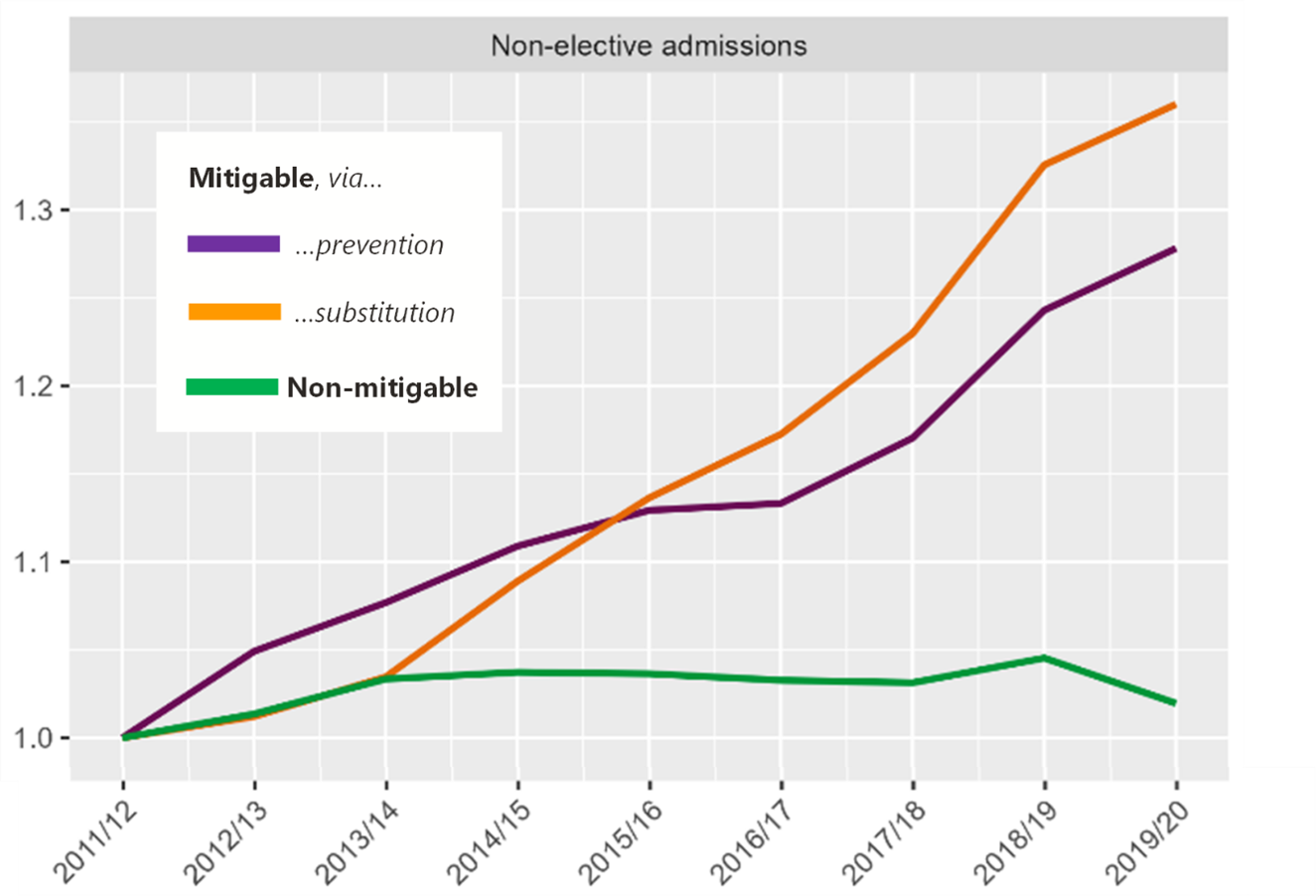
  • Potentially mitigable activity: including admissions related to falls, smoking and poorly managed long-term conditions

These projections are run 256 times, producing a distribution of outcomes rather than a single forecast. This design choice reflects a deliberate rejection of false precision.

“When the future is uncertain, you should be probabilistic – you shouldn’t say for certain that something is going to happen. If you give a specific number, the nuance behind that can get lost.”

Chris Beeley, Head of Data Science, The Strategy Unit

This enables planners to have a different kind of conversation; instead of asking whether demand will be, for example, 12 per cent higher in 2041, they can ask what actions would be required if demand fell in the upper deciles of the distribution, and what risks would arise if it did not. As such, the model supports scenario-based planning rather than deterministic forecasting.

New Hospital Programme Demand Model factsheet. © The Strategy Unit (Click to enlarge)

The role of potentially mitigable activity

The inclusion of potentially mitigable activity is one of the most policy-relevant, and potentially contentious, elements of the model. This category captures activity that might be reduced through prevention, earlier intervention or more integrated care. It is also where modelling assumptions can have the greatest influence on long-term conclusions.

Beeley is clear that this is not an area where definitive answers exist. Evidence continues to evolve, definitions vary, and local context matters. However, he argues that the solution to this uncertainty is not to avoid the issue, but to make assumptions explicit and open to challenge.

In previous modelling approaches, avoidable activity was sometimes embedded invisibly within proprietary logic. By contrast, the new model treats it as a parameter that can be explored, debated and adjusted. This allows local systems to test how different prevention scenarios might affect future hospital demand, without assuming that ambitious reductions will automatically be delivered.

This is particularly important given the NHS’ stated ambition to shift care “left” towards prevention, community services and earlier intervention. If capital investment in hospitals is based on implausible assumptions about demand reduction, the system risks either overbuilding or underfunding upstream services. Transparent modelling helps to clarify these trade-offs rather than obscure them.

Open code as a public sector principle

The foundational technical design of the model centres on a broader philosophy about how analytics should be done in the NHS. Beeley has long advocated for a “code first, code open” approach to data science in the public sector. In his view, sharing analytic code is “the only way to have truly reusable and inspectable analytics”.

Code-based analysis offers several advantages. It is inspectable, allowing others to examine assumptions, test for bias and assess fairness. It is reusable, avoiding the inefficiency of multiple teams independently recreating similar analyses. It is extensible, meaning improvements can be layered on without starting again. And it is reproducible, ensuring that results can be verified and audited.

These principles align closely with the recommendations of the Goldacre Review, which emphasised the importance of code-based Trusted Research Environments and reproducible analytical pipelines. By embedding these ideas into a high-profile national model, the Strategy Unit is making a statement about how analytical work that underpins major public decisions should be conducted.

There is also a clear economic argument. Beeley contrasts code-based analytics with “whizzy ML-powered dashboards with indefinite licensing costs,” arguing that the former is both cheaper and more sustainable. As he puts it, it is a case of “teach a man to fish”: investing in internal capability rather than embedding a perpetual external dependence.

Keeping core capability in-house

The development of the hospital demand model highlights a wider issue within the NHS: a persistent skills deficit in analytical and data science capability. While the system makes extensive use of data, much of the most complex analytical work has historically been outsourced.

Beeley argues that this approach is no longer tenable for core functions. Modelling future hospital demand is not an optional extra; it is fundamental to capital planning, service redesign and financial sustainability. As such, the capability to develop, understand and adapt these models should sit within the NHS itself.

This has implications for workforce development. Code-first analytics requires investment in training programmes, experiential learning, mentoring and leadership. It also requires organisational support for reproducible analytical pipelines and automated processes that can move from raw data to analysis and reporting with minimal manual intervention.

The upfront investment is not trivial, but the long-term case is clear. As Beeley notes, terminating unnecessary software licensing fees and building internal capability is a way to “invest now to save money later”.

Using the model to plan new hospitals

The immediate application of the model is to support decisions about where to build new hospital facilities and what scale of capacity will be required. By projecting demand at a granular level, i.e. by geography, specialty and demographic group, the model can highlight where pressures are most likely to emerge over time.

This does not imply that hospitals should simply be built wherever demand is projected to rise. Instead, the model provides a more robust evidence base against which alternative options can be tested, including service redesign, prevention and changes in care pathways.

In this sense, the model represents a rare example of innovation being applied to the “right shift” in a way that supports the “left shift”. By ensuring that resources invested in hospitals are genuinely needed, it reduces the risk of overbuilding and helps protect funding for upstream activity. Capital spent wisely on hospitals that will be required over the long term can free up revenue and policy space for prevention and community-based care.

Supporting system-wide consistency

Another important use case lies in creating a shared analytical language across the system. When different organisations rely on incompatible models, alignment is difficult. Disagreements about numbers can obscure more substantive debates about strategy and priorities.

Because the new model is open and reproducible, it provides a common starting point. Local systems can adapt it to their own data, test different assumptions and contribute improvements back to the core codebase. Over time, this creates the conditions for methodological learning at scale, rather than isolated pockets of expertise.

This collaborative approach also supports accountability. When assumptions are visible, disagreements can be resolved through evidence and analysis rather than authority or commercial constraint.

A step towards more credible planning

The hospital demand model is not presented as a definitive answer to future need. Its developers are explicit that uncertainty remains, particularly around non-demographic change and avoidable activity. Future iterations are expected to operate across different geographies and to incorporate more sophisticated scenarios as evidence evolves.

What it does offer is a different way of approaching long-term planning, one that acknowledges uncertainty honestly, embeds openness by default and recognises modelling as a public good rather than a proprietary product.

In a system where today’s capital decisions will shape care for decades, that shift matters. By combining open code, probabilistic methods and a clear link to policy objectives such as the left shift, the model contributes not just to better forecasts, but to better conversations about the future of the NHS.

Community Care, News, Systems

Shifting care in Birmingham and Solihull

By

Peter Spilsbury, Director of the Strategy Unit, shares insights into recent work demonstrating how analytical advances can support the shift of care from hospital community.


Two questions will be consuming many people involved in the desired shift of care ‘from hospital to community’:

‘Where should we start? What should we do?’

The Darzi review and 10-Year Plan made it clear that change is needed – and that the NHS needs to become less ‘hospital-centric’. So how is this to be done in practice? What types of activity should be shifted? At what scale? And what does this mean locally?

The Strategy Unit is currently supporting Birmingham and Solihull’s health and care services to address these questions. The work was spurred by the Chief Executive of Birmingham Community Healthcare, Richard Kirby. It covered the whole Birmingham and Solihull system, and Richard led on behalf of all the Chief Executive Officers of the Integrated Care Board (ICB) and provider trusts.

We were asked us to:

  1. Demonstrate the opportunity to shift care. Analyse the nature and scale of activity currently in local hospitals, which – given available evidence – could be addressed through community-based alternatives.
  2. Support local partners to translate insights into action. Combine this analysis with other local sources to produce plans that all partners can have confidence in.

To make this practical and meaningful, and recognising the hyper-diversity of the local population, Richard asked us to produce specific results for the Birmingham and Solihull’s six localities.

‘Mitigation’: a fundamental concept in shifting care

In approaching these questions, we began with our (award winning…) demand model produced in collaboration with the New Hospital Programme. A central part of that model was the question of activity, currently in hospitals, that could be ‘mitigated’.

This gives an evidence-based way of highlighting where community-based alternatives could play a greater role. This could happen in different ways. For example, community-based services could prevent hospital activity, e.g. for alcohol related admissions. Or community services could substitute for hospital-based ones, e.g. for mental health admissions via emergency departments.

Not all hospital activity is amenable to mitigation. We used evidence to understand what might be. Sources included: working with clinicians; reviewing the literature and the data; and using a structured (and published) process to elicit assumptions from national experts. The result is a set of evidence-based judgements about 92 detailed and catalogued types of hospital activity that are amenable to mitigation.

The chart below – from a forthcoming publication – illustrates this. It tracks nearly a decade of non-elective admissions, indexed to 2011/12. It shows admissions judged to be non-mitigable (green line), or to be mitigable via prevention (purple) or substitution (orange).

Mitigable activity has grown at a far faster rate than non-mitigable activity. This suggests a failure of policy over this period. The aim has been a more primary and community-based NHS, but – via the erosion of community based services and public health activity – the reverse has been achieved.

Tracking NHS non-elective admissions from 2011/12-2019/20, indexed to 2011/12 (click to enlarge)

From ‘mitigable activity’ to ‘local opportunity’

The sunny interpretation of the chart is that something can be done. To gain a more refined sense of this, we took the work on mitigation and developed it specifically to help plan local care shifts.

We found that 29 of the 92 types of potentially mitigatable activity are amenable to community-based intervention. This work is described here, and the interactive tool – which presents results for all ICBs, local authorities and hospital trusts – is here. The result is that there are evidence-based places to start when planning local shifts of care.

This is an extremely valuable start. Applying these tools to Richard Kirby’s questions, we produced two bespoke analyses: one for the ICB overall, looking at variation over time and in comparison with other areas; and another examining variation at the locality level.

And, to help scale opportunities, we used the same three scenarios as for our (in parts eye-watering) national estimate of demand for community services:

  • ‘Do nothing’, where service patterns remain the same and demographic change continues to drive growth.
  • ‘Planned’, where service patterns change in line with shifts of care planned by trusts in the New Hospital Programme (taken as an indication of what could realistically be done).
  • ‘Ambitious’, where services are altered using judgements on mitigation given by experts instructed to assume that services could grow into opportunities: that where something could be done, it would be done.

This is not the place to rehearse the detail of local results. But, taking a step back, it is instructive to see that they are:

  • Nationally derived and tested. The work to build the model and produce the assumptions and tools on mitigation was already in place. The basis for local analysis had already been tried, tested and validated nationally.
  • Locally specific. There were, of course, shared patterns and themes. But, in the main, the results for each of Birmingham and Solihull’s six localities provided a view specific to that area, its population and its services.
  • Locally trusted. Results from the analysis were trusted and believed by the partners involved. This followed partly from the detail and quality of the analysis, and partly from positive relationships. Commissioners, hospital trusts, the community services trust: all agreed that our work could form the basis for shared planning.

That is the next stage. We will be facilitating locality workshops: combining our insights with public health data and the tacit, experience-based knowledge of local teams, to guide the planning process.

Where next?

The power of analysis based on ‘mitigation’ is becoming increasingly apparent. Supporting Birmingham and Solihull has helped us to refine the application of this concept, and the analysis based on it.

It has also helped us to see a direction for future development. The analysis can be improved through the addition of more tailored, locally specific, assumptions on what can – and cannot – be mitigated. We now want to find local areas to do this with (contact details below).

In doing so, we have seen that the process – taking clinicians, managers, commissioners and analysts through a structured elicitation exercise – can build the trust necessary to develop plans everyone can have confidence in. Technical tasks can add social value.

Such processes will have national value too. The Strategy Unit rejects the ‘develop once, sell many times’ approach: anything we develop will be shared freely for the benefit of all. Public investment should create public value. And the NHS should be able to cumulate knowledge and improve practice.

We can then see a further, vital, development that is needed: if care is to shift, resources must too.

This is tricky territory. The question is not how to spend additional funding, but how to re-allocate current resources. As the Nuffield Trust recently noted, this is not an approach recommended by other countries. And doing so puts significant strain on the evidence: everyone involved must have high degrees of confidence that care really can be shifted, rather than duplicated, if money is to follow.

This has opened a further analytical frontier. We are giving specific attention to the gap between what works for individuals and what works for populations. In essence, evidence (from Rachel Meacock and others) suggests that preventing admissions for individuals doesn’t translate into reduced rates of admissions for local populations.

The leading theory for this disjoint is that admissions thresholds are not fixed – but are dynamic and responsive to changes in system pressures and capacity. So an admission for Mary might be prevented, but the bed ‘freed’ by this is then occupied by Mohammed (who is unwell, just slightly less so) as the threshold for admission reduces at the margin. This is especially likely in a system like the NHS, which has a low bed base relative to other countries. We are examining how this can be tracked and managed. Ignoring this problem may lead to duplicated costs and disputed contracts.

History suggests that there are no easy answers when it comes to shifting care: and past failures will be undermining current confidence. One past failure has been an unwillingness to ‘do the detail’ and to cumulate lessons over time. This is where much of our work adds value. ‘Mitigation’ might be an unwieldy term, but it is starting to look like a vital ingredient.

If you are interested in working with us to apply and develop the approaches described here, please contact us: [email protected]