Health and care: beyond simply rearranging the furniture

By
health and care

For years now, policymakers and health sector stakeholders have pushed for a joined-up system of heath and care. Yet, despite repeated legislative endeavours, there is a worrying lack of clarity as to what successful integration truly looks like.


Perhaps nowhere has this lack of progress been more acutely felt than in the care sector. Concurrent challenges of unprecedented demand, high staff turnover and poor levels of recruitment (in no small part thanks to Brexit) has left the sector on its knees. Then there is the not so small matter of a global pandemic – which cast a spotlight on the stark reality that is the state of England’s health and care system.

Amid widespread agreement that integrating the country’s health and care system drive improvements to patient outcomes;, it is hard to escape underlying feelings of scepticism, particularly, within the care sector, when it comes to the latest attempt at reforming the UK’s health and care system. This sentiment is driven, in part, by the daunting myriad of challenges facing the healthcare sector, creating anxiety amongst care providers that they will get receive support until the NHS can address issues such as the ominous elective care backlog.

The government’s answer? More policy. With its upcoming white paper on social care integration, Whitehall will seek to clarify the outstanding questions and (we hope) finally begin the transition from policy to practice.

To help crystalise these challenges and begin to turn policy into practice, Public Policy Projects (PPP) hosted an evidence session in January 2022 entitled: Integrating Health and Social Care: A National Care Service, as part of its report series: The Future of Social Care. Senior cross-sector stakeholders in social care were convened to highlight the most urgent issues regarding social care, as well as put forward solutions to help progress them within an Integrated Care System (ICS) context.

Unsurprisingly, a recurring theme was enhancing localised decision making within a nationally driven policy agenda –- a balance that has yet to be struck. ICSs must have the autonomy and flexibility to plan and deliver care strategies accordingaccording to the needs of their populations and this unlikely to be achieved through central control.

While the government has insisted that the bill aims to enhance local autonomy, there is considerable scepticism as to whether Whitehall is truly serious about allowing a ‘thousand flowers to bloom’ outside of its control. We may never find a nationally agreed upon metric to accurately and consistently measure the success of integration and there is still worrying lack of clarity as toon what this new “structural cohesion” is supposed to achieve. The fear is that supposed government enthusiasm for integration may turn into frustration when localised decision making inevitably delivers something different than what was exactly envisaged from the centre.


Rearranging the furniture

As far as the care sector is concerned, nothing less than wholesale service transformation will do. ICSs cannot simply be another attempt in a long line of efforts at just ‘moving the furniture’, or simply creating a structural change to hide a desperately under resourced and overwhelmed care sector. Funding disparities between different care settings must be corrected and the ICS agenda must come with new, brave and bold ways of delivering care.

Whatever the debate around integration, the lived experience of the people who are at the receiving end of services must remain central to service reform. The ‘holy grail’ of integration for the care sector is an assurance that people can receive care and remain safe, with dignity, within their own homes for as long as possible.

While care providers share these aspirations, the geographical separation of England’s 17,000 care homes makes local community collaboration difficult. The latest policy around integration does include some specific points to encourage local collaboration. Integrated care boards (ICBs) and local authorities are required to establish integrated care partnerships with the responsibility of convening a broader partnership and producing an integrated care strategy.

In striving for local collaboration, ICBs need not reinvent the wheel. The foundations for health and care partnerships were put in place with establishment health and wellbeing boards, committees tasked with addressing with improving the health of the local population by advancing service integration. The boards were classified as a ‘partnership forums’ with limited formal powers rather than an executive body, and therefore they have had limited impact. However, many stakeholders (particularly from local authorities) believe that the local knowledge of these boards can be used as the ‘glue’ for ICBs to build place-based partnerships and address health inequality in locality.


The money problem

The NHS has been faced with the most challenging period of service provision since its inception – convincing stakeholders to shift resources away from the acute sector will not be easy. But integrated care must come with a rebalancing of the books, or it will be doomed to fail. Can the care sector rely on the goodwill of policy makers and providers to share resources? Or will these sentiments and shared aspirations for place-based care be superseded by growing political pressure to meet targets and reduce hospital wait times?

If any lesson isto be learnt from, it is that the sector cannot consider health crisis under a purely acute sector bracket. If service challenges and the ICS model designed to address them become subsumed under just ‘health’, there is a risk that funding support will be allocated on an acute sector basis – essentially sucking money from the rest of the system. ICSs cannot somehow become an adjunct of the NHS. It’s got to be a completely reformed and reviewed model.

Crucial to securing shared investment across the different facets of an ICS will be the establishment of a shared strategic vision. Strategy drives investment and if systems get this right and allow ICBs to be the guardians of these visions, systems will drive investment.

A theme that has consistently appeared throughout PPP’s The Future of Social Care series so far is the need for patience. The government must give ICSs the time and autonomy they need, while also ensuring that appropriate funding gets to community care. PPP will continue to hold such discussions with key stakeholders to lead the integrated care agenda.


To find out more about this series please write to me at [email protected]

Built Environment, News

NHSPS generates £53 million in cost efficiencies during pandemic

By
cost efficiencies

NHS Property Services (NHSPS)’s annual report, published on 13 December 2021, has revealed that it generated £53 million in cost efficiencies for the health service during the first year of the pandemic.


NHS Property Services (NHSPS)’s annual report, published on 13 December 2021, has revealed that it generated £53 million in cost efficiencies for the health service during the first year of the pandemic.

NHSPS, which owns and manages 10 per cent of the NHS estate, exceeded its initial cost efficiencies target by £20 million. These savings helped to mitigate inflationary pressures on the NHS, enabling NHSPS to prioritise the pandemic response and keep its charges flat.

There was an additional twenty per cent increase on capital investment, which saw improvements to NHS sites, such as GP surgeries and hospitals across England.

To support the NHS Covid-19 response, NHSPS refurbished spaces to create capacity for over 1,500 beds across England between April 2020 and April 2021. NHSPS also worked with customers and local health systems to set up 250 vaccination sites.

In total, NHSPS delivered 110 transformational estate projects, as part of its ‘Healthy Place’ scheme. This will benefit over two million patients and provide 100,000 sqm of upgraded space for the NHS.

A new social prescribing programme was also launched, creating 21 more spaces, and contributes towards the goal established in the NHS Long Term Plan to refer at least 90,000 people to these services by 2023/2024.

Over the twelve-month period, NHSPS has prioritised reducing the carbon footprint of the health estate, in line with the NHS’ goal to become net zero by 2040. Initiatives have included switching the building portfolio to 100 per cent renewable energy, upgrading to LED lighting and installing smart meters. This has saved £10.6 million and 8,600 tonnes of carbon.

Martin Steele, Chief Executive Office for NHSPS, said: “2020 was a challenging year for everyone, both within and outside of our organisation but it has been incredible to lead an organisation that has been so committed to supporting the NHS during this difficult time.

“Through collaborating with Integrated Care Systems and local health authorities we have adapted existing buildings to support the vaccine rollout and explored how community-based health and wellbeing initiatives can be delivered locally. We have learnt important lessons that will help us to improve the health estate and ensure it is fit for patients both now and in the future. I look forward to continuing to work closely with our customers to deliver local solutions and the best value possible for the NHS at both a local and national level.”

The digital journey of adult social care

By
Adult social care

In the face of unprecedented challenge for the sector, many adult social care providers are demonstrating their ability to deliver impressive tech systems. Louis Holmes, Senior Policy Officer for Care England writes for ICJ.


Digital transformation in social care is often overlooked, particularly by those outside the health and care sector; the perception is that care providers are not as technologically mature as their healthcare colleagues. Despite funding issues, the inability to invest in tech, and not having access to the same level of resources as their healthcare counterparts; adult social care providers have demonstrated that they have the capabilities to deliver impressive tech systems, even when facing a crisis.

Outlined below are three case studies from Care England members that demonstrate innovation in the sector. For more innovation to happen however, resolving the funding of new tech must be addressed. Each study shows the benefits of the independent care sector, but the challenges faced when trying to invest in care tech.

At Care England, England’s largest and most diverse representative body for independent adult social care providers, we have seen countless case studies from our membership where there is strong evidence of digital maturity and innovation. Through our Digital Special Interest Group (DSIG), Care England members can ask digital questions or share their experiences with other group members. This space allows organisations to learn about new software, or avoid, when browsing for what is on offer. Members have found this group incredibly useful, thus demonstrating communication and engagement as necessary when discussing digital transformation.


Blackadder

Blackadder is a family-owned and operated group of nursing and residential homes in the Midlands and can brilliantly demonstrate the power of remote monitoring.

At a recent Care England event on the subject, Finance Director Michael Butcher explained that, in 2018, Blackadder set themselves the objective of being able to monitor their care data remotely. The aim of this was to reduce time and administration work when gathering paper audits, and ensure that the right data was available to the right people at the right time.

Through Nourish’s Electronic Care Management System and Power BI, Blackadder can produce hourly, daily, weekly and monthly reports, efficiently and rapidly analysing core care data points within their homes. The next stage of their digital transformation is linking their current system further remote monitoring systems and eMARs.

Integration and interoperability are essential factors care providers need to consider as they expand their digital systems. It can be the case that a provider buys several different software solutions/pieces without realising that they are not compatible with one another, resulting in barriers being created between the different systems. However, it can also be the case where a regional CCG is rolling out a programme that is not yet compatible with the provider’s current system. Thankfully, more is being done to resolve interoperability issues, but it will remain a pertinent problem as we see more technologies become available.


Hallmark Care Homes

To help avoid such instances, Care England member Hallmark Care Homes are creating a business intelligence system through Yellow Fin that collects data from several different systems used by Hallmark. Building a data lake allows Hallmark to mine important information which can then be analysed effectively by the relevant employee.

Programme Delivery Manager Saad Baig has developed a visual traffic light system through intuitive thinking, enabling head office to monitor each care home. Using a traffic light system, Hallmark can identify which homes needs immediate support and which homes are starting to edge towards becoming a concern.

Sophisticated systems such as the one being developed by Hallmark provide further freedom when it comes to choosing the right tech and enables quicker response times and delivery of care. It buys the gift of time leaving health and care workers to focus on their core role of delivering high-quality care.


Canford Healthcare

Sophisticated systems such as the one being developed by Hallmark provide further freedom when it comes to choosing the right tech and enables quicker response times and delivery of care. It buys the gift of time leaving health and care workers to focus on their core role of delivering high-quality care.

Through Microsoft 365, Amanda Rae, Quality & Compliance Manager, has created a user-friendly system that brings together several data and compliance sources, minimising burden and time spent on administration work. Amanda can link and share important tasks and documents using SharePoint, Forms, Teams, Planner, and Power Bi. It allows Canford to create the correct compliance documents that can then be shared with the Care Quality Commission (CQC).

Although it may seem daunting for providers to build a similar system from scratch, Amanda, who led the project at Canford, does not come from an IT background, demonstrating how easy it would be for any provider to build. This sort of innovation needs to be applauded and the huge innovation in ASC recognised, learned from and built on.


Adult social care: going forward

With Integrated Care Systems (ICSs) introductions scheduled for the summer, we must continue these digital discussions and connect care providers to the right people within each new system.

NHSX, with the help of Digital Social Care, has already begun working with some systems and helping develop their digital capabilities. Tools such as the ‘Digital Social Care Records – Assured Supplier List’ helps care providers choose a supplier who has been rigorously selected, ensuring that they can meet and deliver against the national specification.

The Adult Social Care White Paper demonstrated The Department of Health and Social Care’s (DHSC) eagerness to digitise the sector and outlined some bold ambitions. £150 million shall be invested into the sector over the next three years to help drive care providers’ digital journey with the commitment to ensure that at least 80 per cent of social care providers have a digitised care record in place. This is welcoming news, and Care England looks forward to working with the DHSC in achieving these goals.

Through workspaces such as DSIG, we can actively promote and share successful digital stories that help show the digital maturity of the sector and bring care providers to the forefront of digital discussions.


Louis Holmes is Senior Policy Officer for Care England.

If you are interested in becoming an ICJ contributor, please click here.

Delivering primary care at scale

By
Primary care

Primary care at scale (PCaS) entered the lexicon of healthcare in the NHS in England over 10 years ago. It should be regarded as a set of principles rather than an organisational form, albeit when these principles are applied, a larger provider organisation often results. However, there are many ways of delivering PCaS.


Primary care at scale (PCaS) entered the lexicon of healthcare in the NHS in England over 10 years ago. It should be regarded as a set of principles rather than an organisational form, albeit when these principles are applied, a larger provider organisation often results. However, there are many ways of delivering PCaS.

It is well recognised that a predetermined ‘one size fits all’ approach to providing integrated care to populations with diverse needs rarely delivers the desired improvement in quality, safety and consistency in the outcomes of care for patients.

Therefore, any structures created to deliver PCaS should result from these functional principles and assessment of the needs of the population being served. Population health management is now the internationally recognised approach to this analysis of need.

This approach moves away from episodic care to managing the care of a population, utilising data that is also focussed on predictive and preventative care.


A cultural shift

PCaS is predicated on an ability to provide improved first contact care to a larger population than individual list-based general practice, but is more complex than just the aggregation of local practices.

Its purpose is to extend the provision of health and care services within a community setting through an integrated team-based approach. Many providers of primary care and other public services are usually incorporated into effective models of PCaS.

To be successful, a cultural shift is required by both clinicians and patients which changes the dependency on the GP being invariably the first point of contact and creates new models of care management.


Whole population budget

The last (but by no means least) core principle for PCaS is to improve the deployment of health and care resources (human as well as financial) and so reduce per capita costs of care.

This often requires the alignment of clinical and financial drivers through the management of a whole population budget. Entitling clinicians to take responsibility for the stewardship of resources usually results in improved utilisation and productivity. Also investing in value-based outcomes rather than the historical institutional focus on quality and safety at whatever the cost will reduce overall spend in healthcare services.

Ultimately, a PCaS organisational form needs to be ‘the right size to do the job’ and its size allows for a ‘one team’ approach to the provision of care to a defined population.

These principles should direct the core purpose of primary care networks (PCNs) as designed for the NHS in England. To do otherwise may result in PCNs simply trying harder at what has already failed in previous NHS reforms.


Control by letting go

Whatever the model(s) for delivering PCaS, policymakers need to learn the ‘art of control by letting go’ and empower the service to move away from a centralist approach. Enabling the freedom to make decisions at the right level creates the right environment for effective delivery and leads to sustainable system change.

Unfortunately, this has rarely been achieved in the past. There has too often been a malalignment of behaviours and incentives in the system and ‘engagement’ of the service in predesigned models of PCaS has failed. Only through the development of a consistent set of values and promoting co-production with the service can new models of care emerge.

Moving away from positional leadership to an approach of distributed leadership within a PCaS model also promotes an attitude of collaboration by the people doing the work. The liberation of the ‘leader inside’ the individual creates a more purposeful style of practice for improved provision of care.


Emerging operational change

The transformation from current primary care provision to PCaS can eventually be achieved through learning from the past, seeking knowledgeable advice and using an evidence base for reform.

Often, multiple small-scale redesigns over long periods of time involving a series of well managed sequential experiments is necessary. Reformers need to keep testing and prepare for feedback, mid-course correction and revision if the change is unproductive. Operational change should then emerge rather than be planned. Reformers should be prepared to forgive themselves when things go wrong, as no-one gets it right first time.

Initiating care reform programmes and, in particular, developing PCaS should start where the energy is and where people are ready for change. An incremental approach to implementation should then be taken.

Co-production and use of knowledge in the service is paramount in order to develop a feeling of ownership rather than engagement in someone else’s design.

The ability to deliver the principles and requirements of improved service delivery through a PCaS approach within PCNs is achievable. However, there may need to be a reset in future design. The current environmental factors and a contractual prescriptive approach may prove to be counterproductive to the ambition of the NHS Long Term Plan.

Thought Leadership, Workforce

Getting from understanding to true collaboration

By
ICS collaboration

Dr Masood Ahmed, Chief Medical Officer for NHS Black Country and West Birmingham CCG, reflects on how a shared vision helps health leaders make better and more collaborative decisions.


I was once invited to a leadership training programme while chair of the negotiating team for the BMA Junior Doctors’ Committee; facing my own team were colleagues from NHS Employers. The negotiation, for a new national deal, was a successful one, although events in recent years make that hard to believe.

The focus of the training was ‘principled negotiation, based on Getting to Yes: Negotiating an agreement without giving in by Roger Fisher and William Ury.

Essentially it boils down to this: rather than trying to ‘win’ the negotiation (traditional ‘positional bargaining’), you will deliver long-term success if you attempt to understand the issues faced by both sides and using this as a basis for working together to achieve mutual gains. Basing negotiation on ‘understanding’ also helps develop long-term trusted relationships, something that will be essential for stakeholders across integrated care system.


“The best decisions can never be made in isolation” Dr Masood Ahmed, Chief Medical Officer for NHS Black Country and West Birmingham CCG


Integrated care means integrated decision making 

Across the rapidly moving parts that make up an ICS, plans will change, often out of necessity and, inevitably, unforeseen circumstances. Secondary care, primary care, mental health, social care and other community providers on integrated care boards (ICBs) will be looking to make collective decisions based on individual and shared priorities. Uniting these goals in a health and care ecosystem still reeling from the pandemic will be easier said than done.

If ICBs can truly unite around the obvious shared goal, i.e. better patient outcomes, the focus will shift to the citizen and population rather than the organisation or provider; purpose rather than position. This could mean changing suppliers, how staff work, strategy, and everything in between.

The end goal isn’t everything. Crucial to determining the quality of care delivered, and outcomes eventually achieved, is the decision-making process prompting these changes. If we as leaders cannot make better decisions then we are bound to fall short, no matter how good our intentions are.

Good decision making must be based on collaboration and the best decisions can never be made in isolation. If there is only one takeaway from this article, let it be that. To build and grow ICSs in a meaningful way, health and care leaders must listen to all stakeholders – including staff and citizens. This is all too often lost within the NHS (and indeed, the wider health and social care landscape) when executives make decisions based on their own experience, the data presented to them and what they believe to be the right call, without a broader perspective.


Establishing a meaningful vision for decision making 

Decisions need to be made with a clear vision in mind: getting to a ‘win-win’. In the NHS, vision can often be seen as a tick-box exercise included in a master plan, rather than a central priority. Sure, it’s great to talk about visionary objectives and it’s great to use this vision to get employees and patients excited. But for most, can we say that our organisational vision truly translates into action? Does it have an impact? Does it guide us? Is it really driven by our values?

My own system, Black Country and West Birmingham, has developed stronger system-level decision making by setting a realistic vision – something tangible yet ambitious that staff can work towards and stakeholders can support. The introduction of primary care clinical leadership executives (PCCLEs), for instance, was driven by the idea that primary care expertise should be leveraged in a way that uses both clinical acumen and leadership ability for maximum impact and patient benefit.

This mindset helps place the population at the heart of decision making. It’s too easy to pay lip service to organisational vision, but when this approach is implemented effectively, it can transform the way one makes decisions.

Vision-driven building supports the idea of making decisions based on first principles – understanding the ‘what’ and ‘why’ of what we’re trying to achieve. In a reactive world, where everything is moving at breakneck pace, it’s easy to get caught in the moment and make decisions on the fly. This happens in too many organisations, and stakeholders end up with choices being made without the long term being considered.

We avoid this by placing vision and principles at the heart of these choices, bearing in mind the need for better decision making for both the short and long term. When we determine our vision, we’re using first principles. When we make decisions that align with our vision, we’re being driven by the ‘what’ and ‘why’, striving for outcomes that give short-term benefit and build towards long-term transformation of health and care for our communities.

Our PCCLE for digital/IT, one of the few primary care chief clinical information officers (CCIOs) in the country, approached the issue of patient information visibility with the aim of tackling the existing issues of duplication of tests, delays in diagnosis, harm from medication and inappropriate admissions to hospital.

The understanding that improving patient information sharing is key to fixing these issues, while consulting with secondary care, mental health, ambulance service, social care and voluntary sector colleagues, supports an informed approach to the procurement of a shared care record that will create lasting change across the system for all stakeholders.

If we approach decision making this way, it allows function to then lead form. How we make these changes, and how we improve things for our citizens, can be driven by how we see the future, and what we want to achieve. Initiatives are underpinned by solid principles that are substantial, accountable and considered, and have definite benefit.

Gone are the sometimes shimmery yet ineffective programmes, and in their place we have people and processes that can make a real, lasting impact. Our PCCLE for dementia was brought in with the ambition to use her field of expertise to benefit our population. She has achieved this by helping to create stronger pre and post-diagnostic support, leading to reduced risk of crisis management (which can invariably lead to hospital admission but also keep a patient well for longer in their own home). By letting function drive form, and taking a problem-solving approach, her work has led to immediate patient benefit as well as long-term improvements for our system.

Thought Leadership

Smarter than the average service?

By

As Professor Terry Young writes, overcoming the obstacles facing ICS development will require a major rethink in how care is delivered.


As Luna Rossa eased into the America’s Cup final, I read that Italy’s 60 million people included 59 million sailing experts, such was the intoxication of tons of boat rising from the water to outpace the wind on foils the size of coffee tables.

Many long to see the NHS break free in a similar way. Just as the mariners had to get their heads around sails that are really wings and boats with dry hulls, so we must grasp counterintuitive thinking to get ICSs out of the water. Specifically:

  • Scale
  • Equilibrium
  • Agility

Scale

When I was in R&D, we would guess production costs using a scaling rule: each time production doubled the unit price would fall by 20 per cent. We started with our lab prototypes and applied the rule from there. Later, I found scaling rules everywhere. Even cities get 15 per cent more productive when they double in size (Geoffrey West’s TED Talk).

Scaling rules drive and are driven by volume: cost and quality improve with volume. Single systems serving larger communities, should reap the benefits. However, scaling rules create profound pressures in any system and may eventually force the NHS to choose between going with the grain or forging on against it toward high quality and lower costs regardless of prevalence. An example of such choices concern standardising, since scaling works best where the volumes are largest: if you offer two angiogram procedures, for instance, you lose the productivity boost, even if you boost activity.

However, in the commercial world, there are ways high-volume markets feed niche applications (which may become high-volume). I was born the month Theodore Maiman lit his first ruby and have followed lasers from glass tubes to printed chips. Prices fell steadily and dramatically for decades and suddenly everyone needed a laser. However, no-one can laser-level a construction site until someone else makes lasers cheap enough for civil engineering. Most of today’s high-volume laser applications were unforeseeable in 1960.

Health caught this wave as off-patent drugs were tried on different diseases. Successful ICSs may even see the wholesale plunder of what works for common illnesses to harvest the benefits of scale for rarer conditions. Like sailing with a wing, you need to think differently.


Equilibrium

Emergency Departments (ED) have been a global challenge for decades. This is because systems naturally restore their equilibrium, and EDs are part of something bigger. Whatever you do in the ED, the wider system restores the status quo (and usually the queues).

While this behaviour looks like a form of resilience, it can mask the impact of change until the system reaches the edge of viability. At that point, even a minor event can trigger collapse.

ICSs will therefore need new ways to measure underlying performance, as well as regular stress testing to assess how close each part of the system is operating to a game-changing boundary.


Agility

For these and other reasons planning is a new challenge for ICSs.

When I taught project management, I discovered that software engineering had pioneered a path for health. In the ‘50s, the software needed was relatively obvious, so the waterfall model emerged where requirements were collected. Designs flow from there and were built into something that could be tested. Once released, software required only maintenance.

By the ‘80s it was impossible pin down all requirements or write a good product in one pass, so flexibility was needed. As an example, the spiral model follows the waterfall model in moving logically from requirements through implementation to testing but continues to do so using prototypes until the latest trial meets the need.

Today, methods such as agile cope with the extremes of modern systems. Agile shrunk the documentation, much as foil racers shrank their keels. Agile meets needs quickly and moves on. It’s not the whole story of systems design, but it’s a start.


Summary

The raft of ‘how to’ guidance on ICSs shows that we are still in waterfall land. However, nobody can lay down a set of requirements that could lead inexorably to a fully deployed ICS. As software engineers discovered, we will need greater flexibility in design.

It would also help us if we grasped how differently a successful ICS could look compared to anything we know today.

ICSs are a wonderful prospect but require a change in mindset something like that needed to fly a boat. Unlike flying pigs, however, flying foils may appear any time on a screen near you.

News, Population Health

The local approach to health inequality

By

Dr Chi-Chi Ekhator is a GP based in South London and a GP Appraiser of NHS England. She is also Chair of Five2Medics, an initiative within Ascension Trust, born out of the desire to build wellness and resilience in communities facing disadvantage.

She spoke to Policy Analyst Lottie Moore about how the health sector must radically rethink the ways it engages with the wider social determinants of health inequality.


Good health is crucial to a good life, but it is not the only ingredient. Understanding how health fits into the wider frames of people’s lives is essential if we are to truly enable people to live the healthiest lives possible.

Dr Ekhator knows this first-hand. Working as a GP in some of the most disadvantaged areas of London, she understands the disengagement many people feel with their health services and is working to change the narrative.


The power of community

The Ascension Trust (AT) is a faith-based charitable organisation that seeks to harness and equip local communities to work together. The AT is the architect of the well-known initiative Street Pastors, in which local Christians across the UK serve as a presence on the streets to make them safer during the night-time economy. This model is now used within railways and emergency response settings. “We work with the national railways to cover areas which experience high numbers of suicidal incidents,” says Dr Ekhator. “Likewise in response settings, we send out trained individuals who respond to emergency situations to be a presence with victims and provide support to professional services.”

The key understanding behind this work is that local people know their communities best – better than the systems and structures that are set up to help them. Equipping these systems and structures to embed themselves within communities must be an exercise in learning from those already working on the ground.

“We need to understand fully the deeper challenges at play here,” explains Dr Ekhator. “We might keep sending generic reminders to a woman who doesn’t show up for her smear test. Why doesn’t she turn up? Because she’s on a zero-hour contract; she can’t afford to come. We are surrounded by poverty but we don’t see it.

“Understanding these nuances and bringing health messages into communities in trusted spaces by trusted voices is key.”


A new approach towards vaccine hesitancy

Dr Ekhator believes the Covid-19 pandemic has really revealed these knowledge gaps. “It is all well and good having Public Health England releasing messages and advice. But some of it is falling on deaf ears because people think ‘well I don’t trust you anyway so why should I listen now?’ The pandemic has actually given us scope to go into communities and speak to them and begin gaining trust.”

AT’s Beacon Project, commissioned by South East London NHS Clinical Commissioning Group is doing exactly this. The project is a 12-month initiative aimed at providing Caribbean and African communities in South East London with the ability to make informed choices, recognise myths and fake news, and ask the questions that help them understand what is happening. The project is working with local faith communities in areas that have traditionally been hard to reach through conventional methods.

“Vaccine confidence and uptake is a real trigger for anger at the moment,” says Dr Ekhator. “This project is an exercise in listening and saying “we care about you and we want to approach your health holistically – on your terms.”

The Covid-19 vaccine only works so long as it is taken, and while it is therefore currently in the collective national interest for more hesitant communities to take it, the question must be asked: since when has the health of these people been a priority?

“There is no point saying to people, ‘get the vaccine, but actually we don’t care that you’ve been smoking for twenty years and have mental health issues’ That is not an integrous way to approach communities who have been disadvantaged for so long.”

Dr Chi-Chi Ekhator, Chair, Five2Medics

The Beacon Project is therefore doing much more than just addressing vaccine issues, by providing communities with a trusted and safe place to talk, on their own terms.

For Dr Ekhator, it is about saying: “let’s not just talk about your health when there’s a crisis, but constantly. Let’s talk about blood pressure, diabetes and nutrition…about unpaid carers and under confidence. In many ways, it is a GP’s dream: being able to access hard-to-reach communities rather than sending a letter.”


A national strategy, locally delivered

Much more must be done to integrate health services into the wider tapestries of people’s lives. It should not be the sole responsibility of charities to pick up the pieces where government-funded systems are failing to reach people. It is for national governments to recognise that real change starts where people live, work and breathe. To ensure health systems can fully serve their communities, national government must first recognise the value and importance of community-led approaches.

As Dr Ekhator concludes, “health has to look different. We need to take health into our communities. We can’t expect communities to come to us. We have to meet people where they are at.”

Heatwaves are killing thousands every year – it will get worse

By
Heatwaves

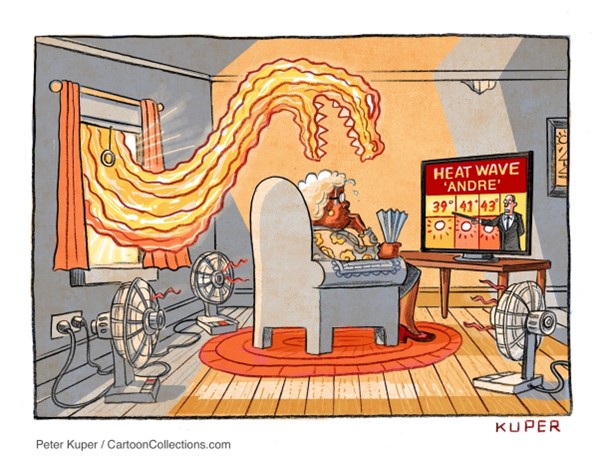
The damage of heatwaves to human health, productivity and lifestyles is growing. This is primarily because of the increasing likelihood of heatwaves caused by climate change. What are the impacts of this silent killer and what can be done about it?


Seventy thousand people died during the 2003 heatwave in Europe – a fact that should pose frightening questions if scientific projections that suggest climate change will increase the frequency of heatwaves turn out to be correct. Yet, because the death toll and drastic impacts of heatwaves are not always so immediate and obvious, they rarely received adequate attention from policymakers and the public.

“When hot days come, people think it’s just time to go to the beach. They don’t think about the fact that heat can make people sick, it can kill them. Maybe it’s just human nature, but why doesn’t it spur public attention?” asks Kathy Baughman McLeod, founding member of the Extreme Heat Resilience Alliance (EHRA) and SVP and Director of the Adrienne Arsht–Rockefeller Foundation Resilience Center at the Atlantic Council. The EHRA, formed by more than 30 global organisations, seeks “to tackle the growing threat of extreme urban heat for vulnerable people worldwide”.

Of the impacts of climate change, heatwaves are considered to have one of the deadliest health impacts. According to The Lancet Countdown on Health and Climate Change 2020 report, “from 2000 to 2018, heat-related mortality in people older than 65 years increased by 57 per cent and, in 2018, reached 296,000 deaths. The majority of these occurred in Japan, Eastern China, Northern India and Central Europe.”

What exactly defines a heatwave? Because they can vary significantly depending on a range of factors such as humidity, heatwaves do not have a universally accepted definition. One of the most common definitions that is attributed to them relates to an intensity that exceeds a certain threshold (there is no worldwide accepted threshold) and a duration that lasts a certain length of time.


How heatwaves impact human health, and who is most at risk?

Experts in the UK and US have concluded that extreme heat can cause a variety of negative health impacts depending on the intensity and duration of the heatwave. Some research shows direct correlations between increasing heat and an increasing number of excess deaths, which often double on particularly hot days. The main causes of illness or death during a heatwave are cardiovascular, respiratory disease and heatstroke.

Other heat-related illnesses:

  • Heat exhaustion – the most common. It occurs as a result of water or sodium depletion, with no-specific features of malaise, vomiting and circulatory collapse, and is present when the core temperature is between 37°C and 40°C. Left untreated, it may evolve into heatstroke
  • Heat cramps – caused by dehydration and loss of electrolytes, often following exercise
  • Heat rash – small, red itchy papules
  • Heat oedema – dizziness and fainting, due to vasodilation and retention of fluid
  • Heatstroke – can become a point of no return whereby the body’s thermoregulation mechanism fails. This leads to a medical emergency, with symptoms of confusion; disorientation; convulsions; unconsciousness; hot dry skin; and core body temperature exceeding 40°C for between 45 minutes and eight hours. It can result in cell death, organ failure, brain damage or death

(Source: Heatwave Advice, Department of Health)

People most at risk are those over the age of 65, people with disabilities or pre-existing medical conditions and those working outdoors for long hours in non-cooled environments. Other factors that can increase risk include; limited access to green spaces, living in cities with high population density, living on a top floor and being homeless. Nowhere is immune to extreme heat but populations in the Europe and Eastern Mediterranean regions have been the most vulnerable of all the WHO regions, the 2020 Lancet report found.

People with chronic or severe illness are likely to be at particular risk, including the following conditions:

  • Respiratory disease
  • Cardiovascular and cerebrovascular conditions
  • Diabetes and obesity
  • Severe mental illness
  • Parkinson’s disease and difficulties with mobility
  • Renal insufficiency
  • Peripheral vascular conditions
  • Alzheimer’s or related diseases

(Source: Heatwave Advice, Department of Health)

2003 heatwave in Europe. Image courtesy of Reto Stockli and Robert Simmon, based upon data provided by the MODIS Land Science Team.

Other impacts of heatwaves

The impacts of heatwaves extend beyond people’s health; experts estimate that by 2030, lost productivity from heat stress at work, particularly in developing countries, will cost $4.2 trillion USD per year.

“Across the globe, a potential 302 billion work hours were lost in 2019, which is 103 billion hours more than were lost in 2000. Thirteen countries represented 80.7 per cent of the 302,4 billion global work hours lost in 2019,” The Lancet 2020 report found.

The 2003 heatwave was estimated to have cost £41 million in health-related costs and productivity losses in the UK alone. In the US, a 2014 study by economists Tatyana Deryugina and Solomon Hsiang looked at annual income data and daily weather data from 1969 to 2011 and found that years with more days above 59 F (15 C) are associated with significantly lower income per person: average per-day income declines by 1.5 per cent for each 1.8 F (1 C) increase in daily average temperature beyond 15 C (59 F).

Several studies have also found links between extremely hot days and the worsening of people’s mental health conditions. A study in Toronto associated the increased rates of emergency visits for mental health conditions to temperatures rising above 28 C (82 F).


Yet another equality issue

Like many public health issues, heatwaves do not impact everyone equally – they affect people of colour and lower socioeconomic status more than anybody else.

“The people contributing to it least are suffering the most. There’s a link between hot communities and trees. Low-income communities don’t have trees whereas suburbs do. Trees help keep the temperature down and, more importantly, they absorb pollution,” says Ms Baughman McLeod.

“By contrast, people of lower economic status and of colour are more likely to be living next to industrial complexes that are emitting pollution. Most of the time in those areas there are no trees that can absorb pollution and heat is a key component of that.”

This was confirmed by a 2018 paper in the US that found people living in less vegetated areas had a five per cent higher risk of death compared to those living in more vegetated areas. Scientists at the University of California in 2017 mapped racial divides in the US by proximity to trees. Results were clear: black people were 52 per cent more likely than white people to live in areas of unnatural “heat risk-related land cover,” while Asian people were 32 per cent more likely and Hispanics 21 per cent.


Heatwaves and climate change: a sign of what is to come

There are fingerprints of climate change all over the recent heatwaves. An overwhelming amount of scientific evidence suggests that climate change is already making heatwaves and extremely hot days more frequent and severe. The evidence also suggests that if immediate actions to reduce emissions are not taken, extreme weather events will become the norm. A 2019 report by the World Weather Attribution (WWA) found that the 2019 heatwave in western Europe “would have been extremely unlikely without climate change”.

More recently in 2020, Siberia hit a record-breaking temperature of 38 degrees celsius. Again, WWA found “with high confidence” that the January to June 2020 prolonged heat “was made at least 600 times more likely as a result of human-induced climate change.”


We must raise awareness

When Ms Baughman McLeod, along with international partners, decided to establish the Extreme Heat Resilience Alliance in summer 2020, their first priority was clear: raising awareness among decision-makers. “We found that heat was the place where there was not enough attention. I think it’s ironic that in 60 or 70 years of climate discussions, and we call it global warming, we’re not talking about heat. It’s killing more people than any other impact of climate change,” she says.

A report published in 2021 by the WHO concluded that public awareness of the health risk is relatively high in places that are regularly affected by hot spells. However, it also found that “the risk perception of heat among healthcare providers may be significantly lower than it should be, given the objective risks faced by their patients.”

Worryingly, the report also revealed poor levels of awareness of heat warnings among health professionals, including nurses in care homes, as well as a lack of knowledge of existing heat–health plans among hospital front-line staff.

Heatwaves are a silent killer, how can you solve a problem people don’t know about? In a landscape of crises, if something is not burning, people are not going to address it.

– Kathy Baughman McLeod, SVP and Director of the Adrienne Arsht–Rockefeller Foundation Resilience Center at the Atlantic Council.

How should we go about raising awareness and saving lives? The Extreme Heat Resilience Alliance believes that naming heatwaves can make a difference. Although Ms Baughman McLeod admits that this may not be as straightforward as naming hurricanes, she believes this can help save lives.

“We’re trying to build a framework that can be adapted at a local met service and the existing heat health warning systems,” she told Integrated Care Journal. “We’re piloting heatwave naming and we’ve put a science team together to help inform it. We’re also building a ‘how to name heatwaves policy’ toolkit for countries that we will take to the COP26 in Glasgow,” she adds.

Courtesy of Arsht–Rockefeller Foundation Resilience Center

It is now crystal clear that heatwaves are an international issue that is bound to worsen in the years ahead, causing tens of thousands of deaths. While heatwaves impact certain countries more than others, nowhere is immune. Policymakers and health professionals must close the current knowledge gap and put into place policies that safely protect the most vulnerable in our societies. As the chances of altering the global CO2 emissions fall year after year, more resources should also be dedicated to adaptation rather than mitigation.

It is now crystal clear that heatwaves are an international issue that is bound to worsen in the years ahead, causing tens of thousands of deaths. While heatwaves impact certain countries more than others, nowhere is immune. Policymakers and health professionals must close the current knowledge gap and put into place policies that safely protect the most vulnerable in our societies. As the chances of altering the global CO2 emissions fall year after year, more resources should also be dedicated to adaptation rather than mitigation.

Thought Leadership

Getting what you need in healthcare: An information systems perspective

By

Information is one of the World Health Organization’s (WHO) six essential “building blocks” of a healthcare system. Concurring with this, we have invoked the idea of a health information seeker (Young & Klein, 2021), a concept that cuts through complexity to support policy and decisions around commissioning, adoption or use of IT.


A health information seeker might be someone feeling unwell, a carer or professional such as a doctor or nurse or health manager, even someone with an idle interest. It might be a data scientist needing to update health information. It might even be a hacker!

From their perspective, a healthcare information system must promote access to relevant information, while preventing information overload. The key questions about a health information system are:

  • Is it easy for its intended health information seekers to get what they need?
  • Are they protected from irrelevant, confusing or conflicting data?
  • Are inappropriate requests denied?

Most existing health information systems fail against such criteria on many counts.

Health information seekers are trying to make decisions. Should I see a doctor about this? What’s the best treatment for my patient? Do I need to cancel all elective surgery this afternoon? They have two routes: through interactive activity with technology (not necessarily digital), and through interpersonal activity. Information seekers have a repertoire of heuristics for seeking information from other entities, based on experience, intuition, rationality and guesswork. Their heuristics vary in quality and they are not always best placed to judge this quality for themselves.


Modelling the health information seeker

What more can we say about our information seeker? We might borrow Checkland’s (Checkland & Poulter, 2006) activity modelling concept to construct a generic activity model of the information seeker’s activities. Starting from a perceived need for information (the input to the system), the information seeker must first formulate what information is required. Then they can use this to identify and prioritise possible sources of the information. This will be followed, presumably, by actively seeking to obtain the information, following which the information will be assimilated and assessed, leading either to the need for information being met (the output) or a doubling back to earlier activities in the sequence as necessary.

Consider the UK’s bowel cancer screening programme (BCSP) for people aged 60-74 who receive a test kit by post every two years. Recipients are invited to return samples (also by post) which are tested. If positive, the individual must consult their GP urgently for further investigation. The sample requirement was recently altered from three samples over a few days, to a single sample and take-up increased from 59.3 per cent to 66.4 per cent, perhaps due to the greater convenience of the procedure.

With the test kit recipient as the health information seeker (other candidates are possible, but they would lead to different models), we can argue that the change in the information-seeking activity (the third activity in the activity model sequence in Figure 2) constitutes an improvement for the information seeker over what has gone before. (There is also an improvement in the diagnostic effectiveness of the test, which we have not considered here.)

Note that this system is proactive: many may not have sought this information until they received their first test kit. But if they had, there would have been considerable scope for dysfunction: there is an amazing range of bowel cancer advice available online, for instance, and the quality of each site may not be obvious to the searcher.


Conclusion

In the publication from which this article is derived (Young & Klein, 2021) we have discussed more expansively the implications for information systems designers of viewing an individual as a health information seeker. Here, we hope we have illustrated how this perspective, coupled with systemic thinking, can provide insights for meeting healthcare information needs in efficacious, effective and efficient ways.


References

P.B. Checkland & J. Poulter (2006) Learning for Action: A Short Definitive Account of Soft Systems Methodology and Its Use for Practitioners, Teachers and Students. Wiley, Chichester, UK.

T. Young & J. H. Klein (2021) Information systems in health: what do you need and how will you get it? In: L. Goldschmidt & R. M. Relova (editors) (2021) Patient-Centered Digital Healthcare Technology: Novel Applications for Next Generation Healthcare Systems. The Institute of Engineering & Technology, London, UK.


About the authors

Dr Jonathan H. Klein is an Associate Professor in Management Science at Southampton Business School (University of Southampton, UK). His research interests include the application of systems thinking to healthcare management and delivery, and the nature and use of evidence in decision-making. He has a particular interest in the use of systems approaches, such as Checkland’s Soft Systems Methodology, to messy problems exhibiting high degrees of complexity, uncertainty, and subjectivity.

Professor Terry Young is Director of Datchet Consulting and Emeritus Professor, Brunel University London. His research interests throughout careers in industry and in academia lies in healthcare information systems and care delivery systems.

Jonathan and Terry’s introductory chapter on information services in health is now out in Patient-Centered Digital Healthcare Technology: Novel Applications for Next Generation Healthcare Systems.

Thought Leadership

Integrated Care Systems: where everything depends on everything and everything affects everything

By

Designed correctly, Integrated Care Systems (ICSs) should deliver care more responsively and effectively than anything to date. Jacqueline Mallender, Alastair Mitchell-Baker, Clare Morris, and Terry Young explore.


Designed correctly, Integrated Care Systems (ICSs) should deliver care more responsively and effectively than anything to date. By harnessing the latest digital, policy, and organisational advances, with reformed payment mechanisms, ICSs promise better population health across the health-social, primary-secondary and mental-physical care divides.

As always, people are at the heart of the vision: citizens and communities, patients and families, clinical staff and leaders. To work for all, ICSs must focus on the journey each person makes, within a framework of policy, finance and governance.

ICSs are a response to now widely recognised failures in UK health and care delivery but are new to the NHS and are themselves subject to unfamiliar mechanisms of failure as well as success. In this article, we explore four challenges to integrated care – dynamics, delivery, design, and alignment – and recommend a new approach to system transformation.


Dynamics

Effective performance as a dynamic, integrated, system is radically different from the workings of the pseudo ‘internal market’ – with ‘transactional’ characteristics that have defined the last three decades of health and care delivery. It requires a change in mindset, new approaches, guidelines and procedures.

Furthermore, striving for ‘total connectivity’ means that small glitches can generate avalanches of knock-on effects. As systems become more integrated, the firebreaks of traditional provision disappear, and problems can spread further and faster. This means that ICSs must exhibit extreme resilience as they develop.


Delivery

The second challenge is in how to adapt what we have already learned from radically re-aligning payment methods with outcomes, and incentivise effective collaboration. NICE (The National Institute for Health and Clinical Excellence) has pioneered value-based policy since 1999, making the UK a global leader. An example would be best practice tariffs informed by NICE guidance (for instance in care for heart failure). However, value-for-money does not guarantee affordability within a departmental, local, regional, or annual budget (see Young & Mallender, 2020, Aligning value and incentives to make digital health really work, ICJ), so fresh thinking and new ways of working are needed. But this ambitious goal is well worth pursuing.


Design

While we are born with billions of neurons – grown in months – a brain takes decades to mature because it relies on interconnections, not just functioning units. Similarly, the ICS building blocks – clinics, theatres, equipment – can be built quickly today, but planning the connections between them takes much longer than it used to, while end-users absolutely must be involved from the outset.

This means that the balance between the planning and implementation of care shifts radically. A new mind-set must feel safe with longer planning and design cycles, more concurrency (where very different challenges are addressed together), all underpinned by more agile, adaptive commissioning.


Alignment

Finally, all ICS partners must align policy and operations across the whole system, including: policies to address variations in the wider determinants of health; operating public health programmes at scale; and providing integrated personalised care and treatment. The science of personalised medicine is well understood but the logistics are new and population health management requires tools that we are still only learning how to use.


Looking forward

The key things to focus on when designing an ICS are:

  • Earlier engagement with all stakeholders, including patients and staff, drawing them into the design from the start to unlock value and reduce risk. The old phasing is dead. Long live concurrency!
  • Deeper planning that goes right to the final service in operation, this includes: finance, efficiency; the built environment; information systems; digital; organisational structures; and clinical services.
  • Scenario testing. ICSs offer extreme performance and vulnerability, so attention must focus on failure modes and unintended consequences, as well as ways to make the most of their versatility and responsiveness in fast-changing crises.
  • Agile responses underpinned by automated data and intelligence. Out with old-style monthly KPIs; in with actionable intelligence, always available to all who need it.
  • People and relationships: our fates have never been more intertwined than in an ICS. When things go awry – as they will – the quality of relationships will dictate how we respond and stay on track.

Leaders and policymakers will need expertise that is better networked to reach deep knowledge in consensual ways that combines wider skills.

There are no shortcuts for fostering systems as complex and big as ICSs, so look for flexible support that can switch from strategy to technology, to organisational development, to finance, to clinical flows, to resource management, and can be sustained for the duration of development. Experienced hands – but with the curiosity and appetite for the new era – will be hugely valuable.

Don’t forget, our collective intuition has been honed in very different systems, so grill your experts with care before taking them on: you are looking for experience, agility and a wide range of skills, tools and capability.

If comprehensive system transformation is achieved, then providers and policymakers alike can share a wonderful sense of fulfilment, safe in the knowledge that they have created a solid foundation for integration to thrive throughout their system of health and care.


Contributors

Jacque Mallender, Director of Economics by Design. [email protected]

Jacque is an Economist and co-founder at Economics by Design. She is a respected international health and public policy economist and health evaluation practitioner. Over the last 35 years, Jacque has worked across health and social care with a focus on evaluation and health economics in UK, Europe, North America and more recently the Middle East and North Africa. She was a founding convenor of the joint Campbell and Cochrane Economics Methods Group and for 15 years was a committee member. In addition to her work at Economics By Design, Jacque is a Member of the Executive Committee of the Economic Research Council and an Associate of the Oxford Centre for Triple Value Healthcare.

Alastair Mitchell-Baker, Director of Tricordant. [email protected]

Alastair enjoys working with a diverse range of clients as a consultant – from NHS and councils to international NGOs, government departments and global companies, in the areas of organisation design and development, strategy and systems and leadership development. He has also worked in NHS senior management including as a Chief Executive and a Non-Executive Director. He was co-founder of the European Organisation Design Forum.

Clare Morris, Director of RETHINK Partners. [email protected]

Clare Morris founded Rethink Partners after a career in senior health management in the NHS. She has significant experience of delivering integration across health and social care systems with a strong interest in community health, mental health, learning disabilities, children’s services and neurodiversity. Having delivered big changes as an NHS leader, Clare now works with others – at all levels – to make change happen and create the conditions in which integration can thrive.

Professor Terry Young, Director of Datchet Consulting. [email protected]

Terry worked in industrial R&D before becoming an academic and is now Director of Datchet Consulting. With over 30 years’ experience in technology development and strategy, health systems, and methods to ensure value for money, his current focus lies in designing services using computer models and he set up the Cumberland Initiative to support healthcare organisations wishing to develop their services more systematically.

A recent paper on the cost-effectiveness of modelling was shortlisted for the Operational Society’s Goodeve Medal: Assessing the value of modelling and simulation in health care: An example based on increasing access to stroke treatment.