Health Inequality, News

Life expectancy significantly below average for women in England’s poorest areas

By
women low life expectancy

Life expectancy for women living in the poorest 10 per cent of areas in England is lower than overall life expectancy in any OECD country except Mexico, reveals analysis by the Health Foundation.


The analysis shows that women living in the poorest 10 per cent of areas in England have an average life expectancy of 78.7 years. This is considerably below the average of 83.2 years for the whole of England and less than the overall life expectancy for women in countries including Colombia (79.8 years), Latvia (79.7 years) and Hungary (79.6 years). In Mexico, which has the lowest life expectancy at birth of any Organisation for Economic Co-operation and Development (OECD) country, women live on average 77.9 years.

Women living in the richest 10 per cent of areas in England have an average life expectancy of 86.4 years. This is higher than overall life expectancy for women in any OECD country, aside from Japan which has the highest female life expectancy for all OECD countries at 87.3 years.

These figures demonstrate the harsh reality of health inequalities in England, where those in the poorest areas can expect to live significantly shorter and less healthy lives in contrast with the richest areas.

The government white paper on ‘health disparities’ is currently expected in early summer, following a pledge in February to increase ‘healthy life expectancy’ by five years and reduce the gap between the healthiest and least healthy local authorities.

The Health Foundation warns that the government’s strategy for improving health has so far failed to ‘grasp the scale of the challenge’ and that based on pre-pandemic levels, it will take almost two centuries to achieve that increase.

The rising cost of living is a compounding factor which may further widen health inequalities. The Health Foundation notes that the pandemic has taken a toll on the finances of many poorer families. Rising prices will mean that increasing numbers will be forced to choose between going without essentials which are important for living a healthy life.

Jo Bibby, Director of Health at the Health Foundation, said: “The stark reality in the UK is that the poorest can expect to live shorter and less healthy lives than their richer counterparts.

“The government has committed to addressing stalling life expectancy and this has been described as a core part of the levelling up agenda. However, the government has so far failed to acknowledge the mountain it needs to climb to bring life chances in the UK in line with other comparable countries. Investing in people’s health is an investment in the economy.

“For many people, poor health is a significant barrier to work and training. The economic impact of lost output and health costs associated with poor health adds up – these are estimated to cost the UK economy around £100bn a year.

“If we are to see progress, there needs to be a fundamental shift in the government’s approach, from a focus on people’s individual responsibility and choices towards actively creating the social and economic conditions that enable them to live healthier lives. This means providing secure jobs, adequate incomes, decent housing and high-quality education.

“To achieve this, improving health should be made an explicit objective of every major policy decision. Otherwise, the gap between rich and poor will further widen and ‘levelling up’ will remain little more than a slogan.”

Community Diagnostic Centres: A critical response to regional inequalities

By
CDC regional equality

The latest report from Vanguard, Assessing the current state of play of CDC delivery across England, 2021, provides much needed clarity on the current status of CDC rollout and identifies where more support is required to achieve regional equality in healthcare provision.


The backlog in patient care is affecting every region across England, with waiting lists at an all-time high and services struggling to keep up with demand. Community diagnostic centres (CDCs) were earmarked by Sir Mike Richards as a necessity across communities to support quicker and safer access to both elective and diagnostic procedures in 2019.

A few years and a global pandemic later and the need for streamlined diagnostic service provision is now greater than ever.

An additional layer to the elective care crisis is the disproportionate impacts being felt across England; while no region of the country has been left untouched by the crisis, some are clearly being affected more severely than others. The approach to delivering CDCs is also disjointed across regions and their respective integrated care systems (ICS).

To deliver high-quality diagnostic care in the face of the backlog, a joint up and co-ordinated approach is vital. The latest report from Vanguard, Assessing the current state of play of CDC delivery across England, 2021, outlines the findings of a Freedom of Information (FOI) research project, undertaken in 2021. The findings of the report not only provide a bigger picture on the current status of CDC rollout but also identifies where more support is needed in order to achieve regional equality in healthcare provision.

Compounding inequalities

Health inequalities have been widening across England in recent years and these societal fault lines were underscored by the impact of Covid-19. There is currently a gap of almost 19 years in healthy life expectancy between the most and least deprived areas of the country. Further still, during the pandemic average life expectancy fell for the first time since 2000.

Higher rates of Covid-19 were concentrated in the most deprived areas of England, intensifying pressure on the hospitals and care services within these regions. This has caused patients living in these areas to suffer the greatest disruptions to elective care services.

According to evidence submitted by the Health Foundation to the House of Commons Health and Social Care Committee, patient treatment completion in the most deprived areas of England has fallen by 31 per cent, while completion fell to 26 per cent in the least deprived areas. Regional inequalities are only set to widen as the effects of the pandemic continue to impact patient waiting times.

 “A joint up and co-ordinated approach across England is vital to minimise the disruption to services and reduce the patient care backlog.”

Targeting inequalities with CDCs

The Vanguard report, Assessing the current state of play of CDC delivery across England, 2021, provides an overview of current CDC delivery across England. The region with ICS, STP and Clinical Commissioning Groups (CCGs) that are farthest along in their delivery strategy is the Southeast. A high proportion of respondents reported to have a strategy in place and expect their CDC to be fully operational in the next three years. The Southeast also had the highest proportion of respondents that identified CDCs as a high spend priority.

Contrastingly, just one-third of respondents in the West Midlands identified CDCs as a high spend priority. Furthermore, the West Midlands region has the highest waiting lists for all procedures in England, accounting for 20.5 per cent of all national waiting lists as of July 2021. It is evident from the current picture of CDC roll out that more regionally tailored support is needed to level out delivery across the country, ensuring that the impact of CDCs is maximised.

Central to the CDC ‘mission’ is to minimise regional inequalities by supporting the delivery of integrated care, helping to join up disconnected patient pathways and bring services closer to the communities that use them. It is hoped this will expand capacity and improve access to care. By increasing the capacity to tackle waiting lists, the successful implementation of CDCs could help to reduce healthcare inequalities and disparities in patient outcomes.

Lindsay Dransfield, Chief Commercial Officer at flexible Healthcare Spaces provider, Vanguard said: “CDCs are an essential component to reducing patient care backlogs, creating more accessible healthcare for individuals in more deprived areas.

“Following the recent government announcement that £2.3 billion is to be spent on increasing diagnostic activity across the UK, it is now more important than ever to reduce regional health inequalities through the introduction of more CDCs.”

Fair access to funding

While the Health and Care Levy, introduced in September 2021, provides significant funding for tackling waiting lists and elective care backlogs, there remains significant challenges in ensuring equitable distribution of funding. For CDCs to be rolled out with more consistency across England, the government must ensure that regions are able to fairly access funding and support. There is currently a lack of clarity across ICS/STP/CCGs around how decisions are made to allocate funding, this lack of guidance is detrimental to regions already being impacted by higher waiting lists and capacity issues.

The Vanguard report recommends that the government and NHS “remove bureaucracy in the national procurement process to ensure CDC delivery is accessible for all bodies involved with the ICS”. Unnecessary bureaucracy in the procurement process has cost and time implications for healthcare providers, in some cases making it impossible for them to undertake the application process.

On top of reducing bureaucracy around funding, the report recommends putting in place regionally ringfenced budgets for CDCs that are calculated based on a number of indicators, such as waiting lists, current budgets, staffing requirements and available land. This will ultimately help to provide a more consistent approach in the roll out of CDCs and subsequently generate fairer patient outcomes.

A co-ordinated approach

Central to the NHS Long Term Plan is the goal of delivering fully integrated community-based healthcare. To achieve this, the Vanguard report demonstrates the need for a clear framework for CDC delivery to provide clarity across ICSs. A joint up and co-ordinated approach across England is vital to minimise the disruption to services and reduce the patient care backlog, but the benefits must be felt equally. With the most deprived areas of England facing some of the harshest consequences of the pandemic, the roll out of CDCs is an important step in ensuring accessible and equal healthcare.

The Vanguard report recommendations include:

  1. Put in place clear, accessible national funding streams in order to secure confidence in CDC delivery and enable the development of long-term, futureproofed plans.
  2. Ringfence central Government funding for CDC delivery per region, assessed on a range of factors (such as number of patients, average time for delivery of care, number of ICSs in region) to ensure the roll out of CDCs is fair and serves to actively reduce regional inequalities.
  3. Develop localised awareness and education programmes for ICSs to ensure all bodies involved with CDC delivery are aware of the opportunities available to them in terms of funding, partnership opportunities and have access to necessary additional support to ensure the success of CDC delivery.
  4. Broaden the national awareness of regional health inequalities and provide additional support and resources, beyond funding alone, to regions suffering from covid-related backlogs to better prepare them for future incidences of heightened pressure and to prioritise patient outcomes.
  5. Remove bureaucracy in the national procurement process to ensure CDC roll out is accessible for all bodies involved in the ICS.
  6. The Government and NHS should actively identify appropriate infrastructure partners who can rapidly design, build and commission appropriate high quality, safe clinical infrastructure and develop a register of verified infrastructure delivery partners to ensure CDC delivery is consistent on a national scale.
  7. Develop a sustainability guide for CDC delivery to help the NHS reach its goal of Net Zero carbon by 2045.
  8. Promote Modern Methods of Construction (MMC) for CDC delivery to transform existing facilities and create purpose-built new estates that have the flexibility to be re-purposed and expanded upon, enabling a rapid response to changing demands and enabling ICSs to build out there CDC in a modular fashion to tackle patient waiting lists.
News, Thought Leadership

Making the creative leap: a healthcare case study

By

Amid greater demand for NHS services, increased use of computer modeling in the planning stages can improve efficiency of delivery.


Plan-Do-Study-Act (PDSA) is deeply embedded in the NHS – and why not? It is simple to grasp and easy to explain. It puts improvement in the hands of those who deliver the care, empowering staff with knock-on benefits for patients. However, it is focused on incremental improvements, and may miss what works well already.

Increasingly the NHS must introduce new systems and services quickly, which is where PDSA runs out of steam as a way to manage innovation. In early 2021, Birmingham and District General Practitioner Emergency Room (Badger) Group set out on its final phase of rapid access delivery. Badger group, which delivers out-of-hours primary healthcare to local patients, was preparing to open a drive-through facility in Bourne Road in Aston. When planning for the opening of this facility, the team used an adapted form of PDSA and added something new.

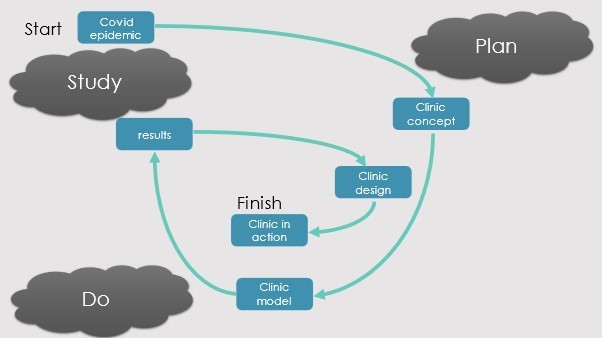
The adapted feature was to stick to a cycle – study, plan, do (SPD) – which emphasises iterative solutions. Cycles are key to systems design, because it is impossible to specify anything completely from scratch. Also, as a solution is developed, the problem often changes. With rapid access, for instance, making it easier for people to reach the care they need can risk creating bottlenecks and queues as people converge on the new facility.

The innovation was to use computer simulation alongside measurement based on physical facilities. Models may be built and assessed faster than a real service, which speeds the design process up enormously. Models are also safe, since nobody suffers during a simulation. Figure 2 shows an example of two cycles of a design process using SPD at its core.

Figure 2: A simplified cycle of a design process involving two cycles of study, plan, do (SPD)

Study

GK Chesterton said, “The Reformer is always right about what’s wrong. However, he’s often wrong about what is right.” It is critical, therefore, to analyse what works well at each stage of an emerging design, as well as to understand what remains problematic.

With each cycle of the design complete, there is usually more evidence and data to feed into the next plan and computer models can address two questions:

  1. Is the plan likely to work as intended? This is the ‘what works’ question.
  2. Under what circumstances is it likely to fail? This is the ‘what risks’ question

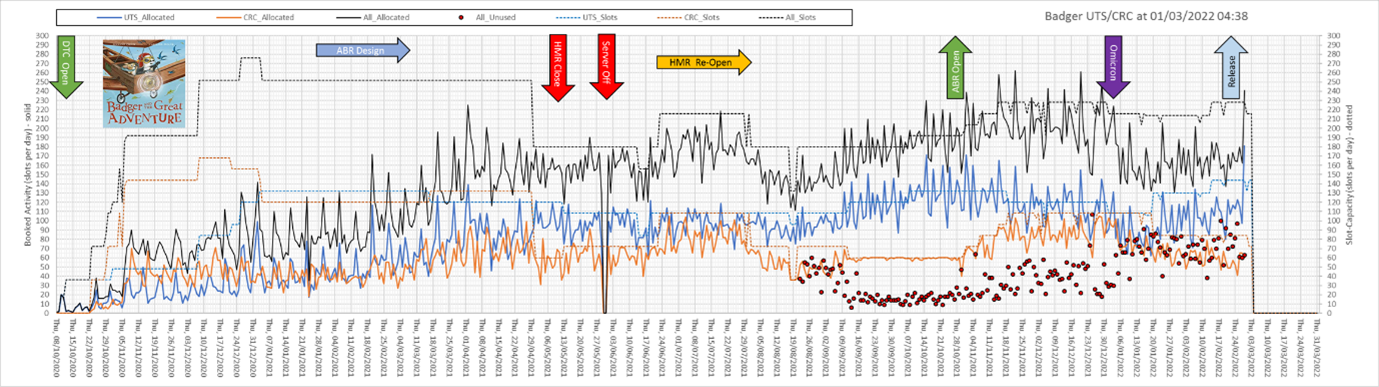
In this case, as several rapid access, drive through facilities were built over a short period, the data available for study became very detailed – as shown in Figure 3.

Figure 3: Example of the depth of data available for later deployments of rapid access clinics based on earlier clinics.

Plan

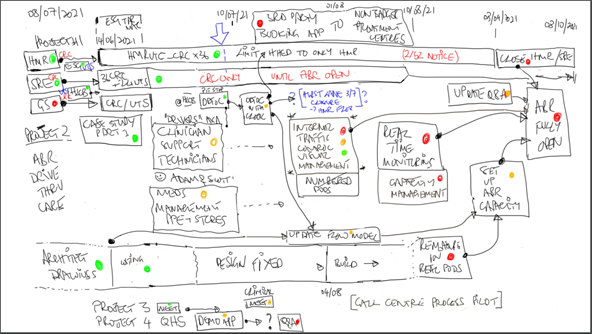
Given increasingly sophisticated data, it is possible to plan in ever greater detail and with greater confidence. Planning is an interactive process, ideally drawing in as many stakeholders as possible. White boards, as shown in Figure 4, are an effective thinking tool at all stages of the process.

Figure 4: Hand drawing used as part of the design process

Do

The strength of the Badger approach is that it could use a variety of protoypes throughout the process, starting with a computer model of the local spread of the Covid pandemic. Computer models were also built to test out each clinic that was commissioned, and those clinics in turn were used to prototype aspects of the next stage of delivery.

This process sustained rapid cycles of development and successful deployment of a new type of care delivery through a series of easy access units in less than two years from initial concept to the latest drive through clinic.


Did it work?

On October 21 2021, the first patients drove through Badger Group’s purpose-built clinic. There is capacity for up to 500 a day, and they are still coming.

The mass vaccination campaign has alerted many in healthcare to the potential of pop-up provision, and many examples exist, run out of anything from tents to cathedrals. What is unique about this example is the advanced methods used to deliver a sequence of easy-access clinics during a time when the NHS was under extreme pressure.

Each opened as planned and worked as predicted. And that is exceptional.


About the authors

Mr Simon Dodds, MA, MS, FRCS

Simon Dodds is a general surgeon at University Hospitals Birmingham NHS Foundation Trust. He studied medicine and digital systems engineering before following a career in general and then vascular surgery. In 1999, he was appointed as a consultant surgeon at Good Hope Hospital in North Birmingham and applied his skills as an engineer and a clinician in the redesign of the vascular surgery clinic and the leg ulcer service.

In 2004, the project was awarded a national innovation award for service improvement. This experience led to the design, development, and delivery of the Health Care Systems Engineering (HCSE) programme.

Alan MacDonald, BSc

Alan studied at Nottingham Trent University and has a BSc (Hons) in Biomedical Science.

He worked for the Badger Group as an Out-Of-Hours primary care team leader and later became a data analyst. Since the start of the COVID-19 pandemic in March 2020, he became directly involved with the development of a multi-lane drive through Covid Referral Centre at the NEC.

He has been instrumental in the deployment of other temporary drive through clinics across Birmingham. He has also been actively part of the original team who were successful in applying this concept to the first purpose-built drive through clinic in the UK

He is frequently involved in new & novel projects within the out of hours primary care sector and is currently studying Health Care Systems Engineering.

Dr Fay Wilson, MBChB, FRCGP

Fay trained in Birmingham and has practiced there as a GP there since 1985. Her extensive national and local portfolio includes: NHS HA Non Exec, GMC fitness to practise chair, and associate postgraduate dean at Health Education West Midlands. She has served on the council of the BMA and other bodies. Fay brings people together to develop new models of care, a notable success being the Birmingham Multifund co-operative, a pioneering nurse-led walk-in centre and a prototype GP provider-at-scale ahead of its time in the mid-1990s.

Dr Wilson is medical director and co-founder of Badger, a GP social enterprise since 1996 providing out of hours and urgent primary care. COVID-19 introduced her to systems engineering, new people and new ways of thinking. Her ambition for the last decade has been to slow down.

Prof Terry Young, BSc, PhD, FBCS

After 16½ years as a research Engineer, Divisional Manager and Business Development Director, Terry became a professor at Brunel University London for 17 years.

He has a BSc in Electronic Engineering and Physics, a PhD in laser spectroscopy both from the University of Birmingham, UK.

His research has been in health technology, health services, and information systems. He has taught information system management, project management and e-Business.

His awards include the Operational Research Society’s Griffiths Medal, 2021, for analysing the return simulation methods offer when used to improve healthcare services.

Prof Young set up Datchet Consulting in 2018 to support innovation on the borders of academia, health and industry, of which the project reported here is an excellent example.

News, Social Care, Workforce

Care employers come together for Ukraine

By
Care employers

With the conflict in Ukraine raging, care employers are working together to provide opportunities for those displaced to work and find a home in the UK.


Care employers have been working together to understand how they can provide a meaningful employment opportunity for those displaced from Ukraine and other parts of the world and finding a home within the UK.

The National Care Forum (NCF), the leading association of not-for-profit care and support providers, in association with the Care Provider Alliance, have brought together a wide range of partners committed to offering support. This includes expertise from across national and local government, housing, recruitment specialists, legal and immigration experts and regulators.

Employers and partners are working closely with recruitment experts to enable displaced people from Ukraine and other parts of the globe to identify roles within the care sector, direct individuals to localised support and ensure that employers work together to provide the best opportunity for those who wish to work.

While this work progresses, the broader support for people displaced from Ukraine through the Homes for Ukrainians scheme is being clarified. Alongside this, local government has an important role in regards to how local support will work, and specific roles and responsibilities are still emerging. It is imperative that the desire to work is aligned with the need for displaced people to be connected into wider community and pastoral support.

Vic Rayner OBE, CEO of the NCF said: “Like many people affected by the plight of the people of Ukraine, care employers are pulling together to take action to help. The ideas are progressing at pace, and there is a strong desire to do something meaningful to help the people of Ukraine, and others from around the globe who arrive into the UK.

“We are pulling together opportunities for care and support employers to share details of available job vacancies, which we hope will be tied into the broader communications for displaced people. There are many other ways for people to offer support, including support to Ukrainians needing care and support, assistance with vetting and matching, and those who have a housing solution.

“However, there remain significant unanswered questions around regulatory requirements, right to work entitlement, safeguarding, etc. We need the government to work at pace alongside adult social care employers to resolve this. Furthermore, we are working with other partners, to understand how most effectively the sector can be engaged to provide a solution at this moment of crisis.”

News, Population Health

WHO reveals almost entire global population breathing unhealthy air

By
air quality

Almost the entire global population (99 per cent) breathes air that exceeds World Health Organization (WHO) air quality limits, and threatens their health, according to the 2022 update of WHO air quality database.


The new air quality database, released on 4 April, is the most extensive yet in its coverage of air pollution exposure on the ground. The database now includes measurements of annual mean concentrations of nitrogen dioxide (NO2), a common urban pollutant and measurements of particulate matter with diameters equal or smaller than 10 μm (PM10) or 2.5 μm (PM2.5).

A record number of over 6,000 cities in 117 countries are now monitoring air quality, revealing how their populations are breathing unhealthy levels of fine particle matter and nitrogen dioxide. The data also shows that people in low and middle-income countries are suffering the highest exposures.


A worsening health emergency

The database demonstrates the threat of air pollution to human health. Particulate matter is capable of penetrating deep into the lungs and entering the bloodstream which can cause cardiovascular, stroke and respiratory impacts. There is also emerging evidence that particulate matter impacts other organs and causes other diseases.

Nitrogen dioxide is associated with respiratory diseases, particularly asthma, which lead to respiratory symptoms, such as coughing or difficulty breathing. This further leads to increased hospital admissions and visits to emergency rooms.

Dr Maria Neira, WHO Director, Department of Environment, Climate Change and Health, said: “After surviving a pandemic, it is unacceptable to still have 7 million preventable deaths and countless preventable lost years of good health due to air pollution. That’s what we’re saying when we look at the mountain of air pollution data, evidence, and solutions available. Yet too many investments are still being sunk into a polluted environment rather than in clean, healthy air.”

Last year, WHO responded to the growing evidence base for the significant harm caused by even low levels of many air pollutants by revising its Air Quality Guidelines. The guidelines were made more stringent, especially for Nitrogen dioxide and particulate matter, an action that was supported by the health community, medical associations and patient organisations.

Now, through the 2022 database WHO aims to monitor the state of the world’s air and feed into progress tracking of the Sustainable Development Goals.

Commenting on the report, Francesco Tamilia, Policy Analyst at Public Policy Projects and author of The climate crisis and its impacts report said: “The science and data are increasingly clear on the extreme threat air pollution poses on human health, damaging every organ in the human body. World Health Organization has done an incredible job revising its Air Quality Guidelines last year, making them more rigorous. The latest air quality database is another important step in measuring the damaging affects air pollution has on the population’s health.

“National governments have no excuses, either they implement those guidelines and avert millions of premature deaths, or they will knowingly neglect the health of their populations.”

More support needed for “fatigued” social care workforce

By
Social care

On the 16th March 2022, Public Policy Projects (PPP) hosted an evidence session entitled The Social Care Workforce: Averting a Crisis as part of its report series The Future of Social Care. PPP’s Social Care Network examines the most urgent issues facing social care and presents tangible solutions to address workforce challenges in the sector.


The crisis facing the social care sector is fundamentally a workforce one. The sector itself is a large employer in the UK, employing about 1.54 million people, equivalent to five per cent of the workforce. As one participant noted, “the sector itself is a huge contributor to the economy and to society”. Given that staff pay is the single biggest expenditure faced by care homes, workforce management should be front and centre whenever system finances are being considered.

Even before the pandemic, there were about 112,000 social care vacancies in England, with jobs paying only £8.50 an hour. Following the pandemic, the vacancy figures are assumed to be worse. Key issues driving individuals away from working in the social care sector include low pay, stressful working conditions and a low sense of worth.

A participant of the evidence session emphasised that the working conditions of the social care sector have led to 74 per cent of care professionals reporting that they regularly experience stress at work, an average number of sick days 25 per cent above the national average, and a staff turnover rate significantly higher than the national average.

As phrased by one participant, social care is suffering from a “fatigued workforce” not only due to the pressures of the pandemic, but issues which have existed within the sector for much longer. The problems within the social care workforce are chronic , and are considered by many to constitute a crisis. As one participant said, “clearly a workforce strategy is one of the absolute essentials that we need to have to make a success of the sector over the next decade or so”.

“The social care sector should work alongside recruitment organisations to recruit young, bright people into social care, and help them consider where a career may lead.”

One problem identified was narrow recruitment to the sector. It was stressed that within social care, “we should cast our nets wider in a recruitment approach… and recruit not only people with previous experience”. The social care sector should work alongside recruitment organisations to recruit young, bright people into social care, and help them consider where a career may lead.

It was also suggested that more effort must be made to recruit hard-to-reach and underemployed groups, including people living with disabilities, and immigrant workers. “What frustrates me is that there are individuals in these groups who can be wonderful, caring staff [but]are missed, because hiring managers are too narrow in their focus”, said one participant.

Staff retention rates in social care are low. Network members noted that social care workers often leave the sector for other, similarly paid jobs, such as retail roles, while few choose to leave and work for the NHS. One network member identified that “between care assistants in the NHS and the social care sector, there is around a 23 per cent deficit in social care. The terms and conditions are vastly better in the NHS. Pensions, sick pay, overtime and unsocial hours all contribute to that deficit.”

Essentially, social care workers are underpaid and undervalued. For both better recruitment and retention, social care workers must be appropriately paid and treated as though they are valued. Some network members identified low pay as the key driver for individuals choosing to leave the social care workforce, and yet, it was emphasised that social care is a both a skilled and psychologically demanding profession, and should be commensurately well-paid.

However, funding in the system is limited, and paying the workforce is the sector’s single biggest expense. One participant said “there is not a settlement from government or local government that actually meets the cost of care to enable us to pay a proper wage for the level of skill, ability, responsibility, dedication that [care workers] have”. Furthermore, a high proportion of social care workers are on zero-hours contracts; in London, this figure stands at 41 per cent of social care workers. Therefore, many social care workers have to deal with pay inconsistency and insecurity, on top of being low-paid.

“Network members were in agreement that social care is, and should be publicly regarded as, a skilled profession.”

While pay is regularly described as the most pressing issue in the workforce, one participant argued that in their experience of conducting exit interviews with workers, it is not low pay, but rather a low sense of worth which leads people to leave the profession. While higher pay is one way in which care workers can be practically appreciated, it was agreed that more must be done to value care work both by improving the public image of care workers and ensuring that internal structures provide support and give value to workers.

Network members were in agreement that social care is, and should be publicly regarded as, a skilled profession. “It is not the kind of job that everyone can do,” said one participant. “It is a skilled job, which requires the creation of quality human relationships and working with people who have complex care needs… it is a real skill and should be regarded as the same as working in health.”

Social work is challenging and worthy of respect, all participants agreed. One commented that “no two days in social care will be the same; you have to be agile and move with that, so it does take very special people to take those roles”. The public status of social care work must be elevated to reflect this, and the workforce to feel appropriately valued if these retention issues are to be effectively addressed.


Securing an integrated future

For a supported workforce, good leadership is essential. One participant noted that in the social care system “there is a varied approach to leadership”, and good leadership is not always evident in the system. Given the demanding nature of social care work, it is essential that carers feel well supported in their roles. One participant added that “workers do not stay because of a good job, they stay because of a good manager”, and therefore, proper leadership training must be a central goal of the workforce plan.

A practical solution suggested by one of the network members to combat low recruitment, retention and the poor image of the profession was a ‘social-care-first’ scheme, mirroring the successful teach-first scheme. Many other sectors have emulated the ‘teach-first’ template with great success. The aim of the scheme is to engage with young people to consider social care work as a career by espousing the value of a career in care. Such a scheme would emphasise how care work has the potential to transform the lives of dependent individuals, and the importance and value in building personal relationships with system users, improving the image of the profession. As part of the scheme, there should also be structured leadership, coaching and mentoring training, for the purpose of also transforming the quality of social care. This may serve to solve some of the leadership issues in the sector, as young and bright individuals will be well trained to manage and lead social care in the future.

Now that the NHS and social care are moving towards integration, participants noted that for a true and fair integration of the systems, employees should be paid and treated equally. One participant called for a joint recruitment scheme for the NHS and social care, with equal pay offered. It was also emphasised that NHS workers receive many ‘perks’, particularly since the start of the pandemic, which social care workers do not (including food and drinks discounts from certain companies).

Other suggestions to aid the integration of the NHS and social care workforce included social care placements and secondments for NHS staff, in which they are exposed to social care, and the richness and value of social care work. The status of care work must be elevated for proper integration of the two systems can occur, in order that social work and NHS work can be equally respected.

A large part of the discussion focused on the role of volunteers within the social care sector, and the value they bring to both paid carers and system users. Volunteers are an invaluable part of the social care workforce given that they reduce pressure on care workers, improve patient experiences, facilitate higher quality of care to drive better health outcomes, and strengthen community connections. One participant said that in the context of social care, “volunteering is a public health tool. There is a body of medical research which talks about the huge benefits for mental health and physical wellbeing for patients”. Volunteers also serve to raise the visibility of the social care sector.

Since the start of the Covid-19 pandemic, the UK has seen an unprecedented rise in the numbers of people volunteering in their local communities. During the pandemic, the UK had 12.4 million people volunteering in their local communities. 4.6 million of these were first-time volunteers. Currently, the UK has a window of opportunity to make the most of the interest in volunteering to reduce the immense pressure on care workers.

As part of the workforce strategy, there needs to be investment to drive the volunteer sector, for the wellbeing of the social care system and its users. However, time is undoubtedly of the essence; as one participant emphasised, “there is an urgency to the conversation we are having. As Covid dissipates, what we don’t want is for people to go back into the corners of their community and not come out again to contribute.”


Clarifying the metrics: A true picture of system wide activity

By
metrics

Maria Kane, Chief Executive of North Bristol NHS Trust, addresses the need for defined and aligned metrics to provide one overall picture of system wide activity and reveal where improvements can be made.


Every acute trust is facing three challenges: the elective care debt, urgent care recovery and an exhausted and depleted workforce. With Integrated Care Systems (ICSs) on the horizon, we have an opportunity to step back and look at the bigger picture to see where we can make system improvements to meet these challenges and add value to the patient, public and taxpayer.

However, it is difficult to understand what is going on in any given health and care system. This is because the finance framework and metrics currently available are not defined or aligned enough to help determine the exact value (cost and outcome) of activity the funding is producing.


A clear picture of each health system

Each ICS will be responsible for allocation of funding at system level. The aim is to distribute resources according to population need and to help reduce health inequalities. However, all payment systems are complex and to ensure the right calculations for payment of care and enable health systems to provide the right care in the right places, it is vital to have access to the right sources of data. Where patient-level data is limited, this can impact on how system budgets are allocated.

Currently, trusts are operating with a mixed economy of block and activity contracts. Most of these are now block contracts since Covid-19 began, but there are also have large numbers of individual providers on specialist and general contracts, which makes it difficult to see the big picture. Specialist contracts, for example, can cover wide areas which makes it harder to pin down what is happening in each ICS. Operating with a variety of contracts like this can create significant challenges when trying to set out a whole system budget.


A greater understanding of each system

ICSs provide the health system with an opportunity to clarify and get on top of the metrics and to have a single interpretation within each system. This will allow the scope to broaden and incorporate areas such as mental health.

Giving full responsibility of finances to ICSs and enabling them to operate the whole budget will bring many benefits and allow good population health management. However, there needs to be a shared understanding of how local services are run to ensure all areas of the system are given adequate funding. All members of the ICS need to understand how each part of the system works and it is crucial that financial decisions are based on a sound knowledge of the challenges across the whole system.

Bringing together sources of data from across community, primary and acute care can help to provide one overall picture of how the system is performing. Data can highlight where funding needs to be focused to help create change, improvement and the best patient care, as well as being able to highlight areas where proactive care can start to make a difference, but  the finance framework and metrics need to be tackled first.


Capita Healthcare Decisions have been at the forefront of tackling the challenges within healthcare systems for over 27 years. To find out more visit: https://capitahealthcaredecisions.com/

Digital Health Academy to provide free digital skills training

By
Digital Health Academy

The Digital Health Academy opens today and aims to provide free digital skills training to all NHS staff by 2031.


From today, the Digital Health Academy, a free, digital training tool for NHS frontline staff, is in operation. Aimed at providing digital skills training to all NHS staff by 2031, the modules are now freely available on the Health Education England NHS Learning Hub. As highlighted by Health and Social Care Secretary, Sajid Javid, in a recent speech, it’s crucial that the NHS improves digital provision across all health and care services and the Digital Health Academy aims to address this by building on the digital skills of all NHS staff.

A survey from the Organisation for the Review of Care and Health Apps (ORCHA), reveals that although 65 per cent of the public are open to trying digital health technologies, only a fraction of tools are recommended by health or care professionals.

In total, amongst those using digital health, only a small proportion of recommendations came from healthcare professionals, with 17 per cent of recommendations coming from GPs, eight per cent from hospital doctors, and two per cent from nurses.

The need to support a digitally ready workforce has been highlighted by the NHSX Readiness Plan and the CPD-accredited Digital Health Academy responds to the critical requirement to invest in developing front-line skills for digital health through professional development.

Currently, there is still no mandatory digital health training for health and care professionals, and the courses that frontline workers can attend are often scarcely available. In response to this need, ORCHA, with the support of universities and healthcare professionals, and with financial support from Boehringer Ingelheim, developed the Digital Health Academy, the foundation level modules of which will be freely available at orcha-academy.com and on the Health Education England NHS Learning Hub.

The academy’s online training modules are designed specifically for frontline health and care professionals who want to use and recommend digital health tools but have been struggling to access the knowledge to do so safely.

ORCHA has created the infrastructure of the online training portal and designed courses, drawing on experience gained reviewing more than 17,000 health apps and operating health app libraries in 70 per cent of NHS regions.

The Digital Health Academy’s aims include:

  • Free access for all NHS and social care staff
  • Availability on Health Education England NHS Learning Hub
  • Enabling staff to gain Continuing Professional Development (CPD) points in a vital new area of professional development

The CPD-accredited Digital Health Academy programme includes:

  • Short, bite-sized learning modules to suit busy schedules, which can be accessed at any time
  • Two foundation modules which explain the function of health apps, the current digital health landscape, the barriers to using and adopting digital health and the importance of prescribing good quality digital health products
  • Coming soon, a series of specialist modules including topics such as digital health for mental health, diabetes, physiotherapy, long Covid and winter pressures

Commenting on the academy’s resources, Dr Neil Ralph, Head of Health Education England Technology Enhanced Learning (who has previously written about the need to prepare the NHS for digitally-driven healthcare), said: “COVID-19 accelerated the rapid adoption of digital health across health and care services and the need to embed digital health in the long term. We are delighted that ORCHA has contributed its Digital Health Academy foundation content to the Learning Hub and look forward to hosting new content in the future, further supporting health and care professionals in their roles.”

Learning about the value the Academy offers frontline staff, Boehringer Ingelheim committed to sponsor the foundation modules. This has enabled it to be opened up at no cost to health and care professionals. Commenting on this, Uday Bose, Managing Director at Boehringer Ingelheim UK & Ireland, said: “There’s widespread recognition of the need for digital health training for frontline workers, with organisations from the King’s Fund to the Royal College of General Practitioners calling for it. With six million people now waiting for elective care, and with first-class digital tools available which could support healthcare workers with many of the high volume and low complexity cases, the need to improve digital skills and digital confidence in the NHS has become critical. We felt the academy was a perfect way to address this very real need amongst frontline staff.”

Ahead of the launch, the academy has been introduced to professionals using the ORCHA digital health libraries to a positive reception:

Dr Michelle Webster, Chief Clinical Information Officer & Consultant Clinical Psychologist at Coventry and Warwickshire NHS Partnership Trust, said: “The ORCHA Digital Health Academy has helped to demystify digital health, strengthen our clinicians’ digital skills and boost their confidence in using healthcare apps. The bite-sized modules are easy to follow, interesting and relevant and designed to flexibly fit around their busy jobs. I would highly recommend.”

Najia Qureshi, Director of Education and Professional Practice, British Dietetic Association, said: “This is a really welcome resource for our members, who work across the NHS supporting patients with a wide range of health conditions. Innovation in healthcare is introducing new ways of working and is transforming patient care. This programme will help dietitians and other health and care professionals to develop the professional skills needed to confidently use and recommend the right digital health products – helping patients to benefit from digital healthcare.”

Reviewing a foundation module course, Dr Joel Brown said: “It takes quite a paradigm shift to move physicians away from seeing prescribing as an exclusively pharmaceutical enterprise. As medicine is increasingly digitised, clinicians need to take seriously the opportunity to prescribe digital health. The course by ORCHA, as part of their Digital Health Academy, makes this point brilliantly.”

If there is a Cinderella in health infrastructure, it is primary care

By
primary care

Chris Green MP, Chair of the APPG for Healthcare Infrastructure, calls for the government to properly prioritise the primary care estate in its upcoming refresh of the Health Infrastructure Plan.


In recent years, attention has been focused on a national level on the government’s headline hospital building programme. While investment in acute infrastructure is imperative, we have been waiting with bated breath for a year for the refresh of the Health Infrastructure Plan (HIP).

Addressing the NHS England and NHS Improvement National Estates and Facilities Forum in March 2021, Health Minister Ed Argar MP promised it would set out “the direction of travel for the primary care estate”.

Since then, the radio silence from Whitehall has been one of the factors behind cross-party parliamentarians coming together to revive the All-Party Parliamentary Group for Healthcare Infrastructure.

Our mission is simple: to highlight the importance of high-quality healthcare infrastructure to support the NHS in meeting the demands of the future, including post-pandemic care.

The state of the primary care estate and the lack of a long-term strategic framework is holding back everything from modernisation and integration of NHS care, to tackling the maintenance backlog and embedding new roles into primary care. A YouGov survey of healthcare professionals conducted last autumn found 40 per cent saying the premises they worked in constrained the services they could provide to patients.

In a report published in February on integrating additional roles into primary care networks (PCNs), The King’s Fund concluded that a lack of adequate estate was becoming an issue across primary care and would require expertise in the design and use of space to support multidisciplinary teamworking. This is just one area where the refresh of HIP must offer concrete solutions.

The direction of travel for the primary care estate must reflect the lessons we have learned throughout the Covid-19. A survey of professionals working in hospitals, health centres, GP surgeries and mental health sites at the height of the pandemic found that half felt the sites they were using were fit-for-purpose. In addition, 70 per cent called for more flexible space and 49 per cent for external space for patients and staff.

Work is going on to achieve these aims at primary care facilities across the country like Gracefield Gardens in Streatham or Lowe House in St Helens or at Bolton One which serves my constituents. But we need the refresh of HIP to prove NHS infrastructure is about more than just hospitals.

An analysis of PCN clinical directors conducted by the NHS Confederation last year found that more than 90 per cent felt a lack of estates infrastructure was hindering their progress, while more than 98 per cent felt more funding for primary care estates was needed.

One the important questions that the refresh of HIP must address is what the first iteration identified as a “significant unmet demand for capital in the system”. We need clarity how the necessary investment in primary care estates fits with the post-pandemic public finances.

There are steps that the emerging ICSs can take. Karin Smyth MP and I proposed an amendment to the Health and Care Bill to empower the new Integrated Care Boards to reclaim their stake in projects delivered under the NHS Local Improvement Finance Trust programme. We hope ICBs will take back their share in these vital schemes to ensure they are best used to serve the needs of the primary care estate in their local areas.

The APPG will be launching a call for evidence on meeting short, medium, and long-term health infrastructure needs shortly. We want to hear from those at the centre of ICSs responsible for primary care.

A refreshed version of HIP will be the bedrock for the return to normality as we move on from Covid. We want to hear what you need to succeed.

To get in touch, please write to [email protected] or to receive regular udpates from the group, please visit our website.

News, Primary Care, Social Care

Spring Statement 2022: Key takeaways for health and care

By
Rishi Sunak spring budget

While many of the measures in Rishi Sunak’s statement were welcomed, health leaders warn the government must go further to safeguard public health amid a spiralling cost of living crisis.


The Chancellor delivered his Spring Budget to the House of Commons today, in a statement dominated by events in Ukraine and the rising cost of living crisis. While there was little mention of health or social care directly, several measures announced pose significant implications for the health of the nation and the NHS workforce.

There was welcome relief for many of the lowest-paid, as the government announced the raising of the NI contribution cap by £3,000 (rather than the £300 initially suggested), from £9,500 to £12,500. According to the government’s own figures, this will take around 2.2 million people out of contributing to the Health and Social Care Levy entirely. Some 50,000 businesses (those who employ four or fewer people) are also projected to become entirely exempt from the contribution, thanks to an increase in the Employment Allowance.

Although welcome to those continuing to be hit by the cost of living crisis, these tax cuts represent an annual £6 billion reduction in treasury tax receipts. With the Health and Social Care Levy initially aimed at raising £11.4 billion a year over the years 2022-2025, the details of the Spring Budget seem to imply a 52 per cent reduction in that figure, at least in the short-term.

In mitigation, the government also announced “that it will double the NHS efficiency target from 1.1 per cent to 2.2 per cent a year, freeing up £4.75 billion to fund NHS priority areas over the next three years, and ensuring that the extra funding raised by the Health and Social Care Levy is well spent.”

Mr Sunak also announced a 5p per litre cut in fuel duty, a move that will benefit healthcare staff, such as district nurses, physiotherapists and midwives, who rely heavily on their cars to deliver domiciliary and community-based care. The cut, however, falls short of action called for by the NHS Confederation and NHS Providers in a recent statement.


Health leaders welcome tax cuts but call on government to do more

Responding to the Chancellor’s Spring budget, NHS Confederation Chief Executive, Matthew Taylor, said: “Health leaders broadly welcomed the additional funding for health and social care in the Chancellor’s Budget last October and recognise the importance of putting this investment to best use but the world around us is very different now.

“This comes as the NHS is already operating with reduced capacity, very high bed occupancy, and 110,000 vacancies, which will compound how much its services can identify further efficiency gains. Also, our members are very concerned by how hard individual NHS staff members will be hit by this cost-of-living crisis.

“A concession has been made in the fuel duty reduction, but we need to see the Treasury go further to shield community-based healthcare staff from soaring prices at the pumps as they rely on their cars to see their patients, including those who are housebound. A lot is uncertain but as the cost-of-living impact bites the Chancellor must be live to the increased strain and pressure it will put on the NHS in his next Budget this autumn.”

Nigel Edwards, Chief Executive of the Nuffield Trust, said: “Amid a cost of living crisis, it is not surprising that the Treasury will be scrutinising the increased spending on the NHS raised by higher taxes and looking for cost efficiencies.

“Changes to national insurance threshold announced today will provide some welcome support to low earners and will not reduce the amount of money already committed to health and care. But by choosing to put tax cuts above spending the Chancellor has made it less likely that health and care will see any further increases in funding during this parliament.

“This underlines that, despite a boost from the levy, the NHS will still face tight budget constraints. Funding increases to the NHS’s core budget become less generous in each of the next three years, which is why the Chancellor has doubled the annual efficiency target to 2.2 per cent. In reality, however, NHS trusts will need to find even more room for efficiency than that, as at the same time there will be steep reduction in Covid support despite the fact this cost pressure is likely to remain in place for some time yet.”

Jo Bibby, Director of Health at the Health Foundation said: “Today’s announcement shows that the government has yet to fully grasp the pandemic’s stark lesson that health and wealth are fundamentally intertwined. Despite the measures set out today, household incomes are set to fall by 2.2 per cent in real terms in the coming year.

“The pandemic has stretched the financial resilience of many families to its limit. Many have run down their savings or increased debts to cope with the impact of Covid-19 and measures to contain it. And there is no sign that there will be any let up with CPI inflation set to peak at 8.7 per cent at the end of the year. This continuing rise in cost of living will force increasing numbers to choose between essentials that are vital to living healthy lives – such as housing, heating, and food – or being driven into problem debt.

“A government that truly valued the nation’s health would have gone further today to protect the most vulnerable families from this latest economic shock. The increase to National Insurance thresholds is significant but fails to target the poorest households. There has been no action on benefits, while the additional £500 million for the Household Support Fund falls well short of what is needed. Higher inflation will also erode planned spending on public services which support health. The government should be investing more to protect people in the here-and-now, as well as building greater resilience against future threats to our health.”