Acute Care, News, Social Care

Innovation uptake in West Midlands reduces A&E visits from care home residents by 30%

By
West Midlands innovation social care

The West Midlands Academic Health Science Network (WMAHSN) has released its 2021-22 Impact Report, highlighting the innovative solutions that have contributed to improving health and generating income growth across the West Midlands, and nationally. 


Key achievements outlined in the report include a 30 per cent decrease in A&E visits from care home residents, across the West Midlands, as a result of the spread and adoption of deterioration management tools such as ‘Stop and Watch’.  

Over 1,255 West Midlands care homes engaging in the test and adoption of deterioration management tools to improve safety for care home residents. More than 1,365 patients in the region are also benefiting from the prescription of PCSK9i inhibitors, a revolutionary medicine that helps lower cholesterol.  


About the West Midlands Academic Health Science Network 

The WMAHSN is one of 15 Academic Health Science Networks (AHSNs) across England and plays a pivotal role in ensuring innovations are shared faster regionally, nationally and internationally. Its goal is to make the West Midlands healthier, more productive and deliver the best possible clinical outcomes for patients. 

AHSNs connect the NHS and academic organisations with local authorities, the third sector and industry, and create the conditions to facilitate change across health and social care economies. 


Over the last two years, the organisation has grown to support the efforts around delivering its strategic programme themes, which includes cardiovascular disease prevention, mental health resilience, and workforce innovation and transformation.  

The new report highlights the WMAHSN’s ability to adapt and pivot its services to address the region’s shifting needs and priorities, including supporting the region’s response to the pandemic. This not only demonstrates its ability to remain agile, but also how the organisation is uniquely placed to support the needs of its partners and future proof the region’s healthcare sector, for years to come. 

Tony Davis, Director of Innovation and Commercial at the WMAHSN, said: “It is our mission to transform health and social care through innovation. Therefore, it is inspiring and positive to see organisations across the region adopting these innovations to respond to our complex health, and social care system. 

“In collaboration with partners, and organizations around the West Midlands, we intend to keep strengthening our ability to work nationally, regionally, and locally, and maintain the environment we have helped create to improve the overall health and wellbeing of our communities.” 

As the WMAHSN approaches its tenth birthday in 2023, the organisation continues to aid local health and care systems, looking at how its workforce supports NHS England and NHS Improvement, and the Office for Life Sciences priorities, ensuring that patients in the West Midlands have access to the best health and care services. 


Other key highlights from the WMAHSN Impact Report includes:

  • Four providers in the West Midlands have adopted HeartFlow, a non-invasive, cardiac test for stable symptomatic patients with coronary heart disease. Over 5,000 scans were performed nationally during last year led nationally by the WMAHSN.
  • A 30 per cent decrease in A&E visits from care home residents, across the West Midlands, as a result of the spread and adoption of deterioration management tools such as ‘Stop and Watch’. Over half of care homes (63 per cent) in Staffordshire and Stoke-On-Trent have fully adopted the deterioration management tools.
  • The creation of the QI Notify-Emlap application and a pilot scheme in partnership with The Dudley Group NHS Foundation Trust. The app supports clinicians to use their National Emergency Laparotomy Audit data more efficiently to drive their emergency laparotomy quality improvement work. Early results from the pilot suggests regular usage could reduce ‘Door to Theatre’ time.
  • Promoting alternative forms of treatment to those from an ethnic minority background, living with a learning disability or autism with the STOMP project. The project aims to reduce the over prescription of antipsychotics, often oversubscribed to these groups, by increasing medication reviews.

To read the full impact report, visit the WMAHSN website.
Community Care, News, Primary Care

Leading health charities highlight “untapped potential” of pharmacy services

By
Untapped potential of pharmacy sector

Leading UK health charities have highlighted the untapped potential of pharmacy services in tackling the nation’s major health conditions. 


Just one in ten adults in Britain have turned to their local pharmacy for advice and information on lowering their risk of serious health conditions including cancer, heart disease and type 2 diabetes, according to a new YouGov survey.  

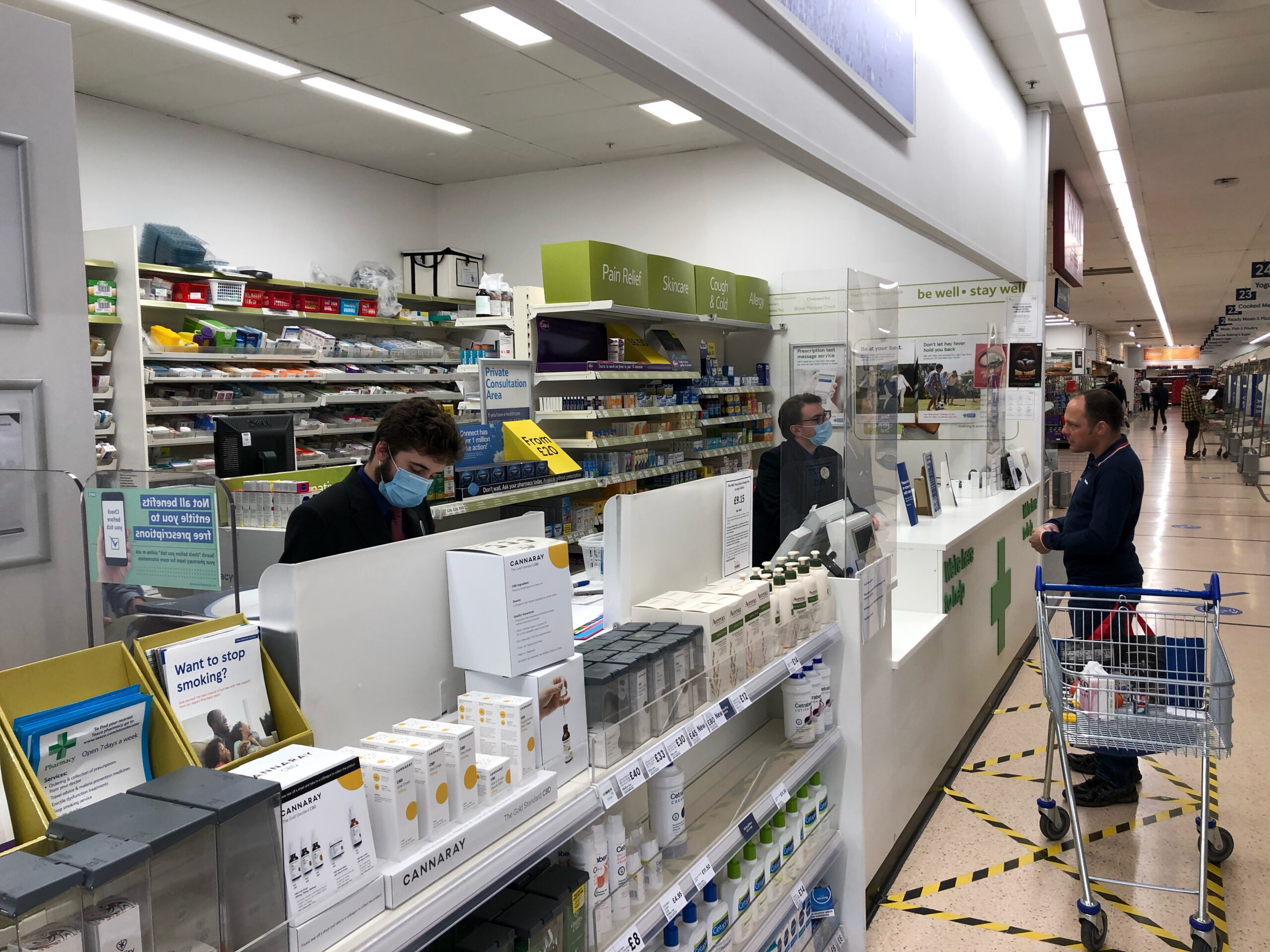
The survey, commissioned by the British Heart Foundation (BHF), Cancer Research UK, Diabetes UK and Tesco, suggests that many people could be missing out on opportunities to access free advice via their local pharmacies that could help them make life-changing improvements to their health.   

The findings come as the BHF, Cancer Research UK and Diabetes UK have been working with Tesco to deliver specialist training to Tesco pharmacists and pharmacy colleagues to support their conversations with the public. The training will help them provide more information and support as to how people can help lower their risk of these serious conditions through small changes to their day-to-day routine.  

The survey also found that, of those who had visited a pharmacist for health-related advice or checks, 43 per cent said talking to a pharmacist had eased their concerns around wasting their GP’s time.    

Meanwhile, 24 per cent of those who had visited a pharmacist for health-related advice or checks found it easier to speak to someone in a pharmacy than in other healthcare settings, while 53 per cent identified not having to book an appointment as a benefit of using a pharmacy for information and advice about a health-related concern.

The leading health charities say that supporting people to make lifestyle changes and seek referrals for concerning symptoms could “save thousands of lives” every year from some of the UK’s most prevalent and serious diseases.   

More than 7.6 million people in the UK are living with heart and circulatory diseases, while 4.9 million are living with diabetes, 90 per cent of which are cases of type 2 diabetes, and it’s estimated that almost three million people are living with cancer (2020). Yet, around four in 10 cases of cancer, many heart and circulatory diseases and up to five in 10 cases of type 2 diabetes could be prevented or delayed.   

Dan Howarth, Head of Care at Diabetes UK, said on behalf of the charities: “Thousands of lives could be saved every year through people making positive changes that lower their risk of type 2 diabetes, cancer, and heart and circulatory diseases.  

Far more people could be taking advantage of the advice and support available to them from their Tesco pharmacy while they do their weekly shop, this includes tips and information on stopping smoking and weight management services”  

The survey also found that only two per cent of adults in Britain had visited their pharmacist for a blood pressure check in the last twelve months, despite an estimated 4.8 million people in the UK living with undiagnosed high blood pressure.   

The three leading health charities, in partnership with Tesco, are encouraging people to use their local Tesco pharmacies for information and support on lowering their risk of cancer, type 2 diabetes, and heart and circulatory diseases.  

Tesco and the health charity partners hope that shoppers take advantage of the convenience of having their local pharmacist in store. Customers can easily seek advice when they do their weekly shop and get support for making positive changes or seeking information on concerning signs or symptoms.  

Acute Care, News, Primary Care

Experts urge NHS to leverage position as England’s largest employer to help fight health inequalities

By
NHS ICS health inequalities

Public Policy Project’s ICS Network has urged the NHS to leverage its position as England’s largest employer and to realise its potential for social and economic rejuvenation.


The calls came at a recent webinar, where PPP and ICJ released the latest findings from the ICS Futures roundtable series. The series saw ICS leaders from across the country convened for three Chatham House debates to identify challenges and opportunities in integrated care, to scale best practice and provide ongoing practical advice for system leaders and care providers. The series ended with an open webinar discussing the Next steps for integrated care. 

The webinar was held to coincide with ICSs taking statutory footing on July 1st, and was chaired by Matthew Swindells, Joint Chair of West London’s four Acute NHS Trusts & former Deputy Chief Executive of NHS England. Mr Swindells was joined by Dr Penny Dash, Chair, NW London Integrated Care System, Paul Maubach, NHS Midlands’ Strategic Advisor on ICS Collaboration and Laura Stamboulieh, Partner, Strategic Advisory for Montagu Evans.  

The role of the NHS  

There was a particular focus was on the role of the NHS itself in tackling the wider determinants of health. One lesson from the pandemic that was learnt across the country was the impact of low trust – particularly among more deprived areas of the country. As is well documented, vaccination rates were significantly lower in parts of the country relatively high on the deprivation index, and these sectors of the population tend to have poorer health outcomes more generally.  

“Part of the problem is not employing people from those areas”, suggested Paul Maubach, contending that a lack of representation from these areas has contributed to low trust of authorities and public services, healthcare included. It was agreed that choosing to adopt more proactive and inclusive recruitment strategies would align with the wider agenda to address and reverse health inequalities.  

The need to differentiate between health inequalities and healthcare inequalities was also a central topic of the session, particularly in view of what the NHS and ICSs can feasibly impact upon. Many drivers of poor health are deeply rooted in socioeconomic trends far outside the purview of health and care professionals, but there is much that can be addressed in the short term with the right focus and the right policies.  

For example, one of the greatest drivers of poor health in later life are educational outcomes. In turn, a crucial indicator of lower educational outcomes in the future is poor oral health at the age of two, so ensuring better access to NHS dentistry among more deprived cohorts would allow those more at risk to be identified, engaged, and supported by their local health and care systems, as well as improving access to dental services themselves.  

This area of discussion highlighted one crucial, but often overlooked point; that all health and care services are interconnected, and ultimately, are trying to achieve the same outcomes. Part of the role of ICSs, therefore, is to create a culture where all stakeholders collaborate to achieve this shared goal (improving population health).   

To this end, Dr Penny Dash argued the importance of those on integrated care boards (ICBs) having clearly delineated areas of responsibility and accountability, to create clarity over how different parts of the system fit together and to ensure that decision making does not become bogged down in bureaucratic hierarchies. “If you can’t answer the question related to your remit, you shouldn’t be at the table.”   

The importance of data was emphasised throughout the session – both from a population health management perspective, as well as the effective planning and monitoring of estates and facilities. 

It was posited by Laura Stamboulieh that “the role of the estate as an enabler is often overlooked. The ultimate delivery of ICSs will rely on a well-developed health and care estate.” On this point, it was noted that NHS estate planning has evolved little since the introduction of digital healthcare and the increase in remote working. As such, an updated, modernised approach to estate planning will be essential to delivering effective, integrated care, at scale. 


News

Javid out, Barclay in…for now, as Johnson government collapses into chaos

By
johnson government collapses

(Disclaimer, story was accurate as of 15:00 on 06/07/2022. At time of writing, only 26 ministers have resigned. We will try to keep up…)


Steve Barclay, Chancellor of the Duchy of Lancaster and former Minister of State for Health, has been formally appointed as the new Secretary of State for Health and Social Care following the resignation of Sajid Javid.

In his resignation letter, which was widely circulated on social media, Mr Javid cited the public’s belief that the Conservatives are no longer “acting in the national interest”, and “that this situation will not change” under the current leadership.

With a slew of resignations following the departure of Mr Javid, including the former Chancellor, Rishi Sunak, it is unclear how long the cabinet will retain its new composition, with Labour welcoming Mr Barclay as the “shortest serving Health Secretary in history.”

Mr Barclay, who became an MP in 2010, will be in charge of overseeing the business and policies of the health department, but it remains to be seen how much divergence of policy there will be between the new appointee and his predecessor.

Of particular focus will be the government’s continuing response to Covid and the major reforms currently underway in the health sector, including the recent establishment of integrated care systems in England, as well as plans to tackle the deepening cost of living crisis.

A keen area of focus for Sajid Javid were plans to address the elective care backlog and put patient choice and the personalisation of care at the centre of health policy.

Recent policy announcements from Mr Javid include the proposal to offer private hospitals to people in England waiting over 18 months for surgery, as well as commitments to fund the modernisation of the health and care services.

Commenting on his appointment, Mr Barclay said: “It is an honour to take up the position of Health and Social Care Secretary.

“Our NHS and social care staff have showed us time and again – throughout the pandemic and beyond – what it means to work with compassion and dedication to transform lives.”

“This government is investing more than ever before in our NHS and care services to beat the Covid backlogs, recruit 50,000 more nurses, reform social care and ensure patients across the country can access the care they need.”

Commenting on the resignation of the former Secretary of State for Health. Matthew Taylor, Chief Executive of the NHS Confederation, said: “Health leaders thank Rt Hon Sajid Javid for the support he has shown the NHS during his twelve months in post but colossal challenges remain for his successor to resolve.

“Leaders recognise the work Mr Javid has done to put health inequalities on the map in a way that his predecessors in Government had not.

“The new health and social care secretary will be joining as cost of living pressures grow and as coronavirus and associated hospital admissions are on the up once again. After everything the NHS has been through over the last two years, health leaders need political stability from the Government alongside immediate acknowledgement from their new health and social care secretary that the present situation is understood and with no sugar coating.”

Also responding to Mr Javid’s resignation, Saffron Cordery, Interim Chief Executive of NHS Providers, the membership organisation for the NHS acute, ambulance, community and mental health services, said: “Trust leaders thank Sajid Javid for his service, particularly in seeing through the biggest health reforms in a decade in the shape of the new Health and Social Care Act and his initiation of the Messenger review of leadership in the NHS.

“All eyes will be on how the new health and social care secretary addresses major challenges including serious workforce shortages right across the NHS, the forthcoming NHS pay award amid the cost of living crisis, and the government’s New Hospitals Programme which promises to give the NHS much-needed capital investment to benefit patients and the quality of care.”

On the appointment of Steve Barclay to replace Mr Javid, Ms Cordery responded: “Trust leaders will welcome the rapid appointment of Steve Barclay as the new secretary of state for health and social care.

“Top of his in-tray must be the serious workforce shortages right across the NHS, with over 105,000 vacancies across the service and the forthcoming NHS pay award, which will be made against the backdrop of a soaring cost of living crisis.”


Digital communications tool provides solution for healthcare data protection

By
healthcare data protection

Joost Bruggeman, former surgery resident at Amsterdam University Medical Centre, and CEO and co-founder of Siilo, discusses how secure digital communications tools can ensure patient confidentiality and solve healthcare data protection issues.


Instant messaging apps have become essential tools in our daily lives – their convenience, reliability and sheer ubiquity have transformed how most people communicate, both socially and professionally. At the height of the pandemic, their value within the healthcare sector became even more pronounced, as they enabled rapid information-sharing to help medical professionals learn how to deal with a hitherto unknown virus.

In these circumstances, medical staff came to appreciate the benefits of being able to share details about individual patient cases, including photographs and other sensitive medical data. It facilitated timely and seamless collaboration, without which many more lives would have been lost.

The benefits of ‘off-the-shelf’ messaging apps, however, don’t come without risks. Within the medical sphere in particular, a mistaken message could put patient confidentiality and data protection in jeopardy, while threatening one of the most fundamental aspects of healthcare ethics.


Overcoming data protection issues

Since instant messaging apps are clearly of value within the health and social care sectors, a solution is needed to overcome data protection issues. In fact, this challenge was understood some time ago, and was a key influence behind the development of specialist healthcare apps such as Siilo, which places data security and medical compliance at the heart of its development.

Designed specifically for healthcare professionals, Siilo undertook the task of preserving the usability that people expect from the technology, while simultaneously ensuring that patient data could be exchanged safely and compliantly.

Paul Cowley, Chief Information Officer at St. John & St. Elizabeth Hospital (HJE) in St. John’s Wood, London, recognised the importance of adopting a messenger service which has been tailored to the healthcare sector’s unique challenges. “Timely, effective and safe patient care often requires rapid communication with multiple clinicians and sometimes offsite. A secure, easy-to-use app is needed to facilitate this level of care.

“While temporary guidance was issued during the pandemic that allowed the use of well-known commercial messenger services to help reduce the risk of patient care being compromised, as a hospital we recognised that such services increase risk both in terms of patient data security and patient care, particularly because of the need to anonymise communications wherever practical.”


Security and compliance

Unfortunately, many health and social care professionals and organisations are unacquainted with these issues. Indeed, a survey by the European Heart Rhythm Association (EHRA) revealed that 88.3 per cent of its members regularly use commercial instant messaging apps, like WhatsApp, for sharing clinical information with medical colleagues, yet 29.3 per cent admitted they were unaware of EU data protection regulations. A further 46.7 per cent indicated there are no regulations in place at their institution regarding the sharing of clinical data via instant messaging.

Given that specialist tools have been developed, why are they not mandated among healthcare professionals? The problem is that many health and social care providers still don’t understand the risks involved with off-the-shelf messaging apps because of a simple failure to differentiate between security and compliance.

The basic promise of ‘end-to-end’ encryption, which is offered by the best-known messaging apps, certainly provides a strong element of security. It means the servers of the vendor cannot decrypt the message data even if they wanted to because they don’t have access to the encryption keys that belong to this encrypted data. However, this only applies to data while it is ‘in transit’ from one phone to another. What happens when the data is ‘at rest’, i.e. delivered to a phone or other device?

After a phone receives a message, several synchronisations take place with common messaging apps;photos and videos are synced automatically to the photo library of the phone, where the media is not encrypted; all conversations are backed-up by default and automatically go onto the cloud services of the phone provider – where message data is also stored unencrypted. As such, all these unencrypted conversations are exposed to unauthorized third parties.

Importantly, the professional who makes the decision to share information about their patient is always held responsible for protecting the patient’s confidential data. On a messenger app, this remains the same – the sender is always responsible and therefore needs to have control of what happens with the information on the receiving end of that communication. This control is often not possible and means many conversations taking place over common messenger apps are not compliant with medical confidentiality laws.

This is a huge problem because it becomes impossible for any healthcare professional sending an instant message on most services to be able to guarantee patient confidentiality. A way which is often used to get around this is to anonymise patient information within communications, but this also brings problems.

As recognised early on by Paul and his team at HJE, if healthcare teams cannot clearly identify which patient they are communicating about, it will almost certainly lead to confusion and mistakes. Since all healthcare professionals have sworn an oath to “do no harm”, this risk is often one not worth taking.


Communication and collaboration

For staff at HJE, Siilo has become a key tool in improving communication and collaboration between staff, and therefore improving patient care. A good example of this can be highlighted via its use in supporting the hospital’s Urgent Care Clinic (UCC), which is also helping to drive adoption in other departments.

“If a UCC doctor feels the need for input from a specialist consultant or the patient needs onward referral to a consultant, the UCC doctor can now use Siilo to contact a relevant specialist consultant rapidly and securely wherever they are.”

It is also proving to be an invaluable component in the day-to-day running of its medical team. “Siilo is now the ‘go to’ for some of our multi-disciplinary team meetings (MDTs). It solved a problem with a desire to increase the frequency of our MDT meetings without placing undue burden on the clinicians that contribute.

“It also allows ad-hoc MDT meetings where clinical circumstances dictate a patient’s case needs a review ahead of the next scheduled meeting. The messenger app allows clinicians to collaborate securely and contribute from whatever location they are working, regardless of their diary commitments.

We know the opportunities for the app are vast and since adoption, we are already seeing options becoming wider and wider, with more exciting use-cases being frequently put forward by staff.”

A growing number of healthcare organisations in the UK are recognising the tremendous benefits offered by digitalisation to the healthcare sector. While this is encouraging, it is essential that tools and technologies are truly fit to meet the standards expected. For communications technologies, this means applying absolute rigour to ensure patient confidentiality.


Joost Bruggeman is a former surgery resident at Amsterdam University Medical Centre and now CEO and co-founder of Siilo. For more information, please visit www.siilo.com.

For more information about St. John and St. Elizabeth Hospital, please visit: www.hje.org.uk

News, Population Health

NHS leaders offered free access to resource to help address air pollution across England  

By
air pollution

A new resource is to be offered to every NHS Integrated Care System (ICS) to support their development as ‘Clean Air Champions’.  


Data confirms that everyone in the UK is exposed to the threat of air pollution, with more than 97 per cent of postcodes in breach of at least one World Health Organisation (WHO) limit for toxic pollutants.1

This includes vulnerable environments such as healthcare settings, including the one million people who attend GP appointments every day in the UK and the approximately 16 million people who travel to major A&E departments in England every year.2

In the UK, 36,000 premature deaths per year are caused by air pollution, one in five of all premature deaths, and tackling air pollution will be a vital strand of integrated care systems’ (ICS) efforts to address and reduce environmental determinants of poor health.3,4

Launched at the NHS ConfedExpo, the ICS Clean Air Framework is a practical tool that empowers healthcare leaders to take action on cleaner air and has been developed to support every ICS in England to become a ‘Clean Air Champion’. Joining forces to drive the initiative forward are the environmental change charity Global Action Plan, Newcastle Hospitals and Boehringer Ingelheim. The Framework is freely available to all 42 ICSs nationally to aid the development of an action plan to improve air quality around all healthcare access points in England.

The Framework links to the mandated requirements of Green Plans, the NHS Standard Contract, the Delivering a greener NHS report and the UN’s Sustainable Development Goals. The tool supports the newly established ICS healthcare leaders to incorporate air quality improvement measures around hospitals and health hubs as part of their broader commitment to address environmental challenges.

The Framework launch coincides with Clean Air Day on June 16th, which this year reveals how air pollution impacts almost every organ in the body. Professor Sir Stephen Holgate, Special Advisor on air quality to the Royal College of Physicians and UKRI’s Clean Air Champion, explains “Air pollution is an invisible killer and plays a role in many of today’s major health challenges. The ICS Clean Air Framework is a ground-breaking resource to support the NHS in implementing air quality improvement initiatives that will ultimately protect the health, wellbeing and economic sustainability of today’s communities and future generations.”

The Framework is being pioneered by Newcastle Hospitals, who are first to drive the development of an action plan in their region. James Dixon, Associate Director of Sustainability at Newcastle Hospitals, explains “The NHS has an opportunity to lead by example and set the benchmark for clean air and safe workplaces. Through the creation of an action plan guided by the ICS Clean Air Framework, here at Newcastle Hospitals, we are already making progress and seeing direct benefits to our communities.”

Larissa Lockwood, Director of Clean Air, Global Action Plan, explains how the ICS Clean Air Framework can support healthcare leaders in taking action: “Air pollution kills seven million people globally each year, which is more than malaria, HIV/AIDS and obesity combined.5,6,7 It is a public health crisis that needs immediate action from the health sector. It also cannot be right that our most vulnerable are exposed to it in our places of care – is it fair that a baby must take its first breath in a polluted environment? By developing this framework and working at the Integrated Care System level, we have the opportunity to tackle some of those area-wide issues, empowering healthcare leaders to pursue action on air pollution to secure a healthier future for their region.”

Uday Bose, Managing Director at Boehringer Ingelheim UK & Ireland, explains the impact of the project both now and for future generations, “People who are already suffering with poor health are most at risk of the detrimental effects of air pollution, so this initiative plays an important role in addressing health inequalities. Our commitment to transforming lives goes beyond the provision of medicines, as this initiative clearly illustrates. It also demonstrates the power of partnerships and delivers a real opportunity to create a healthier future for families, the NHS and the planet.”

The ICS Clean Air Framework aims to provide healthcare leaders with a platform to drive positive change and support the implementation of initiatives to improve air quality, without adding to the administrative burden. The NHS net zero targets are as ambitious as possible and are supported by the need for immediate action and commitment to continuous monitoring, evaluation and innovation. It is therefore critical that key stakeholders and local authorities work collectively to turn ambition into action.

More information regarding the Integrated Care for Cleaner Air initiative and the ICS Clean Air Framework is available from today at www.actionforcleanair.org.uk/health/ics-framework.


1 addresspollution.org. 2022. Providing the public with the most accurate air pollution data available. [online] Available at: <https://www.addresspollution.org/> [Accessed 26 May 2022].

2</sup)The Kings Fund. 2019. Key facts and figures about the NHS. [online] Available at: <https://www.kingsfund.org.uk/audio-video/key-facts-figures-nhs#what-does-the-average-day-in-the-nhs-look-like> [Accessed 12 May 2022].

3GOV.UK. 2019. Public Health England publishes air pollution evidence review. [online] Available at: <https://www.gov.uk/government/news/public-health-england-publishes-air-pollution-evidence-review#:~:text=Air%20pollution%20is%20the%20biggest,lung%20cancer%2C%20and%20exacerbates%20asthma.> [Accessed 26 May 2022].

4Who.int. n.d. Air pollution. [online] Available at: <https://www.who.int/health-topics/air-pollution#tab=tab_2> [Accessed 25 May 2022].

5Who.int. 2022. Fact sheet about malaria. [online] Available at: <https://www.who.int/news-room/fact-sheets/detail/malaria> [Accessed 25 May 2022].

6Who.int. 2021. Obesity. [online] Available at: <https://www.who.int/news-room/facts-in-pictures/detail/6-facts-on-obesity> [Accessed 25 May 2022].

7Who.int. 2021. HIV/AIDS. [online] Available at: <https://www.who.int/data/gho/data/themes/hiv-aids> [Accessed 25 May 2022].


News

Award win for Keysource and CENTIEL for project designed to underpin world-class vaccine, cell and gene therapy manufacturing capability

By
Edge project

Global data centre and critical infrastructure specialists, Keysource, in association with Swiss-based UPS manufacturer CENTIEL, have been named as winners of the Edge Project of the Year at the DCS Awards 2022 DCS Awards Voting. The award winners were announced at a gala dinner held at the Leonardo Royal Hotel London St Pauls on 26 May 2022.


The team’s work has been recognised following the completion of an installation of a truly modular, scalable, and highly efficient UPS and Electrical Infrastructure solution to help underpin growth in the government’s efforts to develop world-class, innovative vaccine research and manufacturing capability.

Scientists and researchers based in the centre will accelerate the time taken for new treatments to be delivered to patients by developing cutting-edge therapies to treat life-changing diseases.

The edge data centre that supports the essential laboratory work, is responsible for ensuring that samples and vaccines remain in optimal condition. The installation is now the first medical facility in the UK to take advantage of Li-ion batteries in combination with CENTIEL’s fourth generation three phase, true modular UPS, CumulusPowerTM which offers industry leading 99.9999999 per cent (nine nines) availability translating to just milliseconds of downtime per year.

Louis McGarry, Sales and Marketing Director, CENTIEL UK explained: “The facility runs off different energy sources from the grid, to sustainable power. This means the UPS is called on more often to provide a clean, continuous source of power to support the laboratory environment and ensure optimal conditions. Li-ion batteries offered the perfect solution as they are highly capable of cycling many times over, unlike traditional VRLA batteries, where cycling shortens their design life significantly.

Richard Clifford, Head of Solutions at Keysource, commented: “At Keysource, we deliver the finest and most efficient facilities, utilising the latest in critical power and cooling technologies. Our solutions support the latest generation of high-performance, high-density computing and have been internationally recognised as examples of best practice. We are proud to support clients that lead the development of new, innovative technologies to bolster the UK’s medical research capability. This project is a perfect example of why investing in critical infrastructure, and its protection, is essential to ensure these vital services continue to operate, now and in the future.”

For more information please see: www.centiel.co.uk or www.keysource.co.uk

News, Social Care

Report reveals 229% rise in social care needs assessment enquiries

By
social care assessment

The number of social care needs assessment enquiries increased by 229 per cent in the year 2021/2022 compared to 2019/2020, according to Access Social Care’s annual State of the Nation report.


The report, released yesterday, paints a desperate picture of the English social care system, with a significant rise in advice demand far outstripping available resources.

Access Social Care is a nationwide charity providing free legal advice for people with social care needs. Its second annual State of the Nation report is based on a data collaboration project in partnership with Royal Mencap Society, Age UK, Carers UK and Independent Age.

With the use of 74,000 separate data points, the report outlines the key challenges facing people who need social care and looks at the extent to which advice demand and provision has changed.

The nationwide data in this year’s report also shows an increase in enquiries that were identified as needing specialist legal advice in the year 2021/22, compared to 2019/20.

The report also reveals that the number of enquiries regarding concerns about existing social care and support rose by 43 per cent in the year 2021/22 compared to 2019/20.

The wellbeing of both care users and care providers has continued to spiral downwards. According to Access Social Care, pressure on capacity has meant that helplines have been required to take on additional staff and expand opening hours to cope with the increased demand on their services.

Charging has also become an increasingly pressing issue, accounting for 25 per cent of the dataset. Local authorities have been pushed into further unsustainable cost efficiencies, increasing charges for social care to meet budget targets and causing further demand for advice on charging.

Kari Gerstheimer, Chief Executive of Access Social Care said: “Whether we are self-funders or in receipt of state funded care, we will all need social care at some point either for ourselves or for a loved one.

“The Government claims to have fixed social care and continues its promises to help ease the cost-of-living crisis, but the sums don’t add up. Millions of people are feeling the effects of an underfunded system.

“We want a social care system that is properly financed, readily available and fairly distributed. Currently, vital services are overstretched, and people are going without the necessary social care they so desperately need – something needs to change.”

Caroline Abrahams CBE, Charity Director of Age UK said: “The findings in this report provide clear evidence of a system under severe duress.

“Councils are struggling to discharge their responsibilities to people in need of care and support and are having to adopt explicit prioritisation measures to deal with the overwhelming demands they face.

“In these difficult circumstances navigating the always complex social care system is a real challenge. It makes the role of charities who provide information and advice about social care more important than ever, both for the people in need of help and by shining a light on what’s really going on in care services across the country.”

Access Social Care provides expert legal advice to disabled people, elderly people, and their family carers to ensure their social care needs are met.

News, Primary Care

Report finds white nurses twice as likely as black and Asian colleagues to be promoted

By
RCN racism survey

White nurses are twice as likely to be promoted as Black and Asian staff in the NHS, new survey results from the Royal College of Nursing (RCN) show.


According to the RCN, the survey results demonstrate that racism is ‘endemic in health and care’. The UK-wide survey of almost 10,000 nursing staff found that across all age groups, White respondents and those of mixed ethnic background were more likely than Black and Asian colleagues to have received at least one promotion since the start of their career.

The survey, which was published at the annual RCN congress in Glasgow, showed the difference is most stark between those aged 35 to 44. While 66 per cent of White and 64 per cent of respondents from mixed ethnic backgrounds in this age group said they had been promoted, this fell to just 38 per cent of Asian and 35 per cent of Black respondents.

The RCN also said that their biennial employment survey showed structural racism is having a ‘devasting impact’ on minority ethnic nursing staff in other ways.

The survey found that Black respondents working in hospital (39 per cent) and community (32 per cent) settings are more likely to report having experienced physical abuse than respondents of other ethnic backgrounds.

The RCN is calling on the UK government to ‘seize the opportunity of its planned reform of human rights legislation’ to ensure that health and care organisations, regulatory bodies and inspectorates are required by law to tackle racism, including in the workplace.

According to the RCN this could include a legal requirement to eliminate disparities in recruitment, retention and career progression, or a greater responsibility for employers to protect minority ethnic groups.

RCN Diversity and Equalities Co-ordinator Bruno Daniel said: “The pandemic has shone a spotlight on structural racism in health and care services and we must seize this opportunity to stamp out this vile behaviour once and for all.

“The UK government and devolved administrations must properly acknowledge and address this problem and the devastating impact it has on Black and minority ethnic staff and patients.”

Responding to the Royal College of Nursing’s (RCN’s) research, the interim chief executive of NHS Providers, Saffron Cordery said: “As the largest employer of Black, Asian and minority ethnic people in the country, the NHS must recognise and confront the structural racism and discrimination that still exists within its ranks.

“These important findings are the latest in a long string of evidence highlighting the unacceptable presence of structural racism within our health and care system.

“Time after time we see similar findings that show ethnic minority staff face higher levels of discrimination, and are more likely to face bullying, harassment or abuse from patients or colleagues.

“It is only by recognising these facts and having an honest conversation about racism, its structural roots and its impact, that change can be achieved.

News, Primary Care

Fuller Stocktake: Time for a radical overhaul of primary care

By
Fuller Stocktake primary care

The Next steps for integrating primary care: Fuller stocktake report was published yesterday, outlining a vision for transforming primary care led by integrated neighbourhood teams.


The review was carried out by Dr Claire Fuller, CEO (Designate) of Surrey Heartlands ICS, commissioned by NHS England and NHS Improvement.

With weeks to go until integrated care systems (ICS) are granted statutory footing, the report emphasises this opportunity to radically overhaul the way health and social care services are designed are delivered.

According to Dr Fuller, ‘Primary care must be at the heart of each of our new systems – all of which face different challenges and will require the freedom and support to find different solutions.’

Support, enablement and respect are three key themes of the reviews findings. The report states that these sentiments are important to set the right tone and accelerate the change that needs to be delivered in primary care.

To improve access, experience and outcomes in primary care across all communities, the report outlines three key offers:

  • Streamlining access to care and advice for people who get ill but only use health services infrequently: providing them with much more choice about how they access care and ensuring care is always available in their community when they need it
  • Providing more proactive, personalised care with support from a multidisciplinary team of professionals to people with more complex needs, including, but not limited to, those with multiple long-term conditions
  • Helping people to stay well for longer as part of a more ambitious and joined-up approach to prevention.

Matthew Taylor, chief executive of the NHS Confederation, said: “This review must be a watershed moment for establishing primary care as an integral part of local systems, working across boundaries to deliver population-based care, and a demonstration of the benefits of the integration agenda.

“Our members – from primary care leaders through to ICSs – agree that investing in local relationships, developing and supporting frontline workers, and maintaining stability in general practice are the key components to achieving fully integrated primary care.

If we are to get serious about ramping up prevention, improving patient outcomes including by tackling health inequalities, and providing more personalised care, primary care’s deep-rooted connection to its local communities cannot be overstated.”

Responding to Dr Fuller’s stocktake, interim chief executive of NHS Providers Saffron Cordery said: “Trust leaders will welcome the findings of the Fuller ‘stocktake’ which sets out how primary care can work with partners across health and care to best meet the needs of their local communities.

“The welcome focus in the stocktake on creating neighbourhood health teams to offer continuity of care and support those with complex, ongoing health needs is essential and will help to tackle the health inequalities which have been exacerbated by the Covid-19 pandemic.

“But with just over a month to go before integrated care systems become statutory bodies on July 1st, we now face the challenge of making this vision a reality.

“First and foremost, Dr Fuller’s stocktake underlines the need to tackle the serious challenges facing those who need to access same day, urgent care. This is no small undertaking and will require collaboration across mental health, community services, primary care and secondary care if it is to succeed.”