Dr Veline L’Esperance: Ethnicity data gaps hide who genomics misses
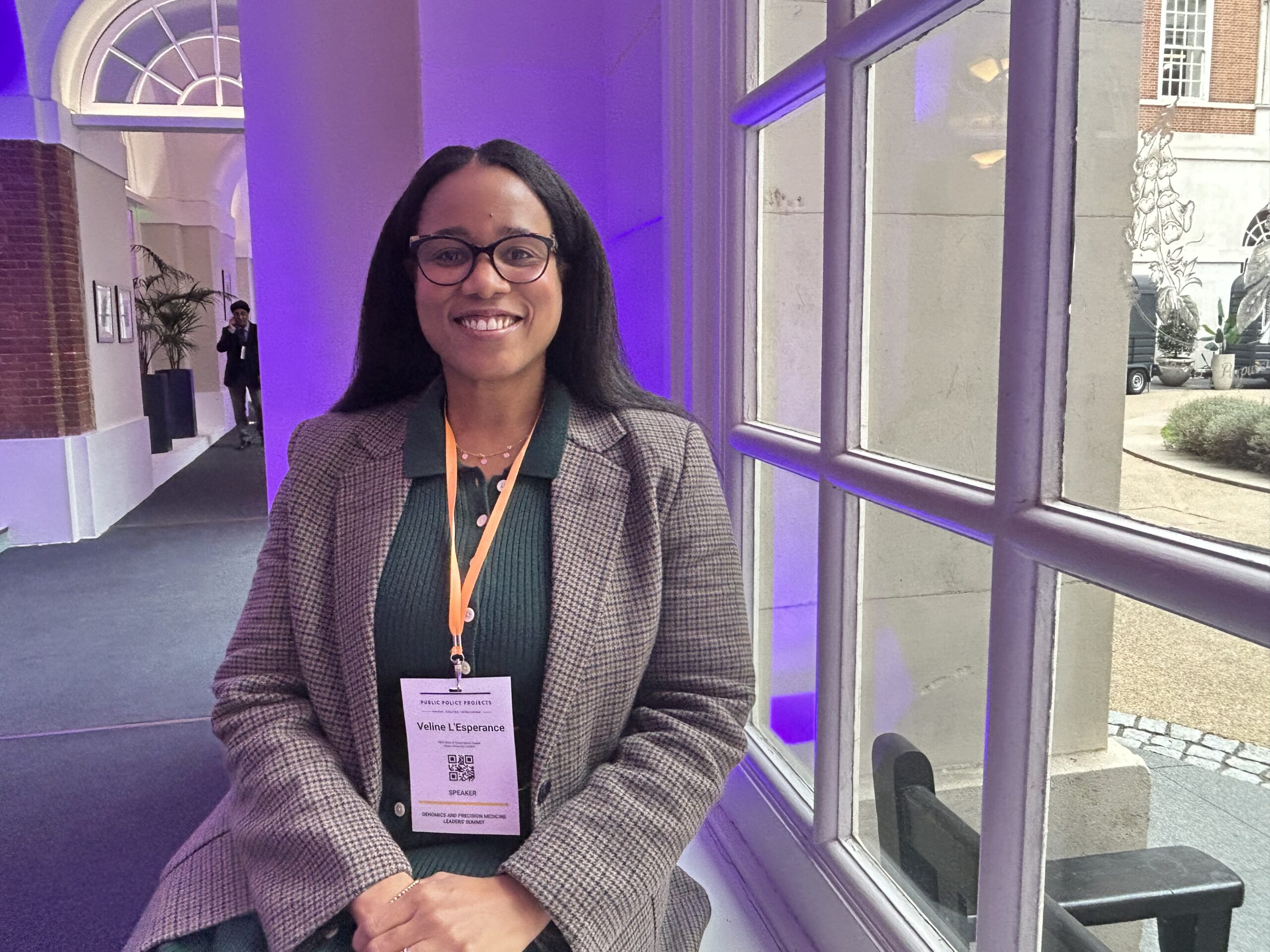
Dr Veline L’Esperance of the NHS Race and Health Observatory says integrated care boards should start by understanding what their populations look like.
Genomic services cannot reach the communities currently missed if health systems do not know who those communities are, according to Dr Veline L’Esperance.
Dr L’Esperance is a GP, Senior Clinical Advisor at the NHS Race and Health Observatory and Senior Clinical Lecturer at Queen Mary University of London.
She spoke to ICJ at the Genomics and Precision Medicine Leaders Summit 2026, hosted by Public Policy Projects (PPP), after joining a panel on equity and diversity in genomics.
She said poor collection of ethnicity data makes it hard to see where the structural problems lie, urging integrated care boards (ICBs) to start by understanding their populations.
ICJ: How does this year’s summit compare with last year’s?
Dr L’Esperance: There is a wide variety of attendees from different sectors, which is always good.
It helps to have clinicians, policymakers and think tanks in the room, because you need a whole-systems approach to get things done.
This year has leaned away from presentations and towards discussion.
It feels more focused on solutions than on repeating the problems we have discussed before.
ICJ: What was the most important point from this morning’s panel?
Dr L’Esperance: Taking communities and participants on the journey with you. We should not see them only as a source of data.
We should ask how the research I do goes back to benefit those communities, either now or for future generations.
With more time, I would have explored how we translate evidence into real change and what we need to deliver it more quickly.
One answer is convening the stakeholders who can affect change in a room.
After the roundtables and meetings, the question is what comes next and how it goes back to the patient.
ICJ: Where do you see the biggest inequalities in genomics by ethnicity and race?
Dr L’Esperance: It is difficult to say, because ethnicity data is hard to collect in genomics.
That makes it hard to see where the structural problems are; we do not know who we are not reaching, because we do not know who is there.
We need to do much more work on what data we collect and how we collect it.
ICJ: Why might some communities be wary of genomics?
Dr L’Esperance: Historical mistrust plays a big role; people have been enrolled in studies without consenting or had their data used in ways they did not agree to.
Those experiences have real repercussions.
There are cultural factors too – if people were mistreated in the past, they ask what safeguards exist now.
We know the mistrust is there, so we must decide what remedies will rebuild trust.
That is why I raised data sovereignty: how do we make sure participants play a real role in how their data is used?
ICJ: What does that mean for AI?
Dr L’Esperance: If we use AI models built on data that does not represent the UK population, we only perpetuate inequalities.
We would be looking for answers in databases that do not represent everyone.
In a world where AI will change everything, data sovereignty matters even more.
We must ask where the data comes from and whether it will truly benefit everyone.
ICJ: What does culturally competent genomic care look like in general practice?
Dr L’Esperance: You have to know your population.
Any GP needs to know who they serve and then understand how to relay and translate information.
Only when you know the people you look after can you tailor information to what they will understand and accept.
People understand that genomics and clinical trials bring benefits, but you must understand who you are talking to and what they will see as beneficial for them.
In areas with large Black populations, for example, GPs need to understand the nuances of different Black cultures and how those shape people’s interaction with health services.
ICJ: What happens to test accuracy if datasets underrepresent some groups?
Dr L’Esperance: Take polygenic risk scores – if they are built mainly in people of white European ancestry, they can perform 30 to 50 per cent less accurately in East Asian, South Asian or African ancestry populations.
We do all this work to build them, but they do not serve all populations equally.
ICJ: Who is responsible for fixing that?
Dr L’Esperance: We all are.
I think we give policymakers too much power, and there is power in the people.
Patient and public engagement helps people understand these hidden disadvantages, so they want more for themselves, their families and their communities.
We can have a top-down approach, where the powers that be tell us which tools will improve healthcare.
But we also need a ground-up approach, where communities say something will not work for them and hold clinicians, researchers and policymakers to account.
ICJ: What should ICBs do to make sure genomic services reach underserved communities?
Dr L’Esperance: ICBs have a wonderful opportunity to serve their populations. Because they work at regional level, they can get granular data that we sometimes cannot get nationally.
The first step is knowing what your population looks like, collecting that data accurately, and seeing where the problems are.
ICBs can take a whole-system and whole-population approach.
ICJ: What is one thing you would ask integrated care leaders to do differently in the next year?
Dr L’Esperance: Think about their populations, and whether genomic advances are actually working for the people they look after.
That is the first thing they need to look at.
Featured image credit: Integrated Care Journal